
REVIEW · HOI AN
Transfer from Hoi An to Hue via Hai Van pass
Book on Viator →Operated by Hura Cars · Bookable on Viator
The Hai Van ride turns travel into a view. This private Hoi An to Hue transfer is built for people who want the scenery without the stress of navigation. I love the air-conditioned vehicle with on-board Wi-Fi, and I love that the Hai Van Pass is the main event on the route.
You’ll sit back while your driver handles the road, and you get a straightforward service with bottled water and all fees and taxes included. One thing to consider: this ride depends on good weather, and your hotel location outside Hue city can mean a surcharge.
In This Review
- Key things to know before you go
- Why the Hai Van Pass drive matters on the Hoi An to Hue route
- Private car comfort: AC, Wi-Fi, bottled water, and real peace of mind
- How long it takes, and how to plan your day in Hue
- Route highlights you’ll actually notice from the road
- Quick breaks, sightseeing add-ons, and asking your driver the right question
- Price and value: what $50 buys you (and why it can beat DIY)
- Drivers who speak up: English, safety, and helpful Vietnam tips
- When weather can throw a curveball
- Who this transfer suits best (and who might want something else)
- Should you book this Hoi An to Hue Hai Van Pass transfer?
- FAQ
- How long is the transfer from Hoi An to Hue?
- Is this a private transfer or shared group ride?
- Is the vehicle air-conditioned, and is there Wi-Fi?
- What’s included in the price?
- Is lunch or alcohol included?
- Will I pay extra if I stay outside Hue city?
- What happens if the weather is poor?
- Are service animals allowed?
Key things to know before you go

- It’s a private one-way transfer: you’re not riding mixed with strangers.
- Hai Van Pass is the star: dramatic mountain-and-sea views along Vietnam’s most famous coastal stretch.
- Comfort features matter: air-conditioning, Wi-Fi, and bottled water are included.
- All fees and taxes are handled: fewer surprise add-ons than many DIY options.
- Your day needs flexibility: the service is tied to weather conditions.
- Plan for Hue location: staying outside Hue city may trigger a surcharge.
Why the Hai Van Pass drive matters on the Hoi An to Hue route

If you’re traveling between Hoi An and Hue, the question isn’t just how you get there. It’s whether the trip feels like a chore—or like part of the experience. The Hai Van Pass is one of the few routes that can do the second.
This road sits at a historic boundary, once separating the Đại Việt and Champa kingdoms, and it also acts like a switch between northern and southern Vietnam’s climates. That adds up to a lot more than scenery for the sake of postcards. You get a dramatic sense of place: hills rising fast, the sea appearing in stretches, and the coastline shaping the drive.
It’s also a great alternative to driving through the long Hải Vân Tunnel, and it’s widely known for being a top road-trip section in Vietnam. Even pop culture has praised it. Top Gear’s Vietnam segment described it as among the best coast roads in the world—exactly the kind of hype that usually means you should plan to look out the window.
You can also read our reviews of more tours and experiences in Hoi An



Private car comfort: AC, Wi-Fi, bottled water, and real peace of mind

Here’s what makes this transfer feel worth booking: you’re not managing traffic, directions, or parking. You’re just riding.
You get an air-conditioned vehicle, bottled water, and Wi-Fi on board. That trio sounds basic until you’re on a coastal route that can include bright sun, wind, and occasional rain. The AC keeps your energy for Hue. Wi-Fi is handy if you’re checking maps, messaging family, or updating plans for your next stop. And bottled water is one of those small inclusions that saves you from turning the drive into a convenience store quest.
Because it’s private transportation, it’s also easier to match your pace. You can slow down when you want a longer look at a viewpoint, or keep moving when you’d rather just get there. On a route known for dramatic views, having that control is a big deal.
One more practical note: the experience is marketed with all fees and taxes included. That means you’re not piecing together extra charges mid-trip, which is where DIY often gets annoying.
How long it takes, and how to plan your day in Hue

The transfer is listed at about 4 to 5 hours. That range matters because it’s not just road time. It’s also the time impact of traffic and the natural slow-down that happens when you keep noticing viewpoints worth stopping for.
If your plan is to arrive in Hue and still do something that evening, I’d treat the 4 to 5 hours as real, not optimistic. Aim to build a buffer. Hue can be a quick-moving city at night, but you’ll enjoy it more if you don’t arrive exhausted.
Also remember what you’re traveling for: you’re going over a pass with mountain-and-sea views. Even if you don’t stop formally, you’ll likely want your camera ready. This is not a transfer you want to schedule with back-to-back stress.
Route highlights you’ll actually notice from the road
The headline is Hai Van Pass, but you’ll experience it in stages. Even without a long formal itinerary, the drive gives you changing scenery every few minutes.
Expect coastal views that pop in and out as the road bends through the pass area. You’ll also feel the elevation shift—mountain air and wind one moment, then a broader look toward the sea. That rhythm is part of why people rave about this stretch.
On a practical level, this route can also act as a mental transition between regions. The pass is historically tied to a boundary and climatically feels like one too. You’ll likely notice the way the light and weather can feel different compared with Hoi An.
Finally, there’s a useful angle for planning: you’re riding through some of Vietnam’s most photographed coastal roads. That means it’s worth packing small extras you can reach quickly—sunglasses, a hat, and something light for sudden showers.
Quick breaks, sightseeing add-ons, and asking your driver the right question
This is a transfer, not a long guided tour with a fixed list of stops. But in real life, drivers often help passengers build in short breaks if you want them.
In the experiences I’m drawing from, people described adding small sightseeing moments along the way—things like stops around the Marble Mountain area, and other quick viewpoints. In one ride, a driver made sure umbrellas were on hand when a brief downpour showed up near a sightseeing stop related to Hue. That kind of readiness can make the difference between a trip that feels like a slog and one that feels smooth.
So here’s your smart move: if you want extra moments—photo stops, a short leg stretch, or a quick look at a nearby landmark—ask your driver before you leave, and keep expectations realistic. Short is key. You’re still paying for a transfer; you want to protect the main goal, which is arriving in Hue with energy.






Price and value: what $50 buys you (and why it can beat DIY)
At $50 per person, this transfer sits in a range that often surprises people—because you’re paying for private transport plus comfort perks plus “admin-free” pricing.
You get:
- air-conditioned vehicle
- Wi-Fi on board
- bottled water
- private transportation
- all fees and taxes included
When you compare it to DIY options, the value comes from removing the hidden costs of stress: time spent figuring out routes, dealing with parking or weather adjustments, and bargaining for snacks or roadside services. You also avoid the risk of ending your day with a tense drive and a slightly ruined arrival.
Two extra pricing notes to keep in your head:
- Alcoholic beverages aren’t included, so if that’s part of your plan, budget separately.
- There can be a surcharge if your hotel is outside Hue city. If you’re staying at the edge of town, check early so you’re not surprised at drop-off.
If you’re a couple, a family, or traveling with luggage, private transfers also tend to feel better value because shared costs often outpace the hassle of arranging multiple pieces of transport.
Drivers who speak up: English, safety, and helpful Vietnam tips
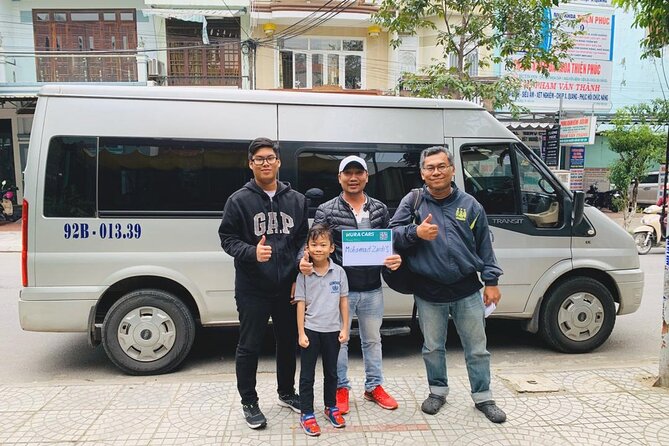
The driver experience is often the difference between a simple ride and one you remember fondly. The feedback around this service consistently points to drivers who are calm on the road and willing to talk.
Names show up in the stories: Huy, David, Harry Thien, and Pho. What’s consistent across them is a mix of safety and practical information. People described drivers speaking good English, pointing out sights, and sharing travel tips that helped right after arrival in Hue or later around central Vietnam.
I’d take that as a signal for how to make the most of the transfer. If your driver offers tips, ask simple questions like:
- What’s the best time to visit the main Hue sights?
- What should I book ahead versus walk into?
- Any small things to bring because of weather?
And if you prefer a quiet ride, that works too. Private means you can set the tone.
When weather can throw a curveball
This is one of the most important logistical realities: the experience requires good weather. If it’s canceled due to poor weather, you’ll be offered a different date or a full refund.
That doesn’t mean you should panic. It means you should avoid planning the transfer as your only single line of defense. If your schedule is tight, keep a backup plan for what happens if weather delays the ride.
This also ties into why umbrellas and light rain gear are smart on this route. One ride included a brief downpour during a sightseeing moment, and having something ready made things much easier.
Who this transfer suits best (and who might want something else)
This is a great fit if you:
- Want the Hai Van Pass views without driving
- Prefer a private ride for comfort and flexibility
- Are traveling with luggage, family members, or anyone who doesn’t want motorbike-style travel
- Value simple pricing with fees and taxes included
It may not be your best choice if you’re the type who wants to control every stop minute-by-minute. Since this is a transfer service, not a full day of guided sightseeing, you’ll want to keep add-ons short.
Should you book this Hoi An to Hue Hai Van Pass transfer?
I think it’s an easy yes if you’re aiming for a relaxed arrival in Hue and you care about the scenery in between. The combination of private comfort, Wi-Fi, and included fees means you can treat the route like part of your trip instead of a hurdle.
Book it if:
- You want air-conditioned comfort over the pass
- You’d rather spend your focus on views than directions
- You’re fine with a roughly 4 to 5 hour window
Skip it or compare options if:
- Your schedule is extremely weather-dependent and you can’t shift plans if the route is canceled
- Your hotel is outside Hue city and you don’t want to deal with a possible surcharge
If you’re still deciding, choose the option that lets you arrive in Hue feeling fresh. On this route, that’s usually the difference between a good trip and a great one.
FAQ
How long is the transfer from Hoi An to Hue?
It’s listed as about 4 to 5 hours.
Is this a private transfer or shared group ride?
This is a private one-way transfer. Only your group participates.
Is the vehicle air-conditioned, and is there Wi-Fi?
Yes. The transfer includes an air-conditioned vehicle and Wi-Fi on board.
What’s included in the price?
Included items are bottled water, air-conditioned vehicle, private transportation, Wi-Fi on board, and all fees and taxes.
Is lunch or alcohol included?
No. Alcoholic beverages and lunch are not included.
Will I pay extra if I stay outside Hue city?
There may be a surcharge if you stay outside Hue city.
What happens if the weather is poor?
This experience requires good weather. If it’s canceled due to poor weather, you’ll be offered a different date or a full refund.
Are service animals allowed?
Yes, service animals are allowed.