REVIEW · HOI AN
Hoi An City Tour (Private Tour)
Book on Viator →Operated by Fingo Private Tours · Bookable on Viator
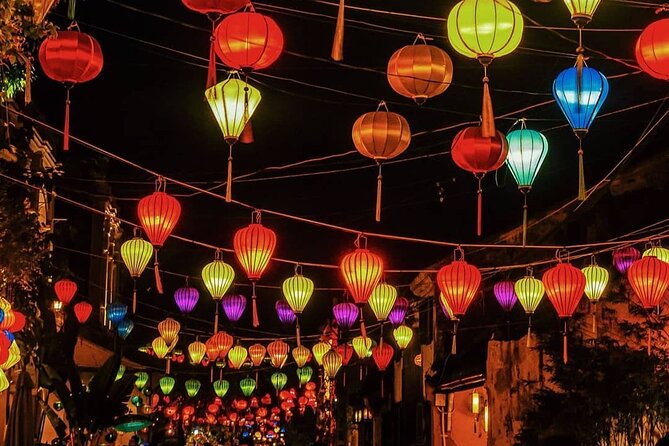
Lantern-lit streets turn Hoi An into a real-life film. I love the classic stop at the Japanese Covered Bridge and the slow-peek feel of Tan Ky Old House, where details are easy to notice. It also has a good mix of heritage sites and day-to-day places, so you’re not stuck only in temples.
One heads-up: with five main stops in about 4 hours, your free time at each location is limited. That’s great if you like a tight plan, but if you want long, unhurried wandering, you’ll likely want extra time before or after the tour.
Everything runs with a mobile ticket, an English-speaking guide, bottled water, and entrance fees for the listed Old Town stops. You’ll get dropped off just outside Hoi An Market, which is handy if you want to keep browsing on your own.
In This Review
- Key highlights worth your attention
- The value: what $50 buys in Hoi An Old Town
- Meeting point and how the tour flows without stress
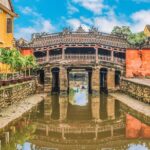
- Stop 1: Japanese Covered Bridge (17th-century icon)
- Stop 2: Fujian (Phuc Kien) Assembly Hall and the sea goddess
- Stop 3: Tan Ky Old House and the architecture mash-up
- Stop 4: Traditional art performance theatre in air-conditioning
- Stop 5: Hoi An Cloth Market for food, souvenirs, and real shopping time
- About the guide: English clarity and real enthusiasm
- Walking time, weather, and what to pack
- Who should book this Hoi An private tour
- Should you book it? My call
- FAQ
- How long is the Hoi An City Tour (Private Tour)?
- What does the tour cost?
- What’s included in the price?
- What isn’t included?
- Where do I meet the tour group?
- Where does the tour end?
- Is there a maximum group size?
- What kind of weather does the tour require?
Key highlights worth your attention
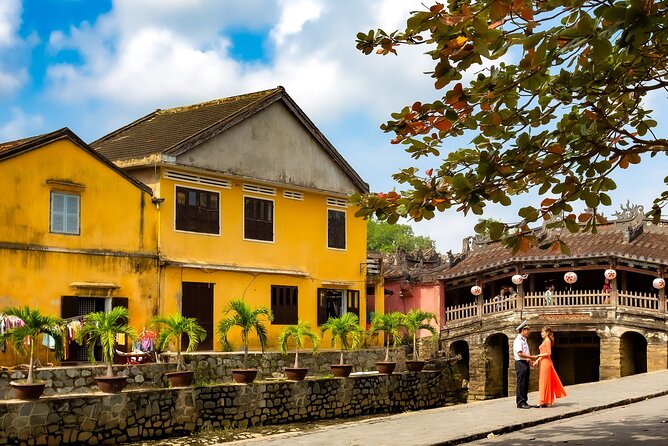
- Japanese Covered Bridge + its 17th-century Japanese roots with carvings and a small temple area
- Fukian (Phuc Kien) Assembly Hall dedicated to Thien Hau, the sea goddess who protects sailors
- Tan Ky Old House blending Vietnamese, Chinese, and Japanese architectural styles
- Traditional Art Performance Theatre in an air-conditioned hall, with restrooms available
- Hoi An Cloth Market stop that transitions from history into practical shopping and local stalls
- Max 15 travelers with a private-tour feel and clear English guidance
The value: what $50 buys in Hoi An Old Town

A half-day private tour at $50 per person sounds simple, but the value comes from what’s included. You get entrance fees for the specific Old Town sites on the itinerary, plus a proper English-speaking tour guide and bottled water. In Hoi An, admission costs and “ticket-only” moments can add up quickly, so having those handled saves you both money and mental load.
Timing matters too. The tour is about 4 hours, which is ideal on a vacation day when you still want flexibility afterward. You’ll start at Chùa Pháp Bảo (Phan Chu Trinh) and finish outside Hoi An Market, so your last stop naturally turns into free time for food and shopping without needing another transfer.
The practical sweet spot here is pacing. You’re not trying to see everything in one go. Instead, you get a guided highlight set—bridge, assembly hall, old house, performance theatre, and market—each with enough time to look closely and take photos without feeling rushed beyond the schedule.
You can also read our reviews of more city tours in Hoi An



Meeting point and how the tour flows without stress
The meeting point is at Chùa Pháp Bảo on Đ. Phan Chu Trinh (Minh An ward). If you like to arrive early, do it—this is one of those tours where being ready at the start helps the guide keep the day smooth.
The end point is outside Hoi An Market at 21 Hoàng Diệu (Cẩm Châu). That drop-off is more convenient than it sounds. It means you can decide on the spot whether you want to:
- keep walking to browse stalls and fabrics,
- grab a snack or drink,
- or head straight back to your hotel at your own pace.
The tour also uses a mobile ticket, which is one less thing to track in your day bag.
Stop 1: Japanese Covered Bridge (17th-century icon)
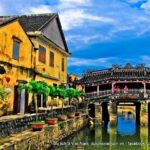
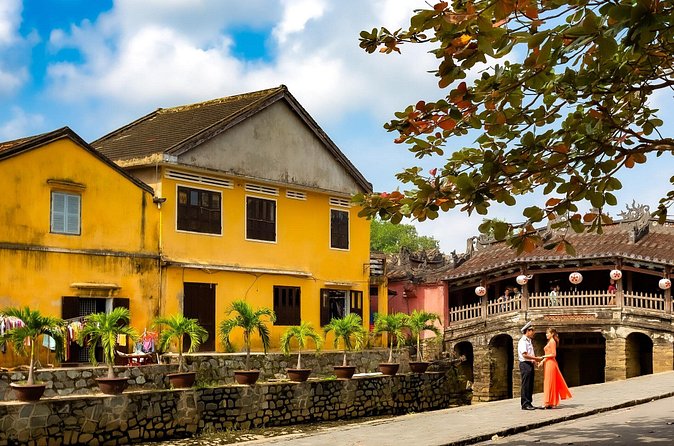
The tour starts with the Japanese Covered Bridge, built by the Japanese in the 17th century. This bridge isn’t just a photo op; it’s a symbol of Hoi An. You’ll see the wooden structure with intricate carvings, the roofed walkway for shelter, and a small temple element connected to the site.
Why this stop works early: it gives you an anchor point for understanding Hoi An’s history as a trading port. Before you even move into other buildings, the bridge teaches a key idea—this town wasn’t shaped by just one culture.
What to watch for while you’re there:
- carvings that add meaning beyond decoration,
- the way the roofed walkway changes how people move and pause,
- and the temple connection that turns a bridge into a small cultural stop.
Possible drawback: this is a famous landmark, so you’ll want to be ready to take photos quickly during your window. If you’re the type who likes to stand and analyze for 20 minutes straight, plan to do that during your own time after the tour too.
Stop 2: Fujian (Phuc Kien) Assembly Hall and the sea goddess
Next up is the Fukian Assembly Hall (Phuc Kien), built by Chinese merchants from Fujian in the late 17th century. The hall is dedicated to Thien Hau, the goddess of the sea who protects sailors. In other words, you’re not only seeing architecture—you’re seeing a community belief system tied directly to life at sea.
You’ll get about 30 minutes here, which is long enough to:
- walk through the site at a relaxed pace,
- notice ornate gate details,
- and understand the purpose of the building without feeling like you’re speed-running.
This stop also helps the tour feel more grounded. It’s not just “pretty old stuff.” It’s a place tied to shipping, protection, and the rhythms of travelers and merchants who came through Hoi An long before today’s lantern streets.
Tip: If you enjoy symbolism, ask your guide to explain what Thien Hau represents in this context. The architecture is impressive, but the belief behind it gives you something to remember after the photos fade.
Stop 3: Tan Ky Old House and the architecture mash-up
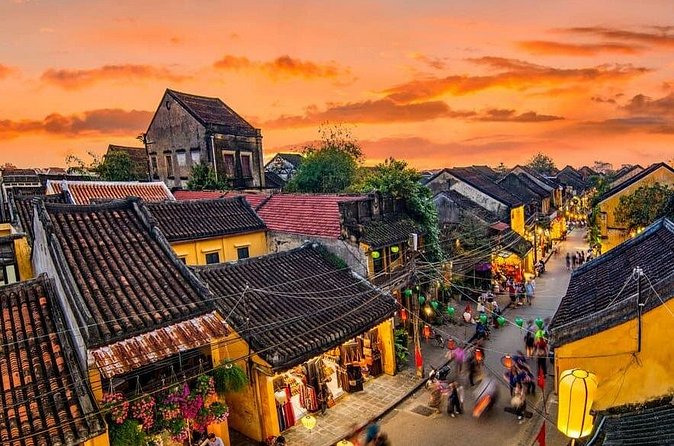
The Old House of Tan Ky (Tan Ky Old House) is built over 200 years ago by a Vietnamese merchant family, and it’s known for blending Vietnamese, Chinese, and Japanese architectural styles. This is the moment where Hoi An’s “international port” identity becomes visible in everyday design choices.
You’ll have around 30 minutes here. That’s usually enough time to:
- look at carved wooden beams,
- get a sense of how the house layout functioned for a merchant family,
- and notice the mix of influences without needing an architecture degree.
Why I like this stop for first-timers: it turns history into something you can walk through. Instead of just reading about trade and cultural exchange, you see it in doorways, structure, and details.
A consideration: old houses can mean you’ll do a bit of uneven floor walking and close-up viewing. Wear shoes you’re comfortable in, especially if the weather is warm or humid.
You can also read our reviews of more private tours in Hoi An





Stop 4: Traditional art performance theatre in air-conditioning
After the walking and ticketed sites, you get a breather at the Hoi An Traditional Art Performance Theatre. The theatre is air-conditioned with restrooms available, which is a real quality-of-life upgrade in the middle of a daytime tour.
You’ll spend about 45 minutes here, watching local dances, plays, songs, and folk games. If you’re lucky in the games, there may be some audience participation.
Why this stop matters: it changes the pace from “look and read” to “watch and listen.” You’ll get a sense of living culture, not only preserved heritage. Even if you don’t understand every song or story line, the performance gives you a broader feel for local traditions.
Practical note: the theatre is indoor, so bring a small layer if you tend to feel chilly in strong AC.
Stop 5: Hoi An Cloth Market for food, souvenirs, and real shopping time
The final stop is the Hoi An Cloth Market. This is where the tour transitions from heritage into current-day life. The market area includes sections for food, vegetables, souvenirs, silk, and leather goods.
You’ll get about 30 minutes. The guide typically leads a short walk first to introduce stall types and how the market is laid out. Then you’re free to browse.
This ending makes sense because it’s right before your tour drop-off. If you want to continue exploring, you’re already in the right place.
What to expect:
- you’ll be surrounded by practical items, not just tourist trinkets,
- the vibe is more active and shopping-oriented than the earlier stops,
- and you can use this time to pick up something small or grab a snack.
A drawback to keep in mind: because this stop is partly market time, it can feel less “sightseeing” and more “browsing.” If you hate shopping, go in with a plan—maybe just look for one souvenir category or focus on food.
About the guide: English clarity and real enthusiasm
One of the biggest reasons this kind of tour works is the guide. Based on recent feedback connected to this provider, the standout theme is that guides are engaging, friendly, and highly fluent in English, with strong history explanations.
Names that come up in support and guidance include Theim, described as passionate, caring, and very knowledgeable about history, and Mr. Fin, who has been credited with helping sort out travel issues and keeping things running smoothly.
You shouldn’t assume your guide will be the same person every time, but you can reasonably expect solid English and a guide who cares about making the day flow. That matters a lot in Hoi An, where the details—like what you’re looking at in an assembly hall or what the bridge symbolizes—are where the experience gets good.
If you want to get extra value, ask questions that go beyond the obvious:
- What does the dedication to Thien Hau mean for the local community?
- What architectural feature reflects the blending of cultures most clearly at Tan Ky?
Good answers make photos feel less random.
Walking time, weather, and what to pack
This is a “see a lot in a half-day” format, so you’ll be on your feet. The tour includes ticketed stops and one theatre stop, but you’ll still do enough walking to benefit from:
- comfortable shoes,
- sun protection (hat/sunscreen),
- and a small water plan even though bottled water is included.
Weather matters. This tour needs good weather, and if it’s canceled due to poor conditions, you’ll be offered another date or a full refund. That’s important in central Vietnam, where rain can change outdoor visibility and comfort fast.
One more small idea: since your last stop is a market, bring a little cash or a payment plan for optional snacks or drinks. Food and drinks are not included, and the tour notes that street food and refreshing drinks are available for purchase locally.
Who should book this Hoi An private tour
This tour is a great fit if you:
- want a structured first-time overview of Hoi An’s Old Town highlights,
- prefer a guided plan but still like getting free time to stroll and take photos,
- care about culture and context, not only snapshots,
- and want the convenience of included entrance fees and an English guide.
It’s also ideal if you’re traveling with family members who can handle moderate walking. The tour is listed as “most travelers can participate,” and it has a mix of indoor and outdoor stops.
If you’re the kind of traveler who hates schedules and wants to spend hours in a single place, you may find the stop-and-go rhythm a little tight. In that case, pairing this with extra independent time in Hoi An Ancient Town is the smart move.
Should you book it? My call
If you want a dependable, guided half-day that covers the key sights—Japanese Covered Bridge, Phuc Kien Assembly Hall, Tan Ky Old House, a traditional performance, and a market finish—this is a strong option. The money feels reasonable because entrance fees and core guidance are built into the price.
I’d especially recommend it for travelers who value clarity and history explanations delivered in fluent English. And if you like finishing with market time, the drop-off outside Hoi An Market is exactly where you’ll want to be.
If you’re on a very tight schedule, this tour makes sense. If you hate shopping or you want long quiet time in a single site, you’ll get more out of it if you treat the market stop as optional browsing and plan extra free hours elsewhere in the Old Town.
FAQ
How long is the Hoi An City Tour (Private Tour)?
It lasts about 4 hours.
What does the tour cost?
The price is $50.00 per person.
What’s included in the price?
You get entrance fees for the Old Town stops listed in the itinerary, bottled water, and an English-speaking tour guide.
What isn’t included?
Personal expenses and any services not mentioned are not included.
Where do I meet the tour group?
The start meeting point is at Chùa Pháp Bảo on Đ. Phan Chu Trinh, Phường Minh An, Hội An.
Where does the tour end?
You’ll be dropped off outside Hoi An Market at 21 Hoàng Diệu, Cẩm Châu, Hội An, and you can return to your hotel on your own.
Is there a maximum group size?
Yes. This activity has a maximum of 15 travelers.
What kind of weather does the tour require?
The tour requires good weather. If it’s canceled due to poor weather, you’ll be offered another date or a full refund.