REVIEW · HOI AN
Hoi An Ancient Town Tour: Japanese Covered Bridge & Old House from Hoi An
Book on Viator →Operated by TripGuru · Bookable on Viator
Hoi An wakes up fast, and so does this tour. You’ll start with a colorful Hoi An Market run by locals, then move into the UNESCO Ancient Town core for architecture and craft-focused stops. The day is built for walking, with an English-speaking guide and a small group size that keeps things relaxed.
I really like how the tour mixes big-picture sights with hands-on culture. I enjoy the Cantonese Assembly Hall explanation (and the photo help), and I also like that you get to see ceramic work up close at a traditional pottery spot. The main drawback to plan around: the Japanese Covered Bridge can be under renovation, with views limited by construction scaffolding.
In This Review
- Key Highlights You’ll Actually Care About
- A Morning Walk Through Hoi An Ancient Town
- Stop 1: Hoi An Market for That First Hit of Local Life
- Cantonese Assembly Hall + Pottery Museum: Architecture With Explanation
- Japanese Covered Bridge Photo Stop, and the Renovation Reality
- Handicraft Tour for Traditional Trades and Souvenir Sense
- Price and Logistics: What You’re Really Getting
- Who Should Book This Tour?
- Should You Book This Hoi An Ancient Town Tour?
- FAQ
- What time does the Hoi An Ancient Town Tour start?
- How long is the tour?
- Is pickup included?
- What’s included in the tour price?
- Are entrance fees included?
- What are the main stops on the tour?
- What group size should I expect?
- Do I need good weather for the tour?
Key Highlights You’ll Actually Care About
- Small group size (up to 9) keeps the pace friendly and questions easy
- 8:00 am start helps you catch the market while stalls are still fresh and active
- Assembly hall photo guidance means you’re not just sightseeing blindly
- Pottery museum stop with locals at work gives context beyond souvenir shopping
- Handicraft tour connects traditional trades to what you’ll see in the shops
A Morning Walk Through Hoi An Ancient Town
This is a 6-hour Hoi An Ancient Town tour designed to get your bearings quickly. You’ll be picked up from central Hoi An, then you’ll shift into walking mode for the best photo and people-watching parts. Since the tour is small (max 9 people), it’s easier to keep up without feeling rushed.
What makes it feel worthwhile is the balance. You get an early local market, plus cultural stops in traditional spaces like assembly halls, then a craft angle through pottery and other handicrafts. It’s not just a checklist of icons.
One more practical point: this is very morning-timed. If you hate early starts, adjust your expectations. If you like beating the crowds and getting the light right for photos, you’ll probably appreciate it.
You can also read our reviews of more tours and experiences in Hoi An.



Stop 1: Hoi An Market for That First Hit of Local Life

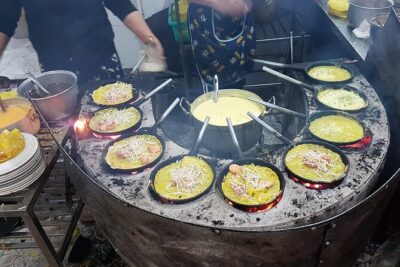
You begin at Hoi An Market, where locals wake early, so the stalls are already stocked. This is the kind of stop that makes the whole trip make more sense. Instead of seeing Hoi An as just a postcard, you see the daily rhythm: fruit, vegetables, and seafood arriving and getting prepared.
Why I like this first: it’s a fast way to understand what the town values and what people buy for real life. And it’s also an easy warm-up if you’re still getting used to Hoi An’s streets, bikes, and lanes.
A drawback worth knowing: market stops can feel short if you’re a slow browser, and the admission ticket for the market isn’t included. If you’re only interested in the “famous sites,” you may want to treat the market like a cultural intro rather than a major attraction.
Cantonese Assembly Hall + Pottery Museum: Architecture With Explanation
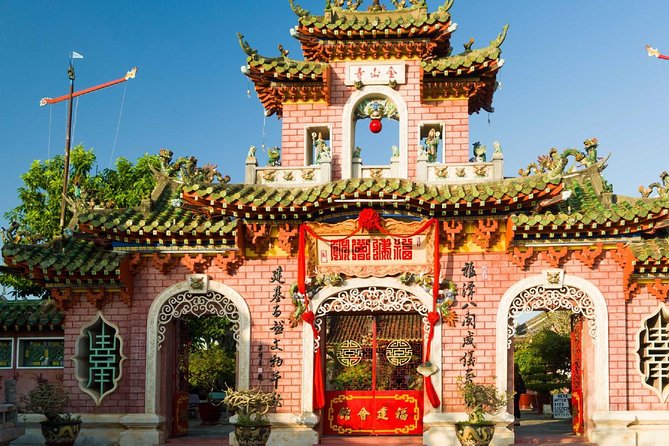
Next you’ll visit an assembly hall tied to Hoi An’s mix of Chinese and Japanese heritage. These buildings are elaborate, decorated in a traditional style, and they’re exactly the sort of place where a guide makes a difference. Your guide explains the history and helps you capture better photos, so you’re not only pointing your camera and hoping.
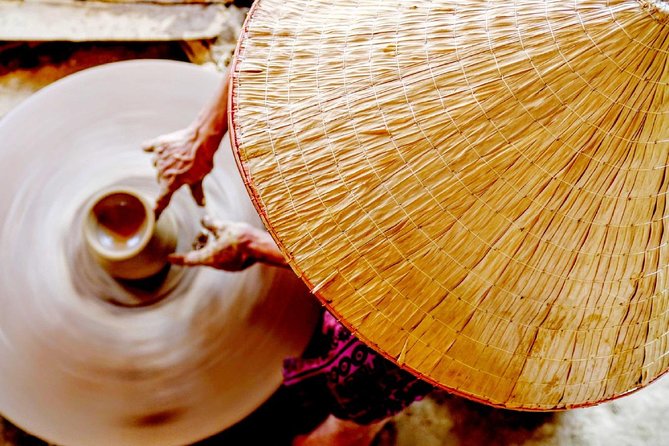
After that, the tour shifts to ceramics via a traditional pottery museum. The idea here is simple: learn why Hoi An became known for pottery, then watch locals working. Seeing the process in action helps you understand what you’re looking at when you later see pottery in shops.
Two things I’d flag for your planning:
- Entrance fees aren’t included for these stops, so expect to pay on site if required.
- This segment is very “culture and craft” focused, not hands-on making. If you were hoping to literally create something, you might find the pottery section more observational than participatory.
Still, if you like learning what’s behind the souvenirs, this part earns its place.
Japanese Covered Bridge Photo Stop, and the Renovation Reality
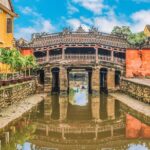
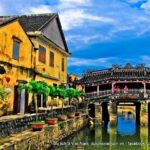
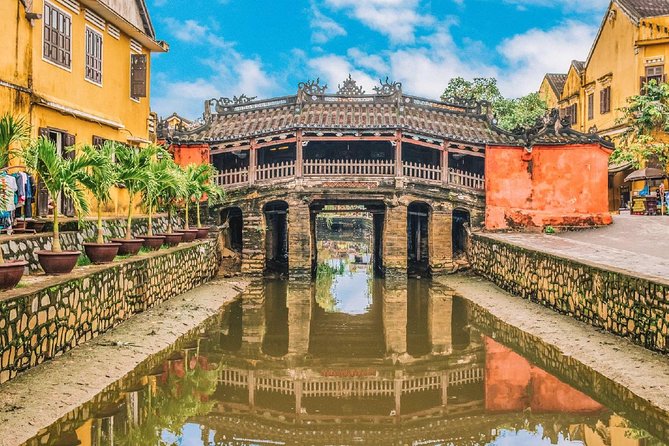
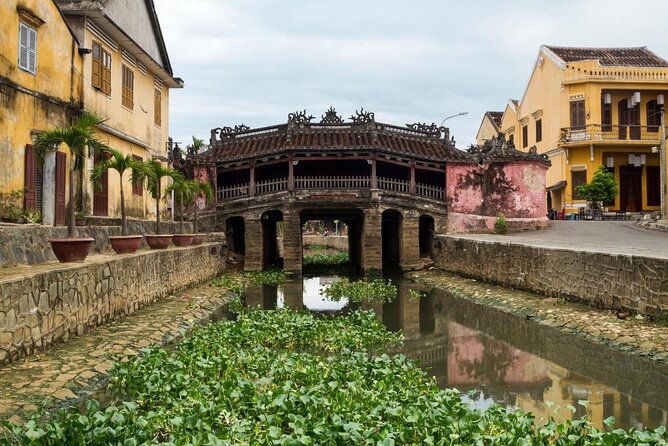
Then comes the iconic Japanese Covered Bridge, the pink spot people photograph for a reason. The bridge has a story tied to the Japanese occupation and once worked as a way to divide parts of the city. Today, it’s loved by locals and visitors as a symbol and a meeting point.
Now for the part you should take seriously before you go: the bridge can be under renovation. The experience description includes the bridge as a highlight, but recent feedback points to construction wrapping that can limit what you can see. In some cases, it’s possible to pass through, but the overall view can feel incomplete—more “construction framing” than “full postcard bridge.”
How I’d handle this as a practical visitor:
- Treat the bridge stop as a photo attempt, not a guaranteed perfect view.
- If you’re coming mainly for the bridge, arrive with a flexible mindset.
- Keep your expectations anchored on the rest of the morning. Even when the bridge is covered, the assembly hall and pottery stops still deliver.
That said, even a partially obstructed bridge can still be worth your time for photos of details, and for getting the location into your mental map. Hoi An is small enough that you can also do a quick self-walk afterward if the bridge view disappoints you.
Handicraft Tour for Traditional Trades and Souvenir Sense
The tour wraps the morning with a handicraft tour focused on traditional trades. This is where the tour stops feeling like museum time and starts feeling more like learning how local life ties into what’s sold in the shops.
You’ll pick up facts from your guide as you go, then you’ll have time to shop if you want. The craft angle matters because it helps you buy with context. Instead of grabbing the first pretty item, you can ask why it’s made a certain way, what materials are used, and what the trade represents in Hoi An.
There’s no guarantee you’ll find the exact item you want at every shop. But in a place like Hoi An, shopping is part of the culture, and this tour at least gives you a guided framework for what you’re seeing.
A small consideration: admission fees aren’t included for some related areas (and the tour’s overall pricing doesn’t include lunch or personal expenses). If you plan to shop, set a budget ahead of time so the tour ends up feeling fun rather than stressful.



Price and Logistics: What You’re Really Getting
This tour is listed at $0.00 per person, with pickup and drop-off from central Hoi An, an air-conditioned vehicle, an English-speaking tour guide, and bottled water. Even when a tour is free, I still look at value the same way: do you get time on meaningful stops, or is it mostly a long ride to places you’d already find yourself?
Here, you do get a structured path with a guide at several key points:
- A market you’ll likely enjoy more with local context
- An assembly hall where photo help and history add up
- A pottery museum with locals working
- A bridge photo stop
- A handicraft tour that connects learning to shopping
So the “free” part isn’t just marketing. It’s about saving you from building the route alone and from missing the explanations.
The main costs to factor in are the entrance fees that are listed as not included for multiple areas (and also lunch isn’t included). Depending on what you choose to enter, you might have extra small payments along the way. I’d bring some cash or plan card access just in case.
If you’re trying to keep your day simple: eat before the tour if that works for you, or plan on lunch after. This tour is built for morning sites.
Finally, logistics: it starts at 8:00 am and runs about 6 hours. With pickup and a small group, you won’t spend the day lost in transport puzzles, which is a huge win for a day trip.
Who Should Book This Tour?
I think this tour fits best if you want:
- A guided way into Hoi An beyond walking the streets alone
- Photos with help at the assembly hall and bridge areas
- A craft and pottery angle, not only architecture snapshots
- A small-group pace (max 9 people) that feels manageable
It may feel less ideal if your top priority is a perfect, unobstructed view of the Japanese Covered Bridge. Renovation can cut into the experience, and the bridge is the thing that seems most vulnerable to that issue.
Should You Book This Hoi An Ancient Town Tour?
If you’re in Hoi An for a short time and you want a guided, structured morning that combines market life, traditional architecture, pottery context, and handicraft shopping, I’d say yes—especially at a listed $0.00 price. The guided explanations and the small group size make it easier to get value from your limited time.
Just go in with one key mindset: the Japanese Covered Bridge is a highlight, but it’s not always in full view due to possible renovation. If you can accept that and still enjoy the surrounding culture stops, this tour is a solid way to understand Hoi An fast.
FAQ
What time does the Hoi An Ancient Town Tour start?
It starts at 8:00 am.
How long is the tour?
The duration is about 6 hours.
Is pickup included?
Yes. You get pick-up and drop-off from central Hoi An.
What’s included in the tour price?
Included are an air-conditioned vehicle, an English-speaking tour guide, and bottled water.
Are entrance fees included?
No. Entrance fees are not included, including fees for places like Hoi An Old Town and other listed sites.
What are the main stops on the tour?
The tour covers Hoi An Market, a Cantonese Assembly Hall, a pottery museum, the Japanese Covered Bridge, and a handicraft tour.
What group size should I expect?
The tour has a maximum of 9 travelers.
Do I need good weather for the tour?
Yes. The experience requires good weather, and if it’s canceled due to weather, you’ll be offered another date or a full refund.