
REVIEW · HOI AN
Hoi An Ancient Town Walking Tour with a Local
Book on Viator →Operated by Momo Travel · Bookable on Viator
Hoi An tells its story best on foot. This guided walk strings together Japanese, Cantonese, and Vietnamese influences across key UNESCO stops.
I especially like how the route mixes famous sights with quieter, character-filled interiors, like the Quan Thang Ancient House. I also like the human pace: you’re guided from place to place, and the small break with herbal tea helps the whole afternoon feel relaxed.
One consideration: the Hoi An UNESCO entrance ticket is not included, and it’s listed separately (120,000 VND per person), so factor that in before you go.
In This Review
- Key highlights at a glance
- Why this Hoi An walking tour feels worth it
- Price and what you’re really paying for
- Before you go: shoes, weather, and your best start point
- Japanese Culture Gallery: setting context before you hit the streets
- Japanese Covered Bridge: the iconic view with better meaning
- Cantonese Assembly Hall: where community identity shows up in design
- Quan Thang Ancient House: imagining merchant life, not just sightseeing
- Art performance theatre: culture you can hear and watch
- Central Market finish: where you test flavors and follow local tips
- Guide quality is the real differentiator
- Value check: does $9.89 + ticket still make sense?
- Who should book this walk (and who might skip it)
- Should you book this Hoi An Ancient Town walking tour?
- FAQ
- How long is the Hoi An Ancient Town walking tour?
- What’s included in the tour price?
- Is the Hoi An UNESCO entrance ticket included?
- What stops are included on the walking route?
- How big is the group?
- What happens if weather is poor?
Key highlights at a glance

- Japanese Culture Gallery first gives context fast, including why the Japanese were in Hoi An
- Japanese Covered Bridge is more than a photo stop, with story and symbolism as you walk through
- Cantonese Assembly Hall shows how Chinese communities shaped architecture and community life
- Quan Thang Ancient House helps you picture everyday merchant-family living
- Traditional Art Performance Theatre adds culture beyond the streets (music/dance/theatre style)
- Central Market finish gives time to snack, shop, and follow your guide’s practical picks
Why this Hoi An walking tour feels worth it
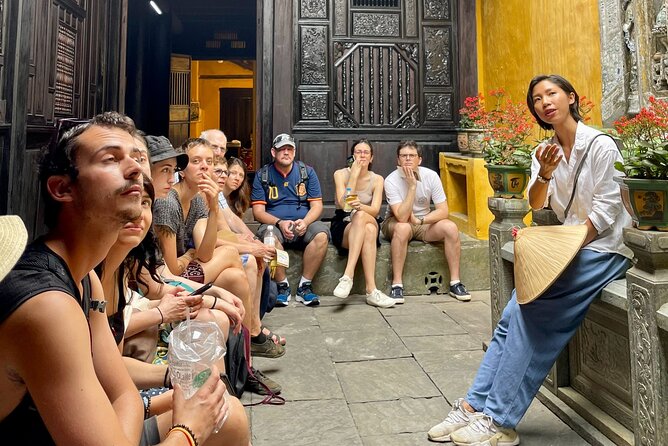
This is the kind of tour you book when you want more than a map and a stack of landmarks. The value here is the connections—how a town like Hoi An becomes itself when multiple cultures overlap, trade, and leave behind buildings you can still walk into.
I like that it’s set up as a smooth loop: you start with background, then you move into the architecture, then you finish with the market where daily life happens. With a maximum of 10 travelers, you’re less likely to feel like you’re being pushed along by a crowd. It’s also short enough (about 3 hours) that you can still do other plans afterward without feeling trapped.
You can also read our reviews of more walking tours in Hoi An



Price and what you’re really paying for
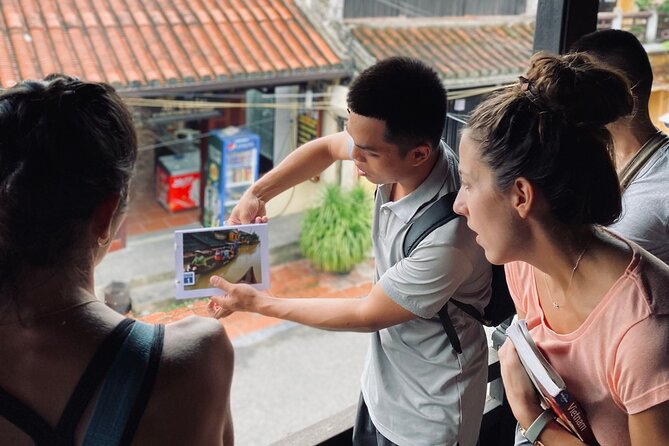
The base price is $9.89 per person, which is low for a 3-hour guided route that includes multiple structured stops. You’re not just getting a chat on the sidewalk—you’re moving through specific heritage sites with planned time at each one.
The one cost to plan around is the UNESCO entrance ticket (120,000 VND per person), which is explicitly not included. In practice, that means your final spend will be base tour price plus the site ticket. Even so, the math often still works well because you’re covering several major buildings in one organized walk, instead of doing them one by one and paying for time and tickets separately.
Also check timing expectations: the schedule lists time at each stop (about 20–35 minutes each), so this isn’t a slow “wander at will” kind of tour. If you like lots of free-strolling, you’ll still get some time at the end in the market, but the core is guided and paced.
Before you go: shoes, weather, and your best start point
Plan for walking. The route is a true walking tour with multiple stops, including visits inside historic buildings. Wear comfortable shoes—you’ll be on your feet more than you think once you account for turning corners, stairs, and waiting for the group.
Weather matters. The experience notes that it requires good weather, so if conditions are poor, your tour may be moved or refunded. If you’re traveling in rainy season, it’s smart to keep a bit of flexibility in your day.
For meeting points: you start at 125 Đ. Phan Chu Trinh, Phường Minh An, Hội An and end at Hoi An Market, 19 Trần Phú, Cẩm Châu, Hội An. That end point is handy. You’ll finish where you can keep eating and shopping without needing another transport plan.
Japanese Culture Gallery: setting context before you hit the streets
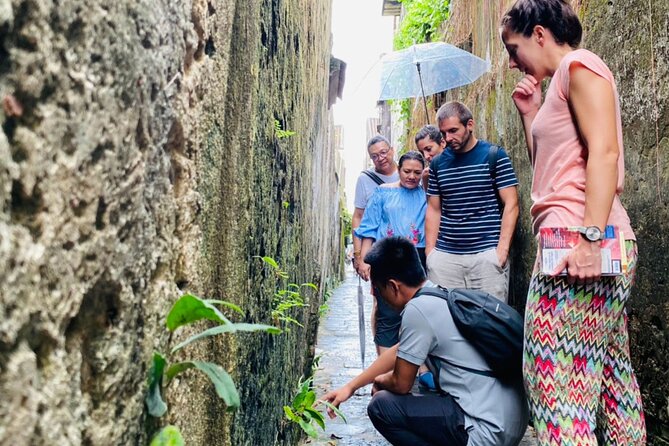
The first stop is the Nhà trưng bày Văn hóa Nhật Bản (Japanese Culture Gallery). This is a smart opener because it gives you a quick timeline of Hoi An and explains why the Japanese were here. Without that context, the later Japanese-linked sights can feel like isolated landmarks. With it, they connect to a story of trade, community, and cultural exchange.
Plan about 25 minutes here. Admission is listed as not included, so again, keep an eye on any separate ticketing that applies once you’re onsite.
This stop is also where you learn the “why” behind the “what.” You’ll be better at spotting details later because you’ll understand what to look for: how Japanese influence shows up, what it meant for merchants and residents, and how that era fits into the wider Hoi An timeline.
Japanese Covered Bridge: the iconic view with better meaning
Next comes the Japanese Covered Bridge. This is one of the most recognizable spots in town, and yes, you can expect classic photo angles.
What makes it more satisfying on a guided route is the way the bridge functions as a symbol—tying back to the Japanese presence you just learned about. You’ll spend about 20 minutes here. Admission is also listed as not included, but the bridge itself is often easy to enjoy even if you’re just passing through; the key is using that short time to understand what the bridge represents.
Pro tip: go in with a little patience. Even on a good day, people gather for pictures. If you’re taking photos, position yourself, then listen for the story. The meaning tends to stick better than the pose.






Cantonese Assembly Hall: where community identity shows up in design
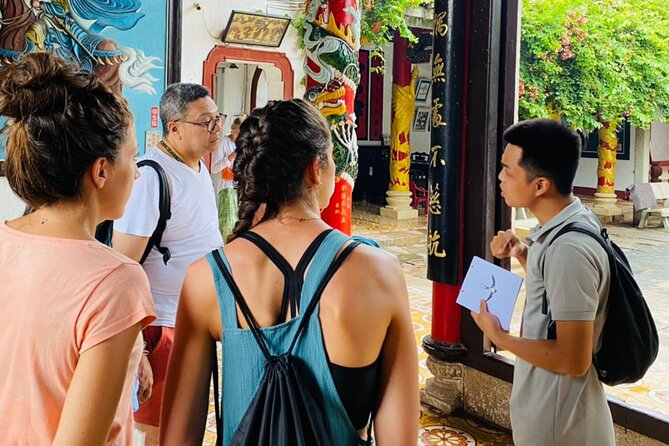
The Cantonese Assembly Hall is a visual punch. It’s decorated and designed to communicate community pride and social organization. You spend about 25 minutes here, which feels like the right amount of time: long enough to look closely, not so long that you’re stuck reading details for an hour straight.
The benefit of the guided stop is that you don’t just admire the building—you understand its role. Cantonese culture influenced Hoi An’s social life through shared language, trade connections, and community organization. When you hear that framing while you’re standing in the space, the building stops being just “pretty architecture.”
Admission is listed as not included. If you’re budgeting, remember that the UNESCO entrance ticket is separate from the tour price, and the site costs can vary depending on what you’re entering that day.
Quan Thang Ancient House: imagining merchant life, not just sightseeing
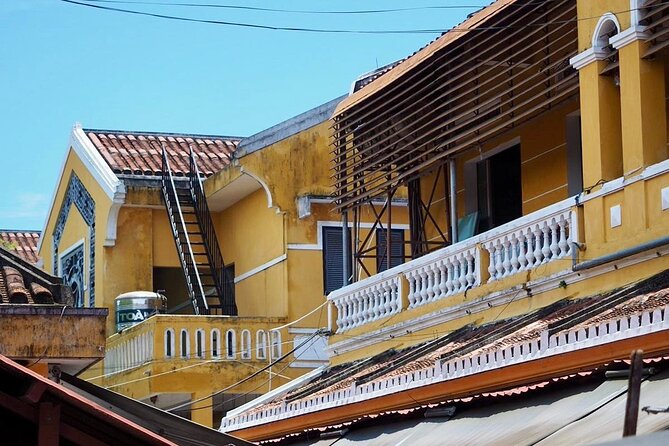
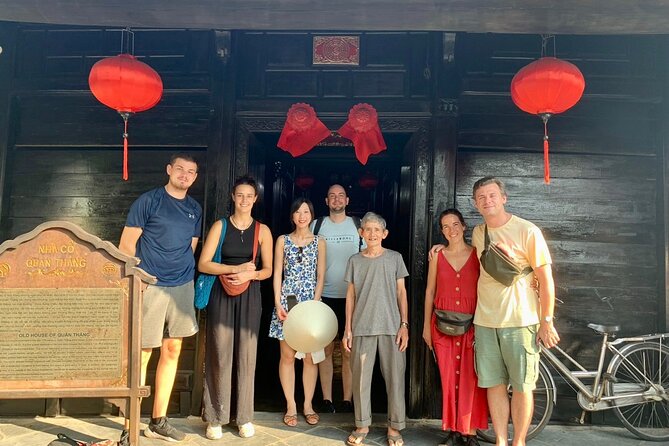
This is one of the best stops on the route if you want to picture how people actually lived. The Quan Thang Ancient House is a well-preserved structure connected to a prosperous merchant family. You’ll have about 25 minutes here.
The point isn’t only the exterior look. It’s what the house teaches you about household routines and family structure—especially in a trading town where wealth came from commerce. A guided route helps you notice layout, transitions between spaces, and the kind of practical design that kept daily life running.
Admission is listed as not included. Also, this stop is often where guides share extra story beats that make the architecture feel human. Based on guide experiences shared by past guests, you may hear details about how the house survived floods and how families adapted across generations. Even if that specific story doesn’t land the same way every time, the house itself is built for that kind of conversation.
Art performance theatre: culture you can hear and watch
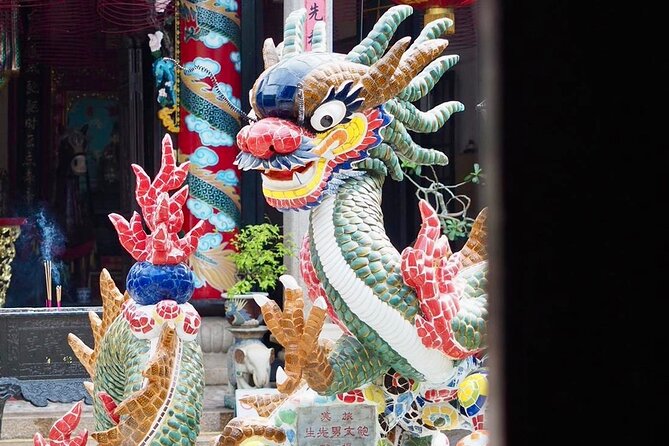
After the buildings, the tour shifts to performance at the Hoi An Traditional Art Performance Theatre, with about 35 minutes scheduled. This is where you get traditional music, dance, and theatrical styles in a structured format.
Admission is listed as not included, so check whether the UNESCO ticket covers what you need for this stop in your case. The good news is that even a short performance segment can change how you interpret the rest of the day. You stop thinking of Hoi An as only “old streets” and start seeing it as a living culture.
If you’re the type who gets bored by museum-like settings, this part can still work because it’s time-bound and sensory. Just remember: performances can be brief and vary by schedule, so keep your expectations realistic.
Central Market finish: where you test flavors and follow local tips
The tour ends at Hoi An Market, with about 35 minutes. This is where the experience turns practical. You’ll go from stall to stall, with time to browse handicrafts, local snacks, and souvenirs.
The tour highlights include stopping for shopping and trying delicacies. That means you can treat the market like your personal wrap-up: pick a snack, compare a couple stalls, and buy something small if you want a memory you’ll actually use.
Two things make this final stop work well:
- Your guide’s context has built confidence. You can ask smarter questions because you know what you’re seeing.
- You’re not stranded. Since the tour ends here, you can keep going right after the group finishes.
If you have dietary preferences, this is also your moment to be clear. You’ll have enough time to choose alternatives without feeling rushed.
Guide quality is the real differentiator
The itinerary is solid, but the guide makes it feel personal. This tour’s reviews strongly point to a pattern: friendly guides who keep the group moving at a good pace and explain details in clear English.
You might meet guides such as Kun, Trang, Nguyen, Anh, June, Karla, Minh, or Sanh. While you can’t predict which name you’ll get, it’s useful to know the tour is staffed with people praised for making the walk feel fun—often with small humor, practical tips, and a clear way of connecting Hoi An’s architecture to real life.
Practical bonus: many guides in this route tend to give end-of-tour recommendations—places to eat, shops to check, and even suggestions for planning something like a lantern boat ride later in your stay. That kind of advice is gold because it saves you time when you’re tired and hungry.
Value check: does $9.89 + ticket still make sense?
Let’s look at what you’re getting:
- A structured 3-hour walk through multiple UNESCO-linked stops
- Guided time at major sites (Japanese Culture Gallery, Japanese Covered Bridge, Cantonese Assembly Hall, Quan Thang Ancient House, theatre performance, and market)
- Herbal tea (and/or coffee) included
- A small group size (max 10)
Now add the one big extra cost: the 120,000 VND UNESCO entrance ticket per person. Once you add that, the price becomes less of a bargain-only argument and more of an efficiency argument: you pay for guidance and for accessing several important places without having to plan each one alone.
If you’re doing Hoi An for the first time, this format is hard to beat. It gives you orientation fast, and it helps you understand which sights are connected by theme. If you already know the history and just want free time to wander, you might feel guided time is less necessary. But if you’re aiming for meaning, the value holds.
Who should book this walk (and who might skip it)
This tour fits best if you:
- Want a fast, guided orientation to Hoi An’s UNESCO area
- Like history that connects to architecture and daily life
- Appreciate a short, well-paced afternoon plan
- Want market time without having to figure out where to go alone
You might consider a different style of tour if you:
- Hate structured schedules and prefer solo wandering for hours
- Are allergic to performance-related stops (there’s a theatre segment)
- Want absolutely no separate site costs, since the UNESCO entrance ticket isn’t included
Should you book this Hoi An Ancient Town walking tour?
If it’s your first visit to Hoi An, I’d book it. The combo of context at the Japanese Culture Gallery, meaningful stops inside key buildings, a short performance window, and a market finish is a practical way to get the story and the street life in one go.
Book it if you like the idea of learning while walking, and if you’re okay with one extra ticket cost on top of the $9.89 price. Skip it only if you strongly prefer unguided time or you don’t want any formal heritage stops.
If you do book: wear comfy shoes, plan for separate UNESCO access costs, and arrive ready to listen. You’ll leave with a clearer sense of how Hoi An’s Japanese and Cantonese influences show up in real buildings, not just on postcards.
FAQ
How long is the Hoi An Ancient Town walking tour?
It runs for about 3 hours.
What’s included in the tour price?
Coffee and/or tea is included, including a special herbal tea.
Is the Hoi An UNESCO entrance ticket included?
No. The UNESCO entrance ticket is listed as not included, at 120,000 VND per person.
What stops are included on the walking route?
The tour includes the Japanese Culture Gallery, Japanese Covered Bridge, Cantonese Assembly Hall, Quan Thang Ancient House, Hoi An Traditional Art Performance Theatre, and Hoi An Market.
How big is the group?
The tour has a maximum of 10 travelers.
What happens if weather is poor?
The experience requires good weather. If it’s canceled due to poor weather, you’ll be offered a different date or a full refund.