REVIEW · HOI AN
Vietnamese Culture and Coffee Making Class
Book on Viator →Operated by Hoian Handicraft Tours · Bookable on Viator
Vietnamese coffee has a way of sticking with you. This class in Hoi An is a hands-on way to learn the phin filter method and the big story of how Vietnamese coffee became its own thing. I like that you’re not just tasting—you’re actively brewing.
The best part for me is making multiple styles back to back, from egg coffee to coconut coffee, with an English-speaking guide who keeps everything clear and fun. One small catch: the drinks are seriously strong, so pace yourself, and the 2 hours may feel long if you’re not in a coffee mood.
In This Review
- Key points to know before you go
- Hoi An’s coffee class: what you’re really buying for $15.39
- Vietnamese coffee culture: why these drinks are a “system,” not just a beverage
- The class flow: five coffees in about two hours
- Brewing basics with the phin filter (and why it changes everything)
- The five cups: what makes each one memorable
- Traditional black coffee (your baseline)
- Vietnamese happy white coffee
- Hue Imperial salt coffee
- Hoi An fresh coconut coffee (a crowd favorite)
- Ha Noi capital egg coffee (the famous one)
- The instructor experience: humor, patience, and English clarity
- What you take home: phin filter plus recipes
- Price and value: why this feels fair for what you get
- Logistics in Hoi An: how to set yourself up for an easy start
- Who should book this (and who might skip it)
- Should you book this Vietnamese culture and coffee making class?
- FAQ
- What is the location for the meeting point?
- Is hotel pickup or drop-off included?
- How long is the coffee making class?
- How much does the experience cost?
- What coffees will I make during the workshop?
- What’s included in the price?
- Do I receive anything to take home besides the filter?
- Is there an English-speaking guide?
- Is the group small?
- What happens if the weather is poor?
Key points to know before you go
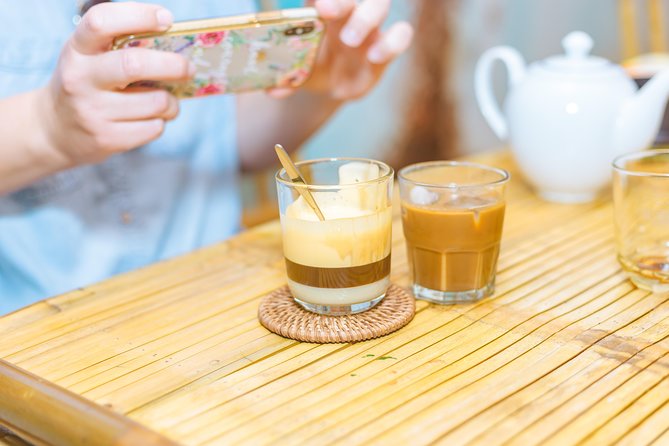
- Five coffees, one workshop: you’ll make and drink five different Vietnamese styles in about 2 hours.
- Phin filter included: you take home a Vietnamese filter so you can repeat the method later.
- Coffee culture plus practical steps: expect history and technique, not just pouring samples.
- Small groups (max 10): easier questions, quicker help at your station.
- Family-run energy: many people highlight humor and friendly banter from the hosts.
- Caffeine factor: the coffee is described as very strong—plan to slow down.
Hoi An’s coffee class: what you’re really buying for $15.39
In Hoi An, this is one of the simplest “do something local” activities you can add to a travel day. For $15.39 per person, you get a full coffee-making session with an English-speaking instructor/guide, plus tools and the filter you need to keep going at home.
The vibe is practical and social, and it’s built for small groups—up to 10 people. If you like learning by doing, you’ll get more out of this than you would from a quick tasting that moves on before your questions catch up.
One important logistics note: there’s no hotel pickup, so you’ll want to get yourself to the meeting point at 10C Bà Triệu, Phường Cẩm Phổ, Hội An. The good news is that it’s near public transportation and you’ll have a mobile ticket.
You can also read our reviews of more tours and experiences in Hoi An
Vietnamese coffee culture: why these drinks are a “system,” not just a beverage
Vietnamese coffee isn’t simply coffee with a local name. The class frames it as culture—how people drink it, how it became what it is, and why the brewing style matters.
You’ll learn about different traditional types of Vietnamese coffee and how French colonization shaped Vietnamese coffee into the form people recognize today. That context helps a lot, because once you understand the “why,” the recipes stop feeling random and start feeling logical.
You’ll also see how Vietnamese coffee and Vietnamese daily life connect. Instead of a generic history talk, the session ties culture to the method you’re using in real time—especially the iconic phin filter.
The class flow: five coffees in about two hours
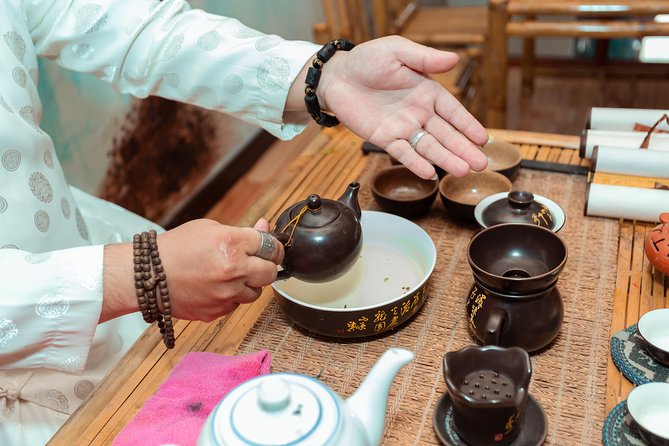
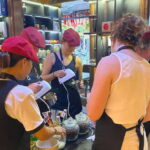
The workshop is built around making several cups in sequence. The stated duration is about 2 hours, and the format is hands-on enough that you’ll be involved throughout—not standing back while everything happens around you.
Here’s what you should expect you’ll make (and taste) during the session:
- Real traditional black coffee using a Vietnamese filter
- Vietnamese happy white coffee
- Hue Imperial salt coffee
- Hoi An fresh coconut coffee
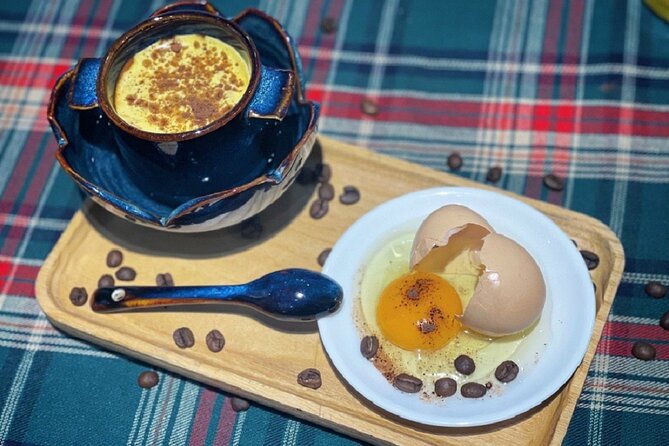
- Ha Noi capital egg coffee
The structure matters because each drink is a little different in feel and ingredient direction. You’re learning how Vietnamese coffee varies by style, region, and local preferences—not just how to pull one “perfect shot.”
Brewing basics with the phin filter (and why it changes everything)
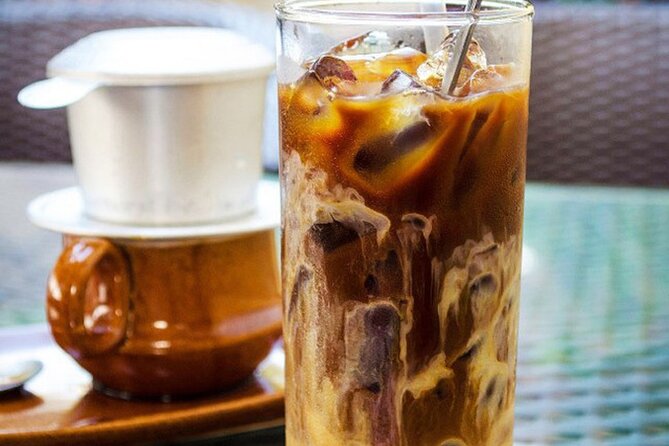
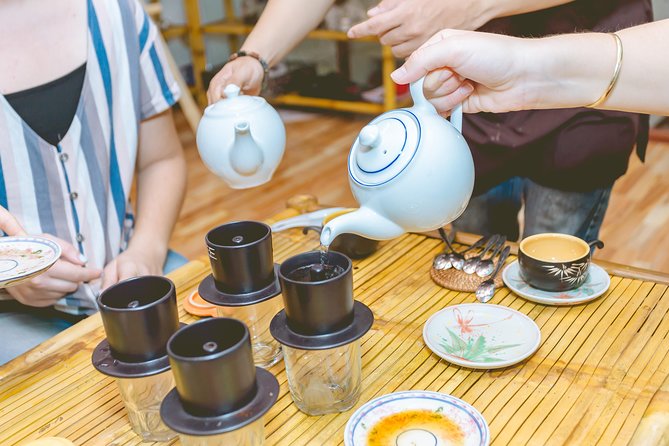
A big reason this class gets such strong marks is that it focuses on the tool. The Vietnamese filter (the phin) isn’t a side detail—it’s the core technique you practice first.
Even if you’ve seen a phin filter before, you’ll likely appreciate having someone guide your hands through how it’s set up and how the brewing process works. And since you take home a Vietnamese filter after the class, you can practice without hunting for the right equipment later.
In practical terms, think of this as learning one reliable system. Once you understand the basics of brewing through the phin, you’ll be better able to follow the recipes you receive and recreate the drinks at home.
The five cups: what makes each one memorable

If you love coffee, this is where the fun is. People consistently point to the variety—making multiple Vietnamese styles rather than just one.
You can also read our reviews of more tours and experiences in Hoi An

Traditional black coffee (your baseline)
Starting with traditional black coffee by Vietnamese filter helps you learn what “plain” tastes like in this brewing style. It’s the baseline that makes the other coffees more interesting, because you can actually notice the differences instead of just guessing.
Vietnamese happy white coffee
This is one of the signature styles in Vietnamese coffee culture. You’ll follow the class method to assemble and brew it, and you’ll leave understanding what makes the “white” version distinct in both flavor direction and presentation.
Hue Imperial salt coffee
Salt coffee sounds unusual if you’re used to sweet-only coffee culture. In practice, it’s one more example of how Vietnamese coffee isn’t afraid of balancing flavors. You’ll learn how this style is put together, so you can see the logic when you taste it.
Hoi An fresh coconut coffee (a crowd favorite)
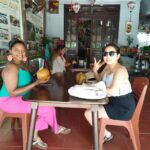
Coconut coffee gets singled out again and again as a favorite. The reason it works is simple: it’s flavorful and a little different from typical café coffee. In the class format, you’ll get to make it yourself, so it lands as something you can repeat, not just a drink you tried.
If you want a “wow” cup that still feels approachable, this is often the one people remember most after the session.
Ha Noi capital egg coffee (the famous one)
Egg coffee is the headline style for many people—rich, classic, and very Vietnamese. You’ll make it in the workshop and learn how the style comes together, which is a big part of why people call the experience eggcellent.
If you’re curious but nervous about trying it, doing it hands-on tends to make it less intimidating. You’re not just ordering off a menu—you’re building it step by step.
The instructor experience: humor, patience, and English clarity

This class is run by Hoian Handicraft Tours, but the on-the-ground hosts and staff are what make it feel personal. A lot of feedback highlights how family-run the workshop feels, with hosts who explain patiently and keep things light.
One name that comes up in the feedback is Linh, mentioned as friendly and funny. That matters because coffee technique isn’t hard, but people learn best when the instruction matches their pace.
Also, the workshop includes coffee-making tools and an English-speaking guide/instructor, so you’re not stuck guessing what you’re doing. If you can follow a demonstration, you can do this class.
What you take home: phin filter plus recipes
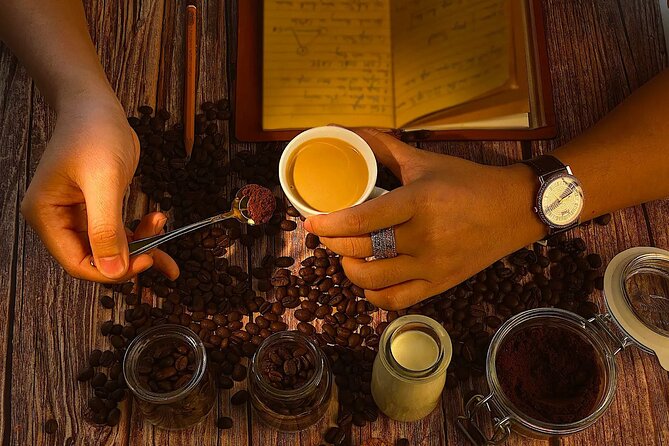
This is not a “watch and leave” experience. You’ll have a Vietnamese filter (phin) to take home, and you’ll have what you need to practice the method later.
Many people also note that they receive recipes to recreate the coffees at home. Between the recipes and the filter, you’re leaving with something tangible: you can keep the flavor experience going after your Hoi An days.
And yes, there’s also mention of a gift at the end of the class, which adds extra value beyond the coffee lesson itself.
Price and value: why this feels fair for what you get
At $15.39, you’re paying for:
- A guided, English-speaking workshop
- Coffee-making tools for the session
- A phin filter to take home
- Five cups you make and drink in about 2 hours
That’s a lot of included value for the cost. In many places, you’d pay a similar amount for a guided tasting where you only sample, not make. Here, you’re learning technique and leaving with equipment and recipes.
Small group size (maximum 10) also helps. It means you’re less likely to get ignored while the group moves on, and it keeps the experience interactive.
Logistics in Hoi An: how to set yourself up for an easy start
Because there’s no hotel pickup, you should plan your route to the meeting point at 10C Bà Triệu, Phường Cẩm Phổ, Hội An. The start and end are back at the meeting point.
A mobile ticket is used, and you should receive confirmation within 48 hours of booking, based on availability. If your schedule is tight, don’t leave this to the last minute.
Also, the experience requires good weather. If it’s canceled due to poor weather, you’re offered a different date or a full refund. That’s worth keeping in mind if you’re visiting during a rainy stretch.
Who should book this (and who might skip it)
You should book if:
- You love coffee and want to understand Vietnamese methods, not just taste
- You want a hands-on, low-effort activity that still feels “local”
- You’re traveling solo or as a couple and like talking with small groups
- You want to take a skill home with the phin filter
You might reconsider if:
- You don’t handle caffeine well (the coffee is repeatedly described as very strong)
- You’re sensitive to longer sessions; some feedback says 2 hours could feel long for certain tastes
- You’re hoping for a quiet, ultra-serious setting. One comment calls out that humor may not land for everyone
Should you book this Vietnamese culture and coffee making class?
If you want a meaningful Hoi An experience that doesn’t require special energy, I’d book it—especially if you’re a coffee person. The value is strong: you’re making five coffees, getting guided instruction, and leaving with a phin filter to recreate the method.
Just be smart about expectations. Pace yourself because it’s described as very strong, and plan to enjoy the class rather than trying to race through it. If you want a coffee souvenir that’s more than a postcard, this one has real staying power.
FAQ
What is the location for the meeting point?
The meeting point is listed as 10C Bà Triệu, Phường Cẩm Phổ, Hội An, Quảng Nam 560000, Vietnam.
Is hotel pickup or drop-off included?
No. Hotel pick up and drop-off are not included. The activity ends back at the meeting point.
How long is the coffee making class?
The duration is approximately 2 hours.
How much does the experience cost?
The price is $15.39 per person.
What coffees will I make during the workshop?
You will make: traditional black coffee by Vietnamese filter, Vietnamese happy white coffee, Hue Imperial salt coffee, Hoi An fresh coconut coffee, and Ha Noi capital egg coffee.
What’s included in the price?
Included items are coffee making tools, an instructor and English speaking guide, and a Vietnamese filter (Phin) you can bring home.
Do I receive anything to take home besides the filter?
Many participants note that they receive recipes, and there is also mention of a lovely gift at the end.
Is there an English-speaking guide?
Yes. The class includes an English speaking guide/instructor.
Is the group small?
Yes. The workshop has a maximum of 10 travelers.
What happens if the weather is poor?
The experience requires good weather. If it’s canceled due to poor weather, you’ll be offered a different date or a full refund.