5 a.m. villages beat Old Town every time. This Hoi An sunrise-style tour gets you out of the tourist lanes fast, with stops built around family trades like fish sauce, noodles, and mat weaving. You’ll also cross the Thu Bon River by way of Cua Dai Bridge, so the morning feels both practical and scenic. I especially like the way the day links food and work, not just pretty sights.
What I like most is the human side. Guides such as Hoa, and also guides like Huong and Tham (plus team members like Nhat), run the tour in a way that feels more like being introduced to neighbors than escorted through checkpoints. One consideration: the schedule is early by design, so if mornings are your enemy, this one may not match your pace.
In This Review
- Key highlights you should care about
- Why a 5:00am start works in Hoi An
- Meet Billy Vietnam Travel and the guides who make it click
- Stop 1: Duy Vinh and the fish sauce behind the flavor
- Stop 2: Cam Kim Island noodles and everyday supply chains
- Stop 3: Cua Dai Bridge and the route between places
- Stop 4: Cam Kim mat weaving—where craft becomes income
- Price and value: is $49 reasonable?
- What this tour feels like in practice (and who will enjoy it most)
- Pickup, tickets, and basic logistics you should plan for
- Weather and minimum travelers: the stuff you can’t control
- Should you book this Hoi An sunrise tour to hidden local villagers?
- FAQ
- What time does the Hoi An Sunrise Tour start?
- How long is the tour?
- Is pickup included?
- How many people are in the group?
- Are admission tickets included?
- What happens if the weather is bad or the minimum number of travelers isn’t met?
Key highlights you should care about
- Small group size (max 8): more time to ask questions and less waiting around.
- Duy Vinh fish sauce focus: you learn how the dipping sauce becomes a daily essential.
- Cam Kim Island work culture: you’ll see both noodles and mat weaving tied to real household jobs.
- Cua Dai Bridge as a connector: it links Hoi An City and Duy Xuyen District across the Thu Bon River.
- Admissions are free at the stops: the tour price covers the experience, not extra entrance fees.
Why a 5:00am start works in Hoi An
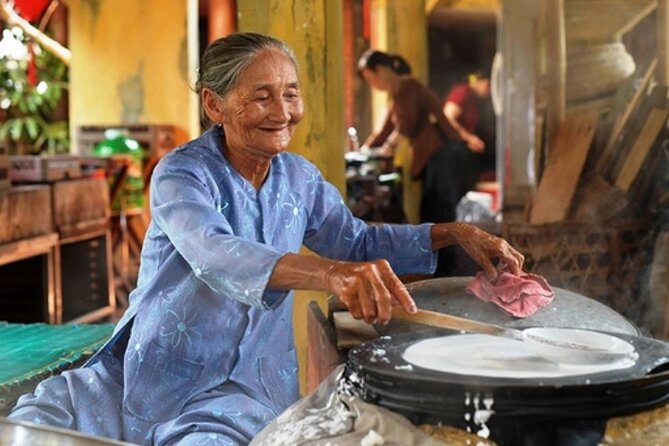
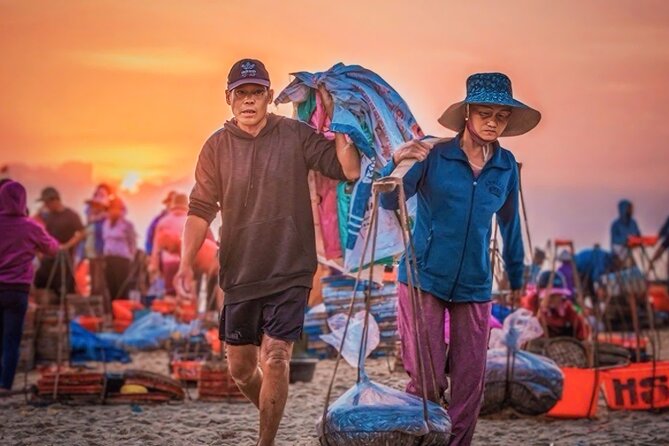
Hoi An has two personalities. During the day, you’ll see crowds and camera culture. In the early morning, you catch the “before the rush” version—when people are already doing their jobs and the streets feel quieter.
This tour starts at 5:00am and runs about 4 to 5 hours, which means you’re not just squeezing in an attraction. You’re walking through the morning rhythm that makes the city tick. That timing also helps the tour feel calmer. With a small group cap of 8 travelers, the whole thing stays manageable, and the route isn’t about rushing from one place to the next.
Is it ideal for everyone? If you’re traveling with a slow schedule or you hate early wakes, you’ll feel it. But if you want “how locals actually live and work,” early is the whole point.
You can also read our reviews of more tours and experiences in Hoi An


Meet Billy Vietnam Travel and the guides who make it click
The experience is run by Billy Vietnam Travel, and the difference is how the guides connect the dots. You’re not only hearing what to look at—you’re getting context for why these trades matter and how they pass through families.
Guides you might meet include Billy, plus local hosts such as Hoa, Huong, Tham, and Nhat. Across these names, the common theme is clear communication and a friendly tone. One standout detail: the tour has a reputation for being easy going and accommodating, including help arranging additional options like motorbike touring when requested.
That matters because small-group tours live or die on the guide. When a guide can explain what you’re seeing without making you feel “on display,” you get something better than photos—you get understanding.
Stop 1: Duy Vinh and the fish sauce behind the flavor
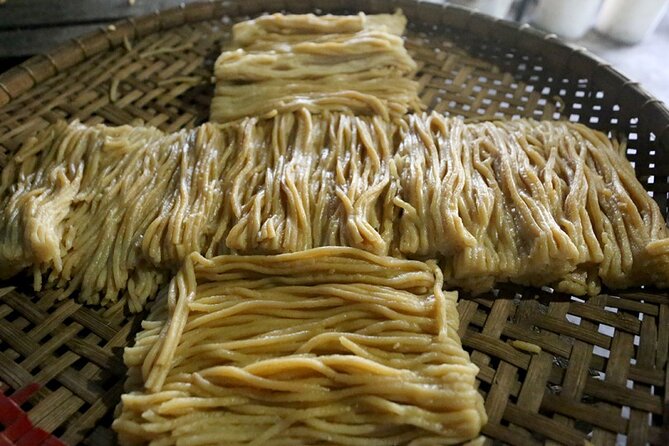
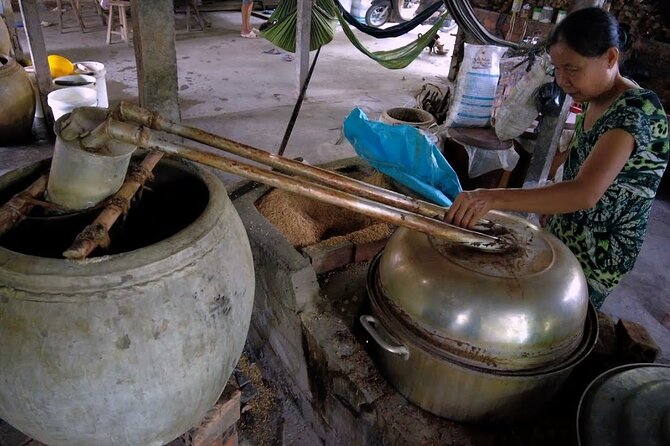
Fish sauce is one of those things people talk about like it’s just a bottle on the shelf. This stop is different. You’ll go to Duy Vinh, where your guide explains how Vietnamese people make fish sauce and process it into the kind of dipping sauce used in everyday meals.
The value here isn’t just the food. It’s the craft behind the flavor. When a community has a “family occupation,” that work tends to be passed down through habits, timing, and technique. Learning the basics of that process turns a common condiment into something personal and local.
Practical note: the stop lists 1 hour and admission ticket free, so you’re not stuck paying extra to enter someone’s working space. You’re there to understand a trade.
Possible drawback? Because this is food production, you might find it more focused on explanation than on “wandering time.” If you want lots of free roaming, this isn’t that kind of tour.
Stop 2: Cam Kim Island noodles and everyday supply chains
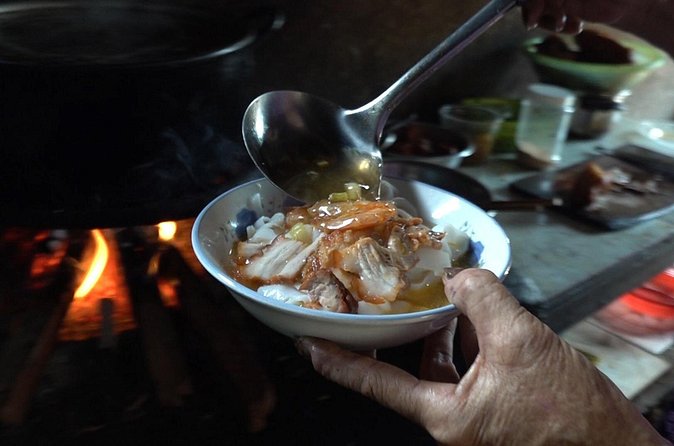
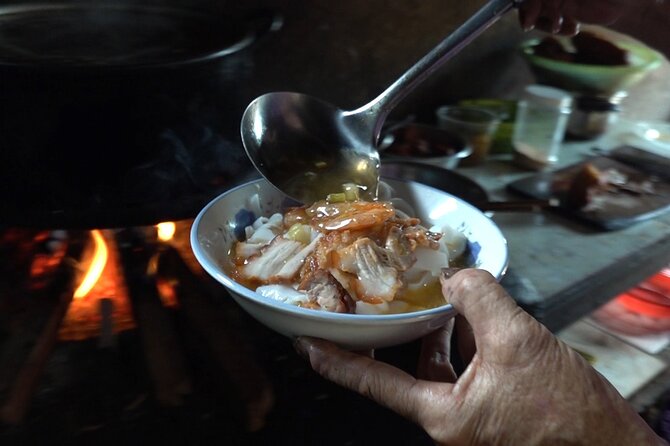
From Duy Vinh, you head to Cam Kim Island for a stop that centers on noodles. Vietnam is famous for all sorts of noodles, but this isn’t a showroom. It’s framed as part of the island’s work life—how local food traditions support daily living and local needs.
I like this stop because it broadens the definition of “Vietnamese food experience.” You’re not only eating; you’re connecting production to the wider market. And since the tour keeps stops organized and timed at about 1 hour each, you get focused learning without turning the morning into a marathon.
There’s also a clever rhythm: the tour repeats Cam Kim Island later, so you don’t just get one slice of island life. You’ll see how different household trades support each other.
Stop 3: Cua Dai Bridge and the route between places
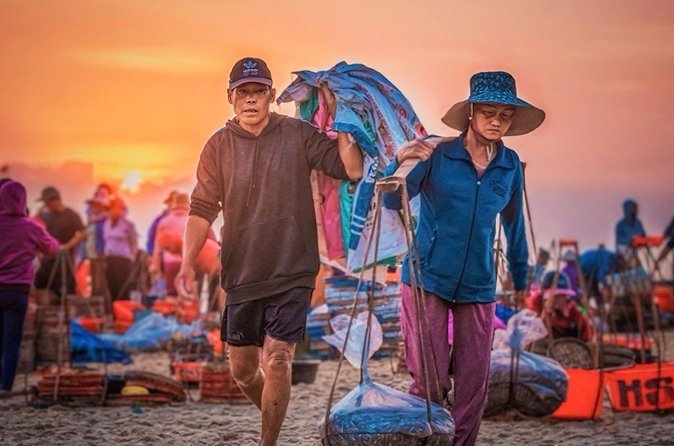
Next comes Cua Dai Bridge, spanning the Thu Bon River and connecting Hoi An City with the Duy Xuyen District. This stop is listed as 1 hour, with admission ticket free.
A bridge stop sounds plain until you realize what it does for the tour. It turns your morning movement into a geography lesson. Instead of staying trapped in one neighborhood, you experience how the city’s connections shape everyday life. You’re seeing Hoi An not as a standalone postcard, but as part of a working region.
If you enjoy straightforward, readable sightseeing—places that help you understand how cities connect—this works well. If you only want craft and food stops, you might see this as a breather. Either way, it keeps the pace from getting too “indoors, indoors, indoors.”




Stop 4: Cam Kim mat weaving—where craft becomes income
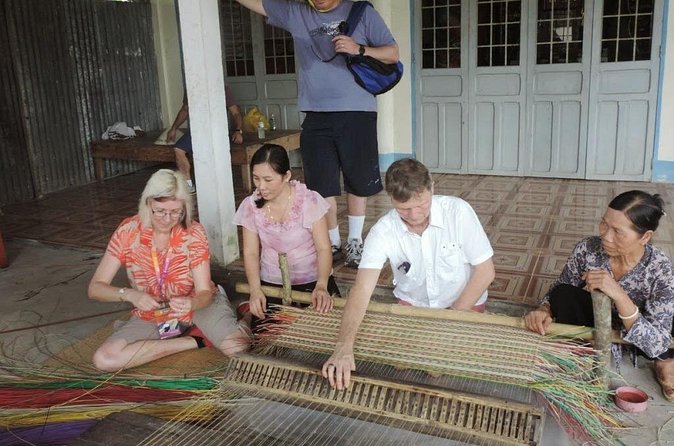
Cam Kim Island shows up again, and this time the focus is on mat weaving. The village has about 200 households, and around 80% of them work in weaving. Each year, it supplies the market with millions of mats, featuring different designs and decorative patterns.
This is the stop where the tour’s promise becomes very real: you learn about how family occupations sustain communities. You’re not just hearing about tradition. You’re seeing how work translates into output—how patterns become products, and how households keep producing year after year.
Why it’s valuable: mat weaving is the kind of “everyday craft” people might overlook when they only shop in old-town lanes. Here, it’s treated as serious labor. That shift is exactly what makes the tour feel authentic and worth getting up early for.
A consideration: this stop may feel more hands-on in theme than in activity. The itinerary is designed around observation and explanation, so keep your expectations aligned with learning how the process fits into life.
Price and value: is $49 reasonable?
At $49 per person, this tour sits in a sweet spot: you’re paying for a guided morning route that includes multiple trade-focused stops, pickup availability, and a small-group cap of 8 travelers. On top of that, the listed stops include free admission tickets, so you’re not hit with extra entrance costs at each point.
Time matters too. A 4 to 5 hour window is long enough to feel like more than a quick photo stop, but not so long you burn your whole day. If you’re on a tight schedule, early tours can be the smartest use of your time.
The biggest value lever is also the least visible: the tour is designed to be non-touristy in tone. The guiding style and the focus on locals’ work makes the morning feel purposeful. If you want one “core” experience in Hoi An beyond the Old Town shuffle, this is priced to be a strong candidate.
What this tour feels like in practice (and who will enjoy it most)
This experience tends to work best for you if you like:
- food culture that starts at production, not just on plates
- craft and community trades, especially family-run work
- a quieter morning with fewer people and more conversation
It also suits you if you want a guide who can explain history and culture in a grounded way. The tour highlights Vietnamese history and local Hoi An culture through the lens of daily work, not grand monuments.
If you’re traveling with someone who only wants famous sights and lots of free time, this may feel more structured than you’d like. And if your priority is sleeping in, the 5:00am start is the trade-off you’re choosing.
Pickup, tickets, and basic logistics you should plan for
You can expect pickup offered, plus the tour is near public transportation. You’ll also have a mobile ticket, and you should receive confirmation at booking.
The practical takeaway is simple: plan to be ready before the 5:00am start. For most people, that means building in buffer time for your hotel pickup or for getting to the meeting point route quickly. When tours run this early, the “last ten minutes” can create stress.
Group size helps here. With a maximum of 8 travelers, you’re less likely to get lost in a big crowd or wait while the organizer herds everyone to the next step.
Weather and minimum travelers: the stuff you can’t control
The tour requires good weather. If it gets canceled because of poor weather, you’ll be offered a different date or a full refund.
There’s also a minimum number of travelers. If that minimum isn’t met, you’ll get a different date/experience or a full refund.
This is normal for early morning tours, especially when the route includes outdoor village areas and river-connected stops.
Should you book this Hoi An sunrise tour to hidden local villagers?
If your goal is to understand Hoi An through work—fish sauce, noodles, mat weaving—and you’re willing to trade a bit of sleep for a calmer morning, I think it’s an easy yes. The guide lineup (people like Hoa, Huong, Tham, and Nhat) and the small-group size create a setting where questions actually get answered and the day doesn’t feel like a conveyor belt.
I’d think twice if you hate early starts or you only want classic landmark sightseeing. This tour is about everyday life and local production, and the pacing matches that focus.
FAQ
What time does the Hoi An Sunrise Tour start?
The tour starts at 5:00am.
How long is the tour?
It runs about 4 to 5 hours.
Is pickup included?
Pickup is offered, and the tour is also near public transportation.
How many people are in the group?
The tour has a maximum of 8 travelers.
Are admission tickets included?
The listed stops show admission ticket free.
What happens if the weather is bad or the minimum number of travelers isn’t met?
If weather is poor, you’ll be offered a different date or a full refund. If the minimum isn’t met, you’ll be offered a different date/experience or a full refund.