REVIEW · HOI AN
Private Traditional Silk Process in Hoi An Silk Village
Book on Viator →Operated by Bay Mau Tour · Bookable on Viator
Hoi An silk isn’t just pretty cloth, it’s a whole process. In this private visit to Hoi An Silk Village, I loved how quickly it connects the dots from mulberry → silkworm → cocoon thread → weaving. I also liked the practical shopping angle at the end, where you learn how to tell pure silk from imitation.
One thing to keep in mind: it’s a short stop inside working demonstration spaces. If you expect a long, outdoorsy tour, you might feel the set-up is more indoor and staged than you hoped.
Key things I liked
- Hands-on process clarity: you see each step, not just finished products.
- Buying with confidence: the exhibition teaches what to look for when silk shoppers hunt bargains.
A possible drawback
- Expect short and structured: 45 minutes moves fast, and the weaving demos can feel compact.
In This Review
- Key highlights you can plan around
- Private Traditional Silk Process in Hoi An Silk Village: what this tour really is
- Price and logistics: is $10 good value?
- Stop 1 at Silk Village: your start inside a craft house
- Mulberry gardens and silkworm breeding: where the process starts
- The Unraveling House: from cocoon to silk thread
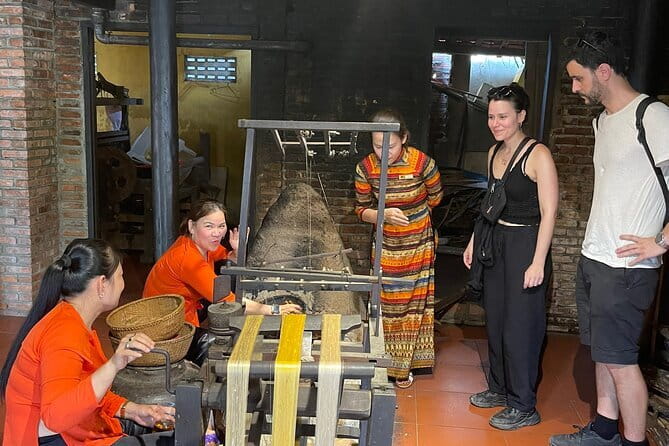
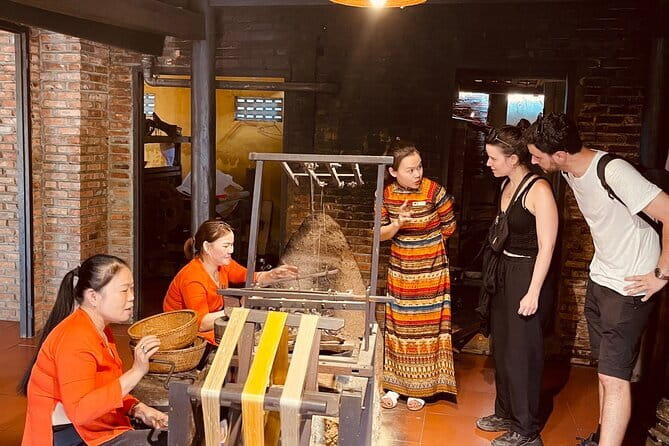
- Champ textile craft and weaving: what you’ll see in the weaving house
- Hoi An Silk Village exhibition: pure vs fake silk and how to shop smarter
- The guide experience: why getting the right person matters
- Who should book this silk village visit (and who should skip)
- Final verdict: should you book it?
- FAQ
- How long is the Private Traditional Silk Process tour?
- Is this tour private?
- What is included in the ticket price?
- Does the tour include hotel pick-up and drop-off?
- Where do I meet the tour?
- Will I get a ticket by mobile?
- Can I cancel for free?
Key highlights you can plan around
- 45-minute private format that fits easily between Hoi An errands
- Welcome drink before you start the craft story
- Quang Nam traditional house and sericulture background tied to local life
- Mulberry gardens + silkworm feeding so you understand the source, not just the output
- Unraveling House showing how silk thread is drawn from cocoons
- Pure vs fake silk education to help with tailoring and shopping decisions
Private Traditional Silk Process in Hoi An Silk Village: what this tour really is
This is a small, focused silk workshop experience in Hoi An, priced at $10 per person and designed to run about 45 minutes. You’ll meet at 28 Nguyễn Tất Thành, Tân An, Hội An, Quảng Nam, Vietnam and the activity ends back at the meeting point—so it’s built for convenience rather than a long day out.
The big idea is simple: you get the full chain of traditional silk making, starting with the plants and ending with the fabric. That may sound obvious on paper, but most silk experiences jump straight to scarves, shirts, and “look how pretty” demos. Here, you’re walked through the system first, which makes everything you see later feel logical.
This is also a private activity, so it’s just your group. That matters in a place like this, where demonstrations move at human speed. When you’re not squeezing around other tour groups, you can ask questions and actually follow what’s happening.
You can also read our reviews of more private tours in Hoi An



Price and logistics: is $10 good value?
At $10 per person for about 45 minutes, I think it’s strong value—especially because the tour includes more than a quick photo stop. Your ticket covers the entrance fee, you get an English-speaking guide, and you receive a bottle of water. In other words, you’re paying mainly for guided access and explanation.
The one catch is logistics: there’s no hotel pick-up or drop-off. You’ll need to get yourself to the meeting point on Nguyễn Tất Thành. If you like to travel light and walk between sights, that’s no problem. If you’re expecting everything to be handled for you, plan to spend a little time figuring out the start location first.
Also, it’s a mobile ticket, and confirmation is sent at booking time. That combination usually makes it easier day-of—no hunting for paper tickets.
Stop 1 at Silk Village: your start inside a craft house
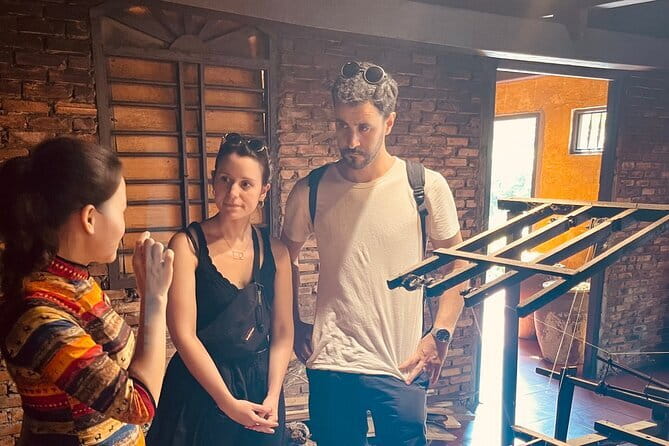
You begin at Silk Village Hoi An – The Tourist, and you’ll start with a welcome drink. It’s a small detail, but it sets a calmer tone right away. Then the visit shifts into the story of how silk was traditionally made in Central Vietnam, with a stop at a traditional house in Quang Nam.
What I like about starting here is that you hear the craft logic before you meet the living stages (mulberries and silkworms). You learn about sericulture—the raising of silkworms for silk production—and how this kind of craft links to daily life and local know-how. It’s not just a “cool fact” intro; it gives you a framework for what you’re about to see.
If you’re short on time, this is also the point where the tour earns its quick pace. You’re not wasting minutes on general history slides. You’re building context for the steps that follow.
Mulberry gardens and silkworm breeding: where the process starts
Next come the ancient mulberry gardens and the silkworm breeding house. This is the step that separates a true craft experience from a souvenir stop. Mulberry matters because silkworms feed on it, and without that base plant, there is no silk chain.
Inside the breeding area, you’ll see how to feed the silkworms. That’s a simple instruction in concept, but it changes how you think about silk. Once you’ve watched the feeding routine, silk becomes less like a product and more like a living process with timing and care.
One more angle that makes this visit feel purposeful: the silk village is described as preserving the handmade silk weaving method from the Champa Dai Viet era and keeping valuable genetic sources of mulberry. Even if you don’t go deep into botany, it explains why this place is more than a showroom. It’s tied to preserving agricultural and craft knowledge together.
The Unraveling House: from cocoon to silk thread
Then you hit one of the most practical parts of the whole experience: the Unraveling House. Here, you learn how to get silk thread from the cocoon.
This is where the tour becomes genuinely useful if you care about quality. A lot of silk in the world is marketed, but the real question is how the thread is produced. Seeing the cocoon-to-thread stage helps you understand why some fabric feels different, looks different, and holds dye differently than other pieces.
It’s also a moment that makes the later weaving house visit easier to follow. When you know where the thread comes from, the weaving steps stop feeling like magic tricks and start feeling like hands-on craft.
The time is short, so you won’t be sitting for hours watching every technique. Still, this is one of the clearest “process” stops in a condensed silk tour.






Champ textile craft and weaving: what you’ll see in the weaving house

After unraveling, you visit a Vietnamese traditional silk weaving house and learn about the handicrafts of Champ people and traditional textile making.
This part matters because weaving is where the character of silk really shows up. Thread quality, tension, dye behavior, and technique all shape the final fabric. When a tour only shows finished scarves, you miss that the quality question is usually answered earlier in the chain.
Here, you get to connect those dots. You’ll also see how the method ties back to older traditions, since the site is described as preserving the handmade weaving method from the Champa Dai Viet era.
That said, a balanced expectation check is important. One negative note from a previous visitor described small rooms and weaving on demand. In a working demonstration setting, the experience can feel compact, and some people may find the mood less friendly than they hoped. If you go in ready for a quick, structured craft walkthrough, you’re less likely to feel disappointed.
Hoi An Silk Village exhibition: pure vs fake silk and how to shop smarter

The final stop is the Hoi An Silk Village exhibition, and this is one of the most valuable parts if you’re planning to buy silk or commission tailoring.
You’ll learn the difference between pure silk and fake silk fabric. That’s the kind of lesson you can actually use. In Hoi An, silk shopping can get confusing fast, especially when everything is marketed as “silk.” A quick education on what to look for helps you filter offers instead of reacting emotionally to sales pressure.
This is also where the shop-and-tailoring side becomes practical. The variety of silk products shown is meant to match the range of things you might want—fabric for garments, ready-made items, or options that support tailoring demands.
My advice: treat this exhibition as your decision-making moment. If you want a better outcome, ask questions during this stage while the “pure vs fake” education is fresh. You’ll get more value from your time here than if you wait until you’re back in the Old Town trying to remember what you were told.
The guide experience: why getting the right person matters
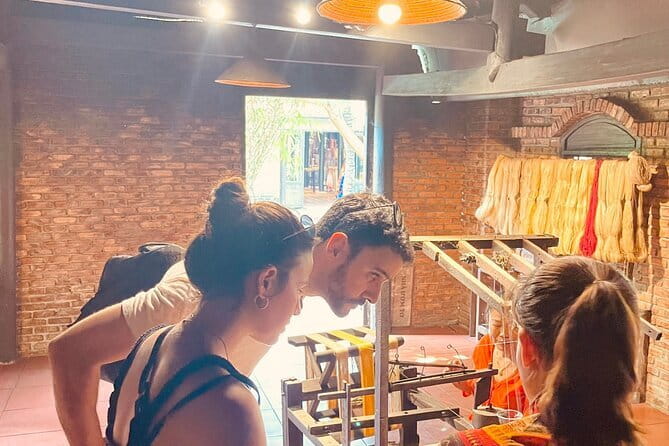
The tour runs with an English-speaking guide, and the guide’s job isn’t just translation—it’s turning what you see into understandable steps.
One highlight that stood out from prior feedback is the mention of a guide named Luni, described as delivering the best silk tour experience and outperforming add-on Old Town shopping-style stops. While not every guide experience will match that, it’s a good signal: ask questions, and pay attention to how the guide explains the process steps.
If you care about quality and not just buying, a guide who can explain silk production clearly makes this worth doing even though the duration is short.
Who should book this silk village visit (and who should skip)
I’d book this if you want:
- A short private craft experience that fits into a busy Hoi An schedule
- Real context for silk production: mulberry, silkworms, cocoon thread, weaving
- A buying strategy for silk or tailoring, with the pure vs fake silk lesson
I’d skip it or adjust expectations if:
- You want a long outdoor tour or a full-day cultural excursion
- You dislike indoor demonstration spaces or tight rooms
- You expect hotel pick-up and a fully managed door-to-door day (this one doesn’t include it)
For most people, it’s a strong middle option: informative without being exhausting.
Final verdict: should you book it?
Yes, I think you should book if silk quality and process matter to you. At $10 and about 45 minutes, it’s priced like an easy win rather than a “big splurge.” The biggest reason is the structure: you don’t start at shopping—you start at the living source and the transformation steps.
If you’re going primarily to browse and buy quickly, you may still enjoy it, but aim to focus your questions during the exhibition stage. That’s where you’ll get the practical tools to avoid wasting money on low-quality imitations.
Go with a realistic mindset: it’s private, short, and process-focused, not a sprawling day of sightseeing. If that fits your travel style, this is a very smart stop in Hoi An.
FAQ
How long is the Private Traditional Silk Process tour?
It lasts about 45 minutes.
Is this tour private?
Yes. It’s a private activity, so only your group participates.
What is included in the ticket price?
The tour includes an English-speaking guide, entrance fee, and a bottle of water.
Does the tour include hotel pick-up and drop-off?
No. Hotel pick up and drop off is not included.
Where do I meet the tour?
The meeting point is Silk Village Hoi An – The Tourist, 28 Nguyễn Tất Thành, Tân An, Hội An, Quảng Nam, Vietnam. It also ends back at the meeting point.
Will I get a ticket by mobile?
Yes. The tour uses a mobile ticket.
Can I cancel for free?
Yes. Free cancellation is available, and you can cancel up to 24 hours in advance for a full refund. If you cancel less than 24 hours before the start time, the amount paid isn’t refunded.