REVIEW · HOI AN
Private Boat to Hoi An Craft Villages-Pottery, Carpentry village
Book on Viator →Operated by TTP Henry Travel Hoi An · Bookable on Viator
Hoi An’s craft villages are best seen from the water. This private tour ties a Thu Bon River boat ride to two hands-on style stops: Thanh Ha pottery and Kim Bong carpentry, with biking around the area so you feel the rhythm of village life. It’s a simple plan that still feels like you’re getting somewhere real.
I especially like the way this experience focuses on making, not just watching. You’ll spend real time at Thanh Ha, tied to the story of decorative pottery for the Nguyen Dynasty, and you’ll see how carpenters shape wood work that once helped build Hoi An’s historic architecture.
One thing to consider: it runs best with good weather and it’s only about a half day (around 3 to 4 hours). If the conditions are poor, the schedule can change, and your village time might feel tighter than you’d like.
In This Review
- Key Things You’ll Notice on This Private Craft Boat Tour
- A Private Boat Ride on the Thu Bon River (That Actually Changes the Day)
- Thanh Ha Pottery Village: From Tiles for Old Hoi An to Decorative Nguyen-Era Pieces
- What you’ll see and do at Thanh Ha
- The drawback to plan around
- Kim Bong Carpentry Village: Traditional Wooden Fishing Boats and Woodwork for Daily Life
- What’s special about Kim Bong’s carpentry
- Village sights beyond wood
- The main consideration here
- Biking Around the Villages: Slower Pace, Better Photos, More Real Vibes
- Price and Inclusions: Why This Costs $40 (and What You Should Check)
- One thing I’d confirm before you go
- Who This Tour Fits Best (And Who Might Want Something Else)
- Practical Tips for a Smooth 3 to 4 Hours
- Should You Book This Private Craft Boat Tour?
- FAQ
- What time does the hotel pickup happen?
- How long is the tour?
- Is this tour private?
- What craft villages are included?
- What’s included in the price?
- What happens if weather is bad?
Key Things You’ll Notice on This Private Craft Boat Tour
- Local-style boat on the Thu Bon gives you a calmer, scenic way to reach the villages
- Thanh Ha pottery village connects everyday ceramic skills to Nguyen-era decorative pieces
- Carpentry that produced old Hoi An architecture and traditional wooden fishing boats
- Watching woodworking + furniture and carvings side-by-side with village daily production
- Biking around the villages helps you slow down and actually see how things sit together
- Everything feels guided and efficient, with hotel pickup and entrance tickets handled
A Private Boat Ride on the Thu Bon River (That Actually Changes the Day)
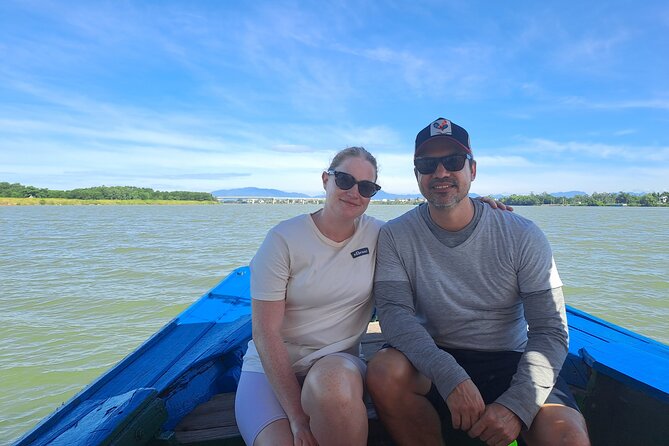
The big difference with this tour is that it starts on the Thu Bon waterways. Instead of treating Hoi An’s craft villages like a quick roadside stop, you travel by boat between areas, then continue by biking in and around the villages. That combo matters because it keeps the pace village-like. You’re not bouncing from shop to shop.
The tour plan also includes hotel pickup and drop-off. That’s a practical win in Hoi An, where hopping between sites can eat up time. You’re met right in the hotel lobby and taken to the river, and then the schedule handles the rest. With an English-speaking guide, you’ll get context as you pass through the waterways and arrive at each workshop area.
The ride itself is part of the value. It turns a “craft day” into a small outing: river light, narrow channels, village edges, and the sense that these places grew around trade routes and water access. You’ll also get the feeling that craft work here isn’t staged for tourists—it’s woven into daily life.
You can also read our reviews of more boat tours in Hoi An



Thanh Ha Pottery Village: From Tiles for Old Hoi An to Decorative Nguyen-Era Pieces
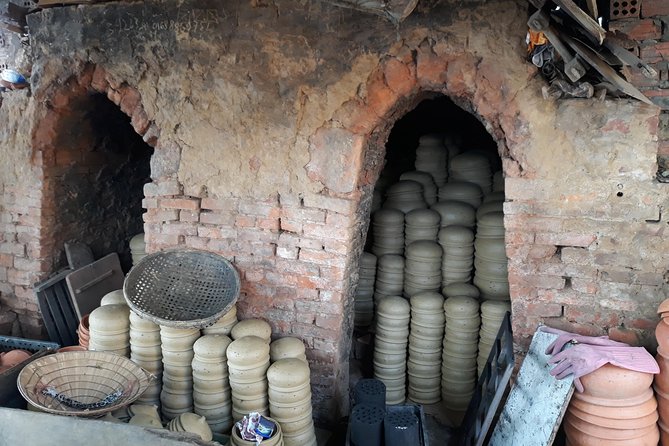
Thanh Ha pottery village is the first stop and it’s built on a long reputation for earthenware. The village was thriving centuries ago and became known for selling ceramics across Central Vietnam. More than that, Thanh Ha potters supplied materials for old building work in and around Hoi An—bricks, tiles, and floor slabs.
So when you arrive, don’t expect only finished souvenirs. This is a place where the craft starts with materials and technique. You’ll spend about an hour here, which is enough time to see the process and still keep energy for the next stop.
What you’ll see and do at Thanh Ha
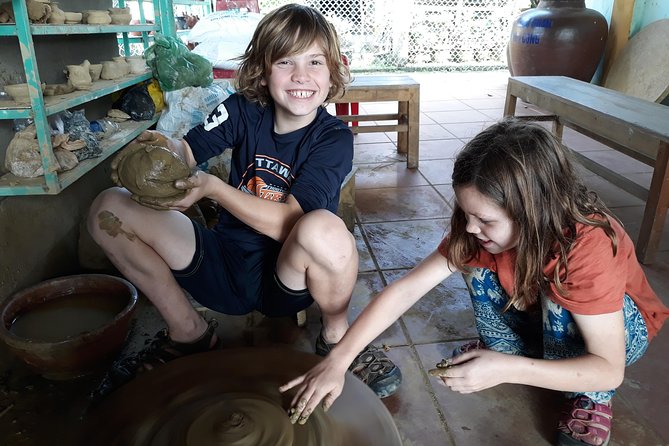
You’ll focus on decorative pottery making: things like teapots and cups, plus vases and bowls. The guide-led context is helpful because it connects the artistry to use. Decorative ceramics aren’t just pretty; they were part of how Vietnamese households and royal spaces expressed status and culture.
There’s also an option that many people enjoy: you can have a product made especially for you. That’s one reason this stop feels personal instead of purely observational. Even if you choose something small, the experience becomes more memorable than buying something off a shelf.
The drawback to plan around
One limitation is time. About an hour goes fast once you’re watching handwork and moving through workshops. If your goal is shopping-heavy pottery hunting, you may want to carry extra time into your day (or plan to return later on your own). But if your goal is understanding how the craft works, that hour is usually the sweet spot.
Kim Bong Carpentry Village: Traditional Wooden Fishing Boats and Woodwork for Daily Life
After Thanh Ha, the tour heads to Kim Bong carpentry village (located at Cam Kim Hamlet). This is where the day shifts from clay to wood—and from ceramics to the kind of carpentry that supported a working port city.
Hoi An flourished as a sea port, and Kim Bong carpenters’ ancestors produced much of the ancient architecture created during that growth period. That’s a big deal because it frames the craft as built infrastructure, not only art pieces.
You’ll spend around two hours at Kim Bong, and that longer block is a smart choice. Woodwork tends to show up in multiple formats—fishing boats, furniture, carvings—and you need time to notice differences.
You can also read our reviews of more private tours in Hoi An





What’s special about Kim Bong’s carpentry
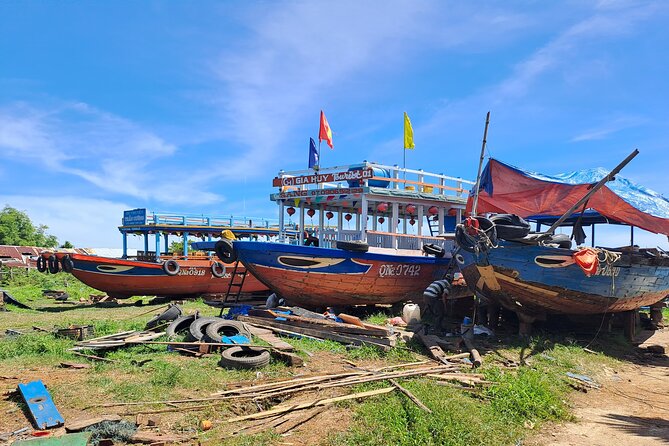
You’ll watch how traditional wooden fishing boats are made. That’s one of the most compelling parts of the whole route because it’s functional craft. Boatbuilding shows discipline: shaping wood accurately, fitting parts, and building for use on real water.
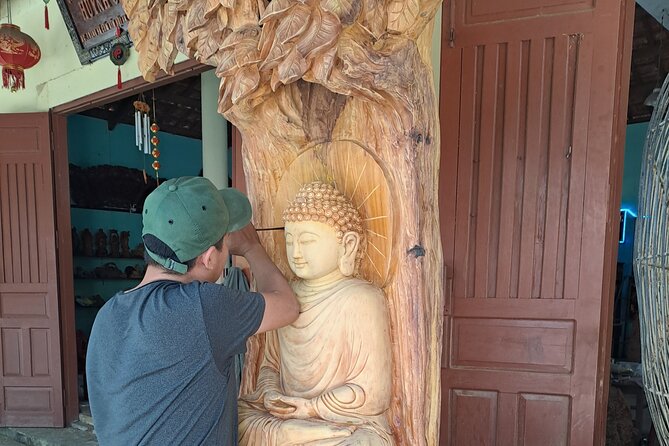
Then you’ll see skilled carpenters creating handcrafted furniture and wood carvings. This is where you can compare styles: utilitarian boat pieces versus more refined household and decorative work. If you like craftsmanship that you can imagine using at home, this is the stop that tends to stick in your mind.
Village sights beyond wood
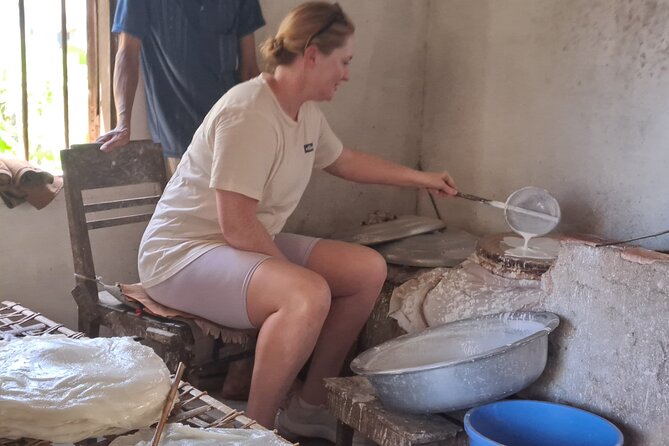
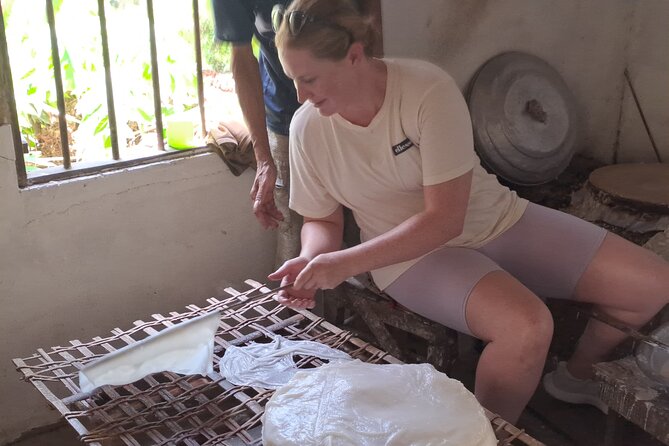
Kim Bong isn’t only carpentry. You’ll walk around the village to see weaving mat and rice noodle making. One family-style comment I’ve heard about this part is that the rice-making moment can turn fun fast—and that tasting what comes out of the process feels like the best kind of souvenir, because you understand it instead of just buying it.
Still, keep expectations flexible. The tour describes viewing rice noodle making, not promising a full cooking lesson. If you do get a chance to try or interact, great. If not, you’ll still see how routine food production sits alongside woodworking.
The main consideration here
The two-hour block involves walking through a working area. Wear comfortable shoes. Woodshop environments also mean you’ll likely encounter dust and strong smells like fresh wood and workshop materials. It’s not a problem, just something to plan for so the day feels pleasant.
Biking Around the Villages: Slower Pace, Better Photos, More Real Vibes
The tour doesn’t rely on sitting around. After the boat ride, you’ll bike around the villages. That detail is more than transportation. It’s how you get proximity to craft work without turning every stop into a crowded, stop-and-go scramble.
Biking helps you notice small things:
- How workshops are arranged
- How materials move between households and production areas
- How daily life and craft work share the same space
You also get better photo angles because you’re not always looking from a single gate or doorway. If you’re the type who likes to understand how places are organized, biking is a big win.
Price and Inclusions: Why This Costs $40 (and What You Should Check)
The price is $40 per person for about 3 to 4 hours. For Hoi An craft days, that’s fairly reasonable, mainly because several basics are included:
- hotel pickup and drop-off
- an English-speaking tour guide
- entrance tickets
- bottled water
That matters because it reduces the hidden costs. A craft village visit can quickly turn into a bunch of separate tickets, separate transport fees, and separate timing problems. Here, the structure is already built, so you spend less mental energy figuring out logistics.
Two more notes that help value:
- It’s described as a private tour/activity, so only your group participates.
- Group discounts are offered.
If you’re traveling with family or friends, this can become one of the cheaper ways to get both a boat ride and guided craft access in one half-day.
One thing I’d confirm before you go
The tour mentions having a product made especially for you at Thanh Ha. The data provided doesn’t state whether materials or the finished item are included in the tour price. If you’re hoping for a custom piece, ask your provider ahead of time what’s included versus what’s an add-on. That way there are no surprise charges later.
Who This Tour Fits Best (And Who Might Want Something Else)
This private craft boat tour fits best if you like:
- traditional making skills (pottery, carpentry)
- guided context and practical explanations
- a mix of viewing and short hands-on moments
- a river-to-village day that doesn’t feel like a long bus tour
It’s also a good fit for families. One family highlighted the fun of the rice-making part, and that’s usually a sign the tour handles different attention spans better than purely museum-style visits.
You might choose a different style of tour if:
- you mainly want shopping time with no workshop focus
- you hate walking and prefer mostly seated activities
- you only have a strict time window and can’t afford a weather-dependent schedule
Practical Tips for a Smooth 3 to 4 Hours
For a day like this, comfort beats style. You’re combining a boat ride, biking, and village walking.
Here’s what I’d do:
- Wear closed-toe shoes with grip.
- Bring a light layer for river breeze and shade breaks.
- Use sunscreen and bring sunglasses—this area can get bright fast.
- Stay hydrated (bottled water is included, but you’ll likely want more if it’s hot).
Also, treat the “custom pottery” option as a decision moment. If you want something made for you, be ready to think on the spot, because you’re working inside a time window.
Finally, go with a craft mindset. If you focus on process—how hands work, how wood pieces fit, how clay shapes turn into final forms—you’ll get more out of each stop.
Should You Book This Private Craft Boat Tour?
If you want a true craft day in Hoi An—pottery plus carpentry, connected by a Thu Bon river ride—this is a strong pick. The included hotel pickup, entrance tickets, and English-speaking guide reduce hassle. The structure also makes sense: an hour at Thanh Ha to understand ceramics, then two hours at Kim Bong to see woodwork and village food production.
I’d book it if your priority is learning how things are made and seeing village life in motion. I’d think twice if you’re very schedule-sensitive or dislike weather-based changes, since the experience requires good conditions.
If you like practical travel with authentic workshops, this one earns its time.
FAQ
What time does the hotel pickup happen?
The guide meets you at your hotel lobby at 8AM for the morning tour or 2PM for the afternoon one.
How long is the tour?
It runs about 3 to 4 hours.
Is this tour private?
Yes. It’s private, so only your group participates.
What craft villages are included?
You visit Thanh Ha Pottery Village and Kim Bong Carpentry Village.
What’s included in the price?
Hotel pickup and drop-off, an English-speaking tour guide, entrance tickets, and bottled water.
What happens if weather is bad?
This experience requires good weather. If it’s canceled due to poor weather, you’ll be offered a different date or a full refund.