REVIEW · HOI AN
Cooking Class with Tra Que Eco Farm & Local Market Discovery
Book on Viator →Operated by Cooking Class at Faifoo Central Restaurant Hoi An · Bookable on Viator
Tra Que is the kind of place that makes food feel personal. This half-day class in Hoi An strings together Tra Que Vegetable Village and a morning local market walk, then hands you the knife and the recipes. You’ll learn how herbs grow here, how to choose produce, and how to turn what you buy into a full Vietnamese meal.
What I like most is the hands-on cooking with a real guide and English instruction, plus the farm stop that explains how ingredients get from soil to plate. You also get to practice market skills like talking with traders and bargaining to pick ingredients with good quality. The food part is fun, but the ingredient-shopping part is what makes it feel worth the time.
One possible drawback: the follow-up for photos/recipes may be delivered through a QR code system, and it sounds like it doesn’t always work smoothly for everyone. If you care about getting digital recipes afterward, plan to double-check that the QR code request goes through.
In This Review
- Key highlights you should know before you go
- How the Morning Works: Pickup, Village Walk, and Market Timing
- Tra Que Vegetable Village: Organic Herbs, Farmer Life, and Tea
- Hoi An Local Market: Bargaining Skills and Smarter Ingredient Choices
- Inside the Cooking House: Hands-On Lessons for Four Vietnamese Dishes
- What You Eat: Lunch, Dessert, and Drinks You Actually Get
- Price and Value: Why $29 Can Make Sense (If You Want the Whole Experience)
- Who This Tour Fits Best in Hoi An
- The One Detail to Check: Photos and Recipes After the Class
- Should You Book This Cooking Class at Faifoo Central Restaurant?
- FAQ
- What time does the tour start and how long is it?
- Where do we go during the experience?
- Is pickup included?
- What’s included with the cooking class lunch?
- How many people are in the group?
- Is free cancellation available?
Key highlights you should know before you go
- Tra Que Vegetable Village: see organic herb growing and farm routines from a village known for centuries of cultivation
- Hoi An morning market: practice bargaining and selection with guidance, not just sightseeing
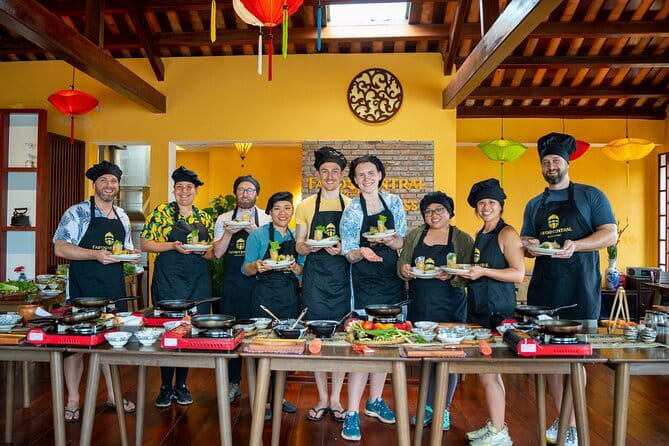
- Four dishes, cooked by you: instruction is structured so you’re not just watching from the sidelines
- Small groups (max 10): easier to ask questions and get help while cooking
- Includes a full meal: lunch with dessert plus set drinks during the class
- English guide/Chef: the cooking is taught in a way that works even if you’re new to Vietnamese flavors
How the Morning Works: Pickup, Village Walk, and Market Timing
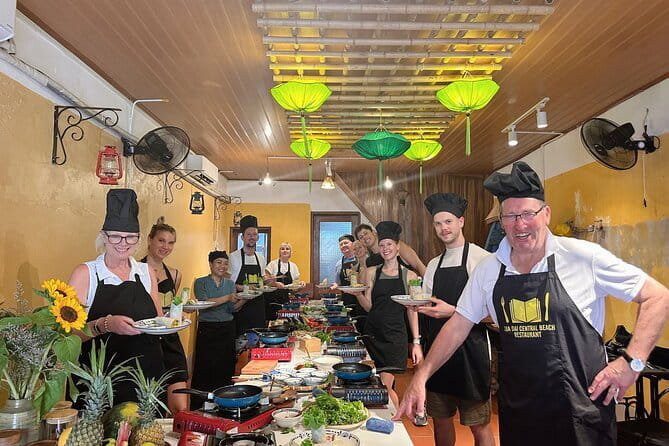
This is designed as a smooth, structured morning (about 5 hours) that balances three different modes: outdoors on the farm, busy indoors/outdoors at the market, and then a proper cooking session at the restaurant kitchen.
You start around 8:15–8:30am with a hotel pickup in Hoi An. The day quickly shifts from village calm to market energy. The timing matters because produce is best in the early hours, and the market walk is set for that morning rush (around 10am).
A big value point here is that you’re not only shown where ingredients come from; you’re also guided through the decisions you’ll make later in the cooking class. If you’ve ever done a cooking class where everyone buys random ingredients and hopes for the best, this format feels more grounded.
If you prefer a light schedule instead of a long day tour, this one is short enough to keep your afternoon open. It ends around 1:30–2:00pm, with return to your hotel.
You can also read our reviews of more shopping tours in Hoi An

Tra Que Vegetable Village: Organic Herbs, Farmer Life, and Tea
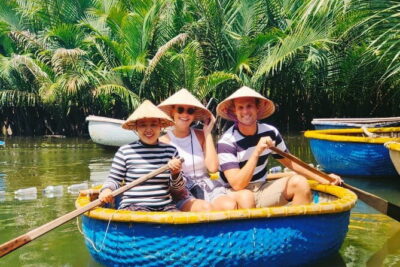
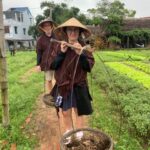
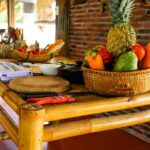
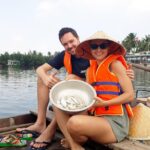
The first stop is Tra Que Vegetable Village, a traditional vegetable area in Hoi An with a long farming tradition (over 300 years). The point isn’t just photos. You’ll learn about the herbs and how the village works day-to-day, including daily farmer activity.
You’ll also get a hands-on moment during the farm visit. The class description says you can try being a farmer, which usually means you’re stepping into the rhythm of farm work instead of just walking past it. Expect an atmosphere that’s slower than the city, with learning that connects directly to what you’ll cook later.
A small but memorable detail: there’s time for tea during the visit. It’s a nice break because it gives you a chance to reset before the market part, where things move faster and the sound levels rise.
What could feel like a drawback if you’re not a morning person: you’ll be outdoors early in the day. If you don’t love heat or bright light, you’ll still make it through, but go in knowing this is part of the experience.
Hoi An Local Market: Bargaining Skills and Smarter Ingredient Choices
Around 10am, you head to Hoi An Local Market—the busy, crowded morning kind of market that’s full of motion. This is one of the most practical parts of the tour, because you’re learning how to shop like someone cooking at home.
You’ll communicate with local traders, learn how to bargain, and practice selecting ingredients based on quality. That matters because Vietnamese cooking often depends on fresh herbs, the right texture of vegetables, and fish and seafood choices that don’t work the same way if they’ve been sitting too long.
Here’s the part that makes it feel more authentic: the shopping walk isn’t just a chance to browse. You’re given a mission tied to the dishes you’ll cook later. Even if you’re not aiming to cook Vietnamese food at home, you’ll come away with a better sense of what “fresh” really means in this context.
A name worth noting from the guide team: one market guide mentioned in feedback is Ngoc. If you get a guide with that kind of on-the-ground energy, you’ll likely feel supported while bargaining and asking questions.
One thing to keep in mind: markets can be overwhelming if you’re used to calm shopping. The guide helps you focus, but go with the expectation that this is lively.
Inside the Cooking House: Hands-On Lessons for Four Vietnamese Dishes
After the market, you head to the cooking area and enjoy welcome drinks (timing is around 11:00am). Then the class turns into a real cooking workshop where you cook, not just watch.
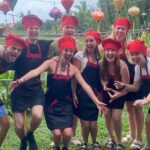
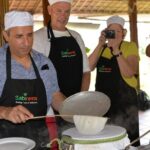
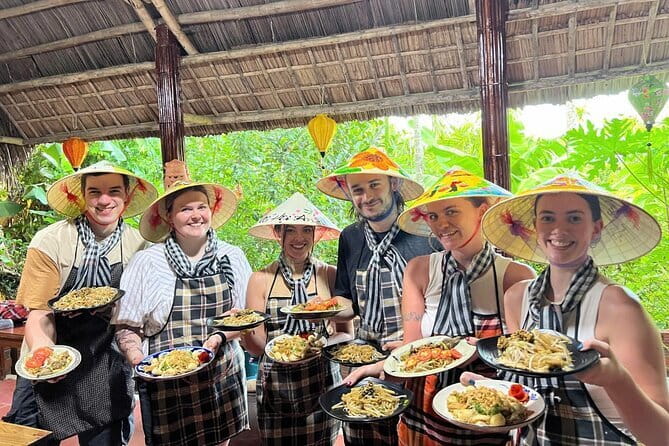
The class format centers on you handing on cooking yourself, guided by a local English-speaking chef/instructor. You’ll learn Vietnamese techniques and how to put flavors together in a way that makes sense. The emphasis is on practical cooking skills—things you can repeat later.
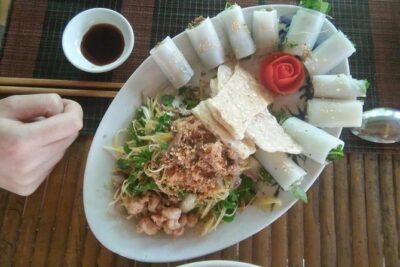
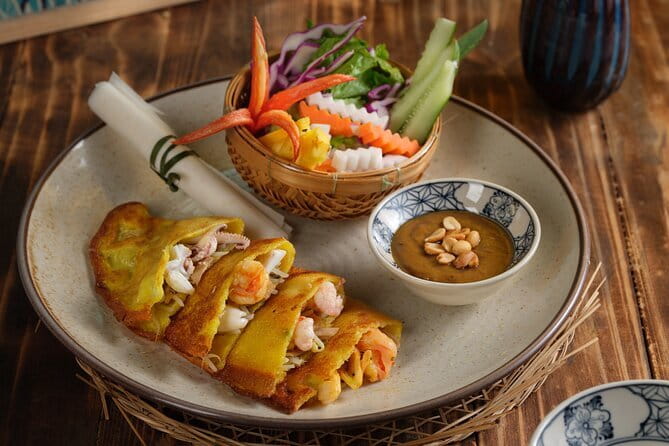
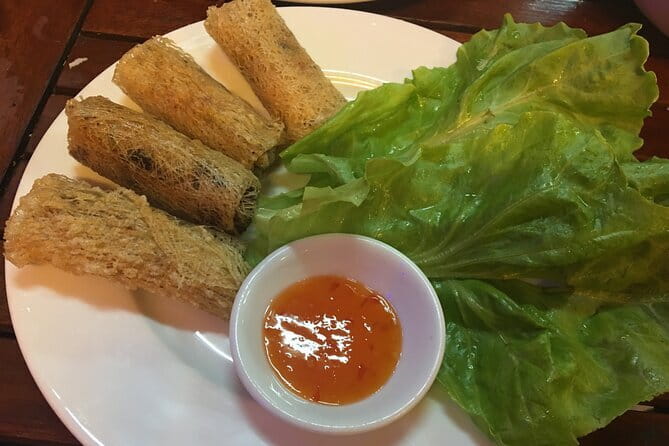
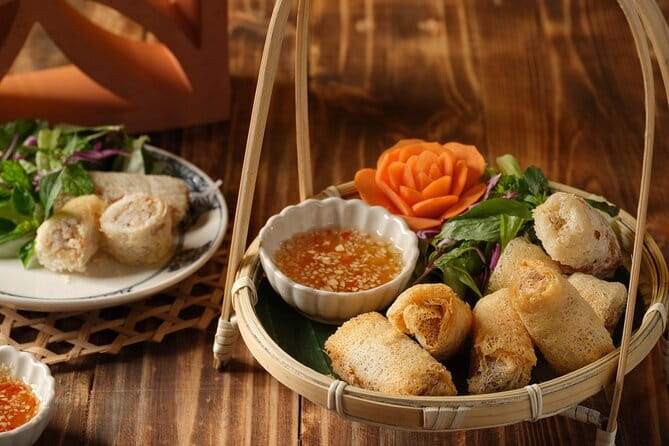
You’ll cook four local dishes. Specific dish examples from the cooking session descriptions include spring rolls, rice pancakes, grilled fish, and a fried dish (the exact last item wasn’t fully shown, but the class is clearly focused on multiple traditional formats: rolling, batter-based pancakes, grilling, and frying).
What makes this valuable is the sequence. You shop for ingredients at the market, then you cook those same ingredients. When you understand why you chose a certain herb or what makes a fish selection work better, the final dishes feel less like random restaurant food and more like your own results.
The staff language is also a big deal. One feedback note highlights a chef who spoke perfect English and was friendly, which is exactly what you want in a class like this. Vietnamese cooking can have steps where timing and technique matter, and clarity helps.
What You Eat: Lunch, Dessert, and Drinks You Actually Get
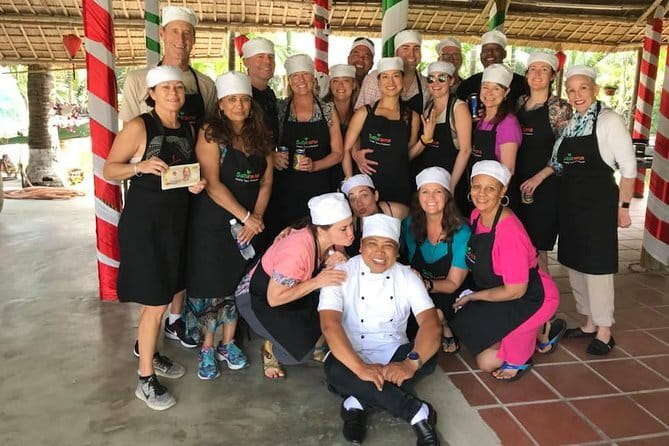
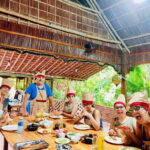
This experience includes a full meal: lunch tied to what you cook, plus dessert.
Drink-wise, the package includes one bottle of water, plus one beer or one soft drink, along with a welcome drink. That’s a helpful structure because it removes the constant question of what’s included versus extra. Other drinks like wine, juice, smoothies, and similar items are excluded.
If you’re the type who hates paying surprise add-ons, this is a strong point. You’ll come out fed and satisfied, not just tasting small bites.
Also, since you cook four dishes, your meal doesn’t feel like a token sample. It’s more like a full lunch built from the results of your own work.
You can also read our reviews of more tours and experiences in Hoi An
Price and Value: Why $29 Can Make Sense (If You Want the Whole Experience)
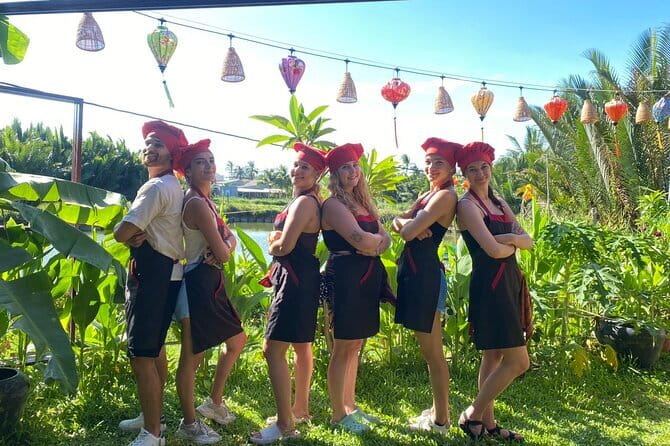
At $29, this is priced as a budget-friendly way to get three things in one: farm education, market shopping skills, and a structured cooking class with lunch.
The value calculation is simple:
- You’re paying for transportation (pickup offered), a guided English chef/guide, and entrance tickets for the farm stop.
- You also get guided shopping time, which usually would cost you time (and likely a private guide fee) if you tried to replicate it solo.
- The meal is not an afterthought. You get lunch, dessert, and basic drinks.
Group size matters too. With a maximum of 10 travelers, you’re less likely to feel lost or stuck waiting for help. Small groups usually mean better attention during chopping, mixing, frying, and rolling.
One thing I’d consider before booking: if you’re only interested in the cooking part and you don’t care about farms or markets, you might feel like the farm and market time is “extra.” But if you enjoy the story behind the ingredients, this layout is exactly what makes the class feel complete.
Who This Tour Fits Best in Hoi An
This cooking class is a good match if you want a hands-on morning with practical skills. Here’s the kind of traveler that usually clicks with this experience:
- You like markets and want to learn how to pick produce, not just take pictures
- You want to cook Vietnamese dishes and understand ingredient choices
- You prefer a short day (about 5 hours) that ends in the early afternoon
- You’re traveling as a small group or pair and want more interaction than big tour formats
It’s also a decent option if you’re new to Vietnamese cooking. The class is built for learning, and the English-speaking guidance lowers the intimidation factor.
On the other hand, it may feel less satisfying if you only want an advanced cooking technique class, or if you don’t enjoy outdoor farm and market environments.
The One Detail to Check: Photos and Recipes After the Class
This isn’t a dealbreaker for most people, but it’s worth mentioning. One experience report pointed out a follow-up issue related to photos and recipes delivered via a QR code, where the request process didn’t lead to the expected materials for that person.
If you want the digital take-home part, I’d recommend being attentive at the end of the class: make sure you understand the QR code step and that it’s the correct link or request method. If something seems off, ask right then rather than assuming it will resolve later.
This kind of hiccup can happen with tech-based follow-up systems, but it’s easy to reduce by paying attention during the handoff.
Should You Book This Cooking Class at Faifoo Central Restaurant?
If your goal is an authentic Hoi An morning that connects ingredients to cooking, I’d say yes. The standout strength is the combo: farm learning at Tra Que Vegetable Village, ingredient practice at the Hoi An local market, then cooking four dishes with guided instruction and a real included meal.
It’s especially good value at $29 because so much of the day’s cost is baked in: entrance tickets, transport (pickup offered), English guidance, lunch, dessert, and drinks. The small maximum group size also helps the class feel less like a factory tour and more like a workshop.
Just book with eyes open about two things: you’ll spend time outdoors early, and the photo/recipe follow-up may be QR-based, so check that process if it matters to you.
If those points sound fine, this is a practical, fun way to leave Hoi An not only with memories, but with cooking skills you can use later.
FAQ
What time does the tour start and how long is it?
Pickup starts around 8:15–8:30am, with the activity around 8:30am. The total duration is about 5 hours, ending roughly 1:30–2:00pm.
Where do we go during the experience?
You’ll visit Tra Que Vegetable Village, then Hoi An local market, and then the cooking house at Faifoo Central Restaurant Hoi An for the cooking class.
Is pickup included?
Pickup is offered at your hotel in Hoi An. The tour also notes it is near public transportation.
What’s included with the cooking class lunch?
You get lunch made from what you cook, plus dessert. Drinks include 1 bottle of water, 1 beer or 1 soft drink, and a welcome drink.
How many people are in the group?
The experience has a maximum of 10 travelers, which helps keep the class more interactive.
Is free cancellation available?
Yes. You can cancel for a full refund up to 24 hours before the experience’s start time.