REVIEW · HOI AN
Luxury Half-Day Tour of Hoi An Ancient Town
Book on GetYourGuide →Operated by Vietnam Travel Group VNTG · Bookable on GetYourGuide
Hoi An in four hours is plenty. This luxury half-day tour guides you through old lanes near the Thu Bon River, with real stops like the Japanese Covered Bridge and Phuc Kien (assembly halls) temples. I also like that you get a clear hit list plus shopping time, not just photo stops. One possible drawback: the walking lanes are narrow and the tour doesn’t work well with big luggage, so pack light and wear shoes you can trust.
You’ll start with an 08:00 hotel pickup, then head straight into the Ancient Town rhythm. Expect centuries-old houses and architecture shaped by Chinese, Japanese, French, and European influences, with a mix of culture, temples, and everyday life.
It’s also worth noting a mismatch in mobility info: the activity is listed as wheelchair accessible, yet it says it’s not suitable for people with mobility impairments. If that applies to you, confirm with the operator before booking.
In This Review
- Key highlights to look for
- Entering Hoi An’s Ancient Town: the Thu Bon River effect
- Hotel pickup at 08:00: fast start, less hassle
- Temple Kwan and Phuc Kien: where the community gathers
- Tan Ky Ancient House: merchant-era home, practical architecture
- Japanese Covered Bridge and cultural show rooms: the famous frame
- The lane walk: Chinese, Japanese, French, European influences
- Local fish market: everyday life between the sights
- Shopping time in the Old Town without getting lost
- Bicycle and helmet included: why that small detail matters
- Price and value: what $55 buys in a half-day
- Practical logistics you’ll be glad you planned for
- Who should book this Hoi An half-day tour?
- Should you book it?
Key highlights to look for
- Japanese Covered Bridge area plus cultural show rooms for context beyond the postcard photo
- Temple Kwan and Phuc Kien for that Hoi An mix of Vietnamese devotion and trade-era connections
- Tan Ky Ancient House to see how a merchant family home is laid out and built
- Local fish market stop to balance Old Town charm with daily life along the river
- Old Town shopping time guided enough to help you browse without getting lost
- Bicycle + helmet included so you can move between spots without burning your legs
Entering Hoi An’s Ancient Town: the Thu Bon River effect
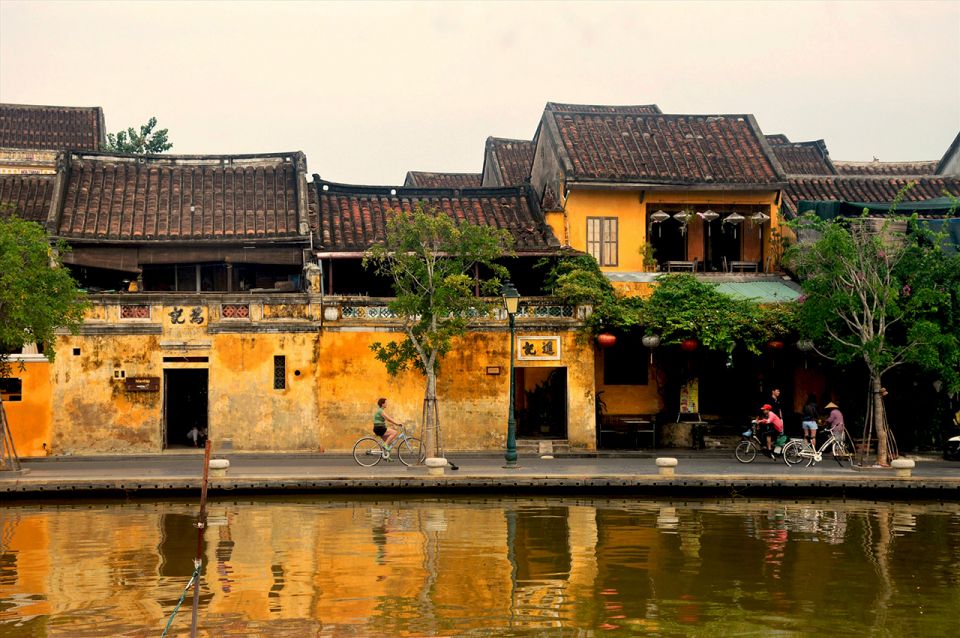
Hoi An is built around the Thu Bon River, and you feel that as soon as you’re near the old streets. The town’s layout makes small distances feel like big discoveries, because lanes twist, roofs change style, and the river trade vibe is always nearby—right down to what you’ll see at market stops.
The tour’s core strength is that it’s not just sweeping views. You get a guided path through the places that make Hoi An make sense: the temples tied to community life, the merchant-era houses, and the famous bridge that became a symbol of contact and craft.
You’ll also notice how quickly the town changes tone. One minute you’re looking at architectural details from different eras, and the next you’re standing in the flow of daily sellers and shoppers. That mix is exactly why a half-day plan works here: it keeps you moving, but it still covers the main ideas.
You can also read our reviews of more tours and experiences in Hoi An


Hotel pickup at 08:00: fast start, less hassle
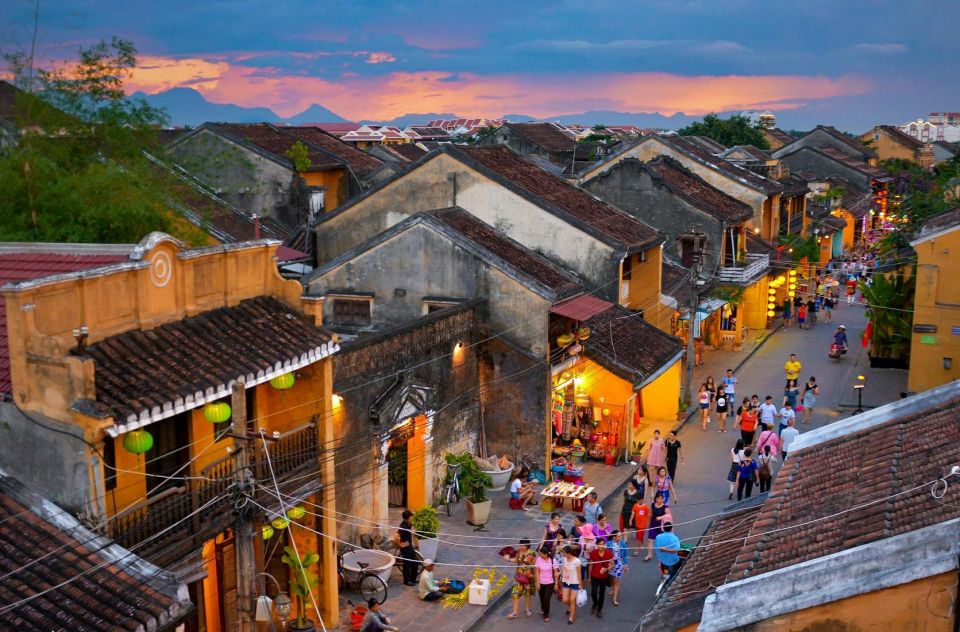
This tour begins with pickup from your hotel. You’re asked to be ready in the lobby about 15 minutes before the scheduled time, which is great if you want a smooth start instead of hunting for a meeting point.
What I like about the setup is how much is handled for you up front:
- you walk toward the Ancient Town with the guide
- you handle entrance tickets together (and entrance fees are included)
- you get the tour route laid out so you don’t waste time deciding what’s worth it
Because it’s only four hours, the timing matters. Hoi An’s streets can get hot and crowded later, and midday is also when shopping gets more tempting than educational. Starting at 08:00 helps you see the town with fewer crowds while your brain is still fresh.
Temple Kwan and Phuc Kien: where the community gathers
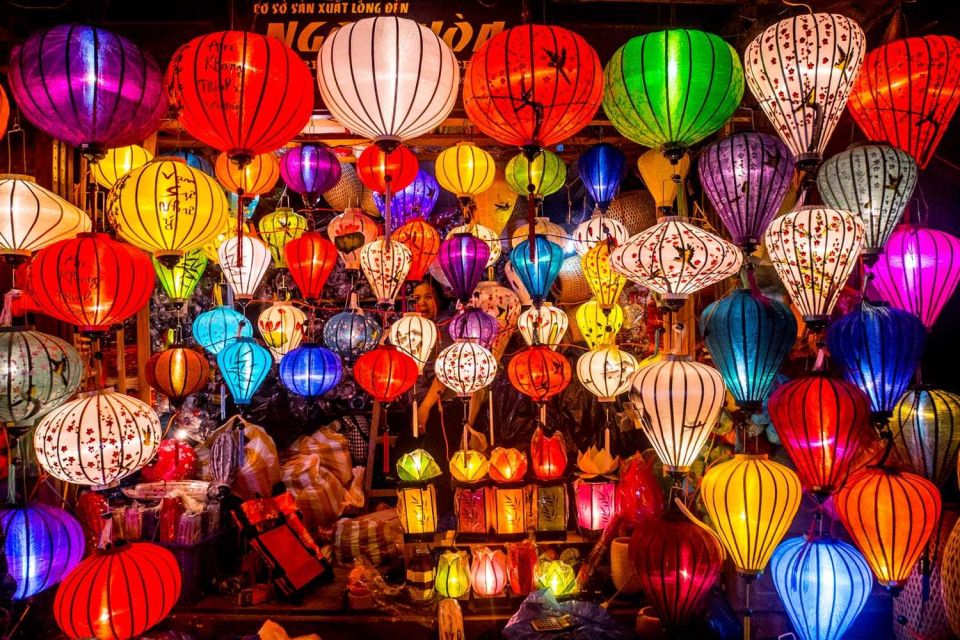
The tour’s first major culture stops are Temple Kwan and Phuc Kien Temple. These aren’t just scenic places to glance at and move on. With a good guide, you come away understanding why these spaces mattered to the people who lived and traded here.
Here’s what to pay attention to when you’re there:
- The layout and offerings: temples are built to direct attention and movement, not just to look pretty.
- The links between local devotion and trade-era connections: Hoi An thrived through merchant networks, and religious community halls often tracked those relationships.
- The way the temples “fit” the neighborhood: they don’t feel like standalone monuments. They sit in the middle of daily street life.
I also like that this tour doesn’t treat temples like an obligation. It gives you a guided reason to visit, and that keeps you from rushing through small details that are actually the point.
Tan Ky Ancient House: merchant-era home, practical architecture
Next you’ll visit Tan Ky Ancient House, one of the town’s standout historic residences. A house stop is crucial in Hoi An because it shifts the story from monuments to ordinary life—at least ordinary life for a successful family.
When you’re inside, focus on how the home is arranged:
- how rooms connect and how light is controlled
- how corridors and courtyards shape movement
- the craftsmanship details that show wealth, trade, and long-term building decisions
This is where the “architecture influenced by multiple cultures” idea becomes more than a slogan. You’ll start spotting how styles and building habits reflect trade contact, local adaptation, and the needs of a busy household.
The Tan Ky stop is also a good reset from the street pace. Even if you’re not an architecture nerd, the house makes you slow down just enough to notice what makes Hoi An distinct from other coastal towns.
Japanese Covered Bridge and cultural show rooms: the famous frame
The Japanese Covered Bridge is the star everyone asks about, and this tour gives you more than a quick photo. You’ll also go to cultural show rooms connected to the bridge area, which helps you understand why the bridge is more than a pretty crossing.
Here’s the practical way to enjoy this stop:
- Look at the bridge structure first, not the crowd. You’ll understand the design faster.
- Then shift to the cultural materials in the show rooms, because that’s where the symbols and background become clearer.
- If you’re buying a snack or taking photos nearby, do it right after the main viewing. Don’t wander off before you get the context.
The bridge area is famous, so expect it to be visually busy. That’s normal. Just remember: the value of this tour is that it adds explanation before you go into free browsing mode.
You can also read our reviews of more tours and experiences in Hoi An






The lane walk: Chinese, Japanese, French, European influences
One of the most enjoyable parts of the tour is simply walking through the old lanes. The streets are lined with centuries-old houses and architecture shaped by Chinese, Japanese, French, and European influences.
That matters because it turns Hoi An from a single-style destination into a layered one. You start seeing how styles blend rather than replace each other. It’s also a reminder that this was a working port town, not a museum town frozen in time.
As you go, keep an eye out for:
- rooflines and window patterns that suggest different building traditions
- storefront and alley layouts that reflect daily movement
- the way older buildings sit right next to later additions
Your guide helps connect the dots, which is where a guided half-day beats a self-wander. You’ll still get the freedom to look, but you’ll know what you’re looking at.
Local fish market: everyday life between the sights
A standout feature is the visit to a local fish market. This is important because it stops Hoi An from becoming only decorative. Markets show you how people actually live here—especially in a port town.
Even if you don’t buy anything, the market stop gives you a grounded pause. It’s a quick shot of real life: the flow, the sounds, and the practical side of the river economy.
Just go with the right mindset:
- Expect activity and smells; this is not a quiet photo corner.
- Bring your patience for close quarters.
- Treat it like context, not an attraction designed for tourists.
It’s a good balance point after temple and house stops.
Shopping time in the Old Town without getting lost
After the walking tour, you’ll have some free time to shop around the Old Town. This is the part people either love or dread, but with a guide-built route, it usually feels more controlled.
How to make the shopping time work:
- Use it to browse first, buy second. You’ll spot patterns in pricing.
- Focus on small items and gifts during this half-day window.
- If you want tailor-made items, you’ll likely need more time than four hours can cover—but for souvenirs, it’s usually enough.
If you get a guide who’s comfortable helping with choices, it can make shopping feel less like a hunt. In past tours, English-speaking guides such as Tea, Huy, and Minh have been praised for being helpful with photos and shopping support. You can treat that as a strong sign that you won’t be left totally on your own.
Bicycle and helmet included: why that small detail matters
Even though this is a walking-focused tour, bicycle and helmet are included. That inclusion matters because it can reduce fatigue and help you move between stops more efficiently when streets get narrow or distances add up.
Practical tip: wear closed, comfortable shoes. If you’re planning to do extra walking afterward, plan your day like a marathon runner, not like a person who thinks they’ll “just stroll.”
Also remember: luggage or large bags aren’t allowed. If you have a bulky backpack or hard-shell suitcase, you’ll need to sort that out before you arrive.
Price and value: what $55 buys in a half-day
At $55 per person for about four hours, the value comes from how many essentials are bundled:
- hotel pickup and drop-off
- an English-speaking guide
- bicycle and helmet
- all entrance fees
- travel insurance included
- tax and service charge included
What that means for you: you’re paying to remove friction. You’re not spending your morning figuring out tickets, routes, or the best sequence to avoid wasting time. In a short visit, that kind of efficiency is hard to recreate on your own—especially in an Old Town where lanes and hotspots are spread out but still close enough to tempt you into detours.
Luxury is in the details here: pickup, included fees, and the guide’s pacing. If you prefer solo exploring, you might pay less. But if you want your first morning in Hoi An to make sense fast, the pricing feels fair for what’s included.
Practical logistics you’ll be glad you planned for
Here’s what you should actually plan around:
- Bring comfortable shoes. Narrow lanes plus historic surfaces are not the moment for fancy sandals.
- Expect a no-big-bag rule: luggage or large bags aren’t allowed.
- Be ready in the lobby about 15 minutes before pickup.
- Your tour ends back at the meeting point/hotel area, and the guide returns you around 11:00.
If you’re sensitive to humidity, start hydrating early. This kind of tour is short, but it’s still outdoors enough to make thirst sneak up on you.
And one more thing: if you have mobility concerns, don’t assume “wheelchair accessible” automatically solves everything, since the activity also says it’s not suitable for people with mobility impairments. A quick confirmation before booking can prevent a painful mismatch.
Who should book this Hoi An half-day tour?
This tour is a strong fit if you want:
- a guided introduction to Hoi An Ancient Town in a compact time window
- the major sights you’ve heard about (bridge, house, temples) plus a real-life stop at the fish market
- someone to connect the architecture dots from Chinese, Japanese, French, and European influences
- shopping time built in, without turning the morning into a full-day retail run
It’s especially good for first-timers. If this is your first visit to Hoi An and you don’t want to spend hours deciding where to go, the route helps you get oriented quickly.
It might not be the best choice if:
- you need to travel with large luggage
- you have mobility limits that make narrow lanes or market-area movement difficult (confirm first)
Should you book it?
If you’re visiting Hoi An for the first time and you’d like your morning to feel guided, efficient, and culturally grounded, I’d book this. The combination of temples, Tan Ky Ancient House, the Japanese Covered Bridge with show rooms, and a fish market stop gives you a well-rounded snapshot that’s hard to recreate in four hours on your own.
Book it when you want structure but still want breathing room for Old Town browsing. Skip it if your priority is slow sightseeing from one neighborhood only, or if you can’t handle the narrow-lane pace or the no-large-bags rule.