REVIEW · HOI AN
Hoi An Countryside Tour with Bamboo Basket Boat Rowing , Buffalo Ride, Farming
Book on Viator →Operated by Andy hoi an online Tours · Bookable on Viator
Your day in the countryside gets hands-on fast. This private Hoi An outing blends bamboo basket boat rowing with a real water buffalo ride, plus farming work that feels like you’re actually part of the rhythm of village life. It’s a smart break from the noise of the Old Town, with pickup and a guided route through working farms and craft families.
I especially like that the day doesn’t stay “look only.” You do farming tasks (including seaweed work), try your hand at traditional village activities, and then finish with Thanh Ha pottery where you get to make a cup or vase. The pacing also makes sense: you move from water (coconut forest) to land (herb and vegetable fields) to craft (pottery) without feeling rushed.
One consideration: it’s weather-dependent, so plan for possible rescheduling if conditions aren’t right. And since drinks and the meal are not included, you’ll want to budget a bit and bring a little patience if you get hungry between stops.
In This Review
- Key things you’ll remember from this Hoi An countryside day
- From hotel pickup to the quiet start in herb-country
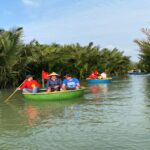
- Bay Mau coconut forest and the bamboo basket boat experience
- Tra Que Vegetable Village: farming tasks you actually do
- Cam Thanh water buffalo ride: work the landscape, then rest
- Thanh Ha pottery village: make a cup or vase, then sign your souvenir
- The food and what’s (and isn’t) included
- Price and value: is $76.42 worth it for a private 4–5 hours?
- Who should book this Hoi An countryside tour
- Short practical FAQ
- FAQ
- How long is the Hoi An countryside tour?
- What time does pickup happen?
- Is this tour private?
- What’s included in the activities?
- Is the meal included?
- What if the weather is bad?
- Should you book it: my decision guide
Key things you’ll remember from this Hoi An countryside day
- Bamboo basket boat time in Bay Mau coconut forest, including fishing-for-crabs practice with local know-how
- Seaweed-based fertilizing and traditional watering at Tra Que vegetable village (yes, you’ll get involved)
- Cam Thanh area with a wartime shelter context, adding meaning to a scenic water ride
- Thanh Ha pottery village hands-on practice, with clay work and a fun souvenir you write your name on
- Private car/minivan with hotel pickup, so you’re not fighting group logistics
From hotel pickup to the quiet start in herb-country
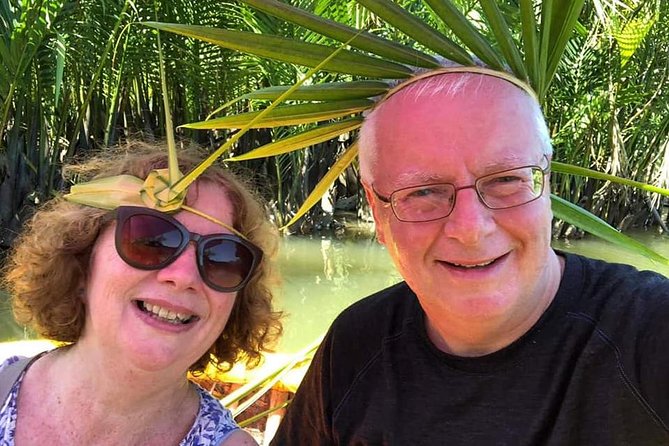
This is built like an easy, small-day escape. You’re picked up from your Hoi An hotel lobby in the morning at 8:30 a.m. or in the afternoon at 2:00 p.m., then driven out to a calmer farming area. The vibe shift is immediate. Instead of shops and scooters, you’re heading toward fields and families tied to daily work.
You’ll meet a guide who’s there to keep things flowing and explain what you’re seeing. In the feedback I’ve seen, guides such as Ty and Mr Tuan are called out for being patient and clear, which matters on tours like this where you’ll be switching between land activities and water time. It also helps if you want your questions answered without feeling like you’re slowing the group down.
The timing is a big part of why this works. A 4–5 hour countryside schedule is long enough to feel like a full experience, but short enough that you don’t lose your whole day. If you’re visiting Hoi An for a few days, this is the kind of excursion that keeps your schedule realistic.
You can also read our reviews of more boat tours in Hoi An

Bay Mau coconut forest and the bamboo basket boat experience
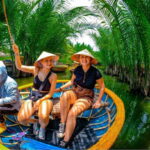
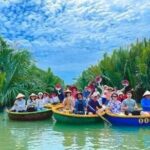
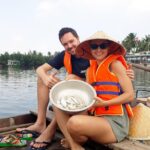
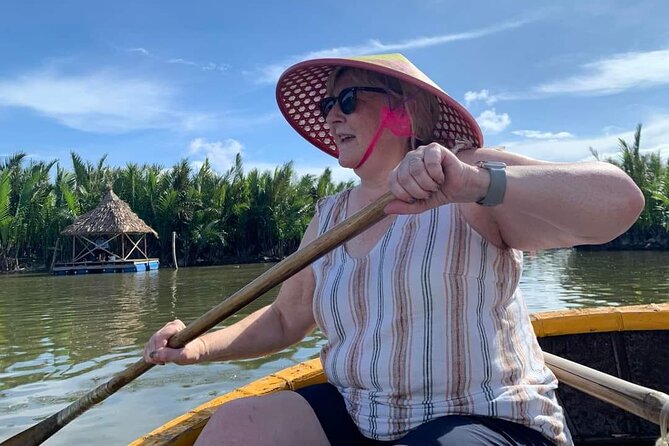
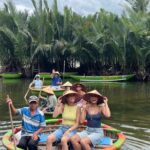
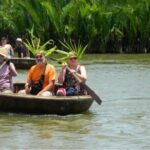
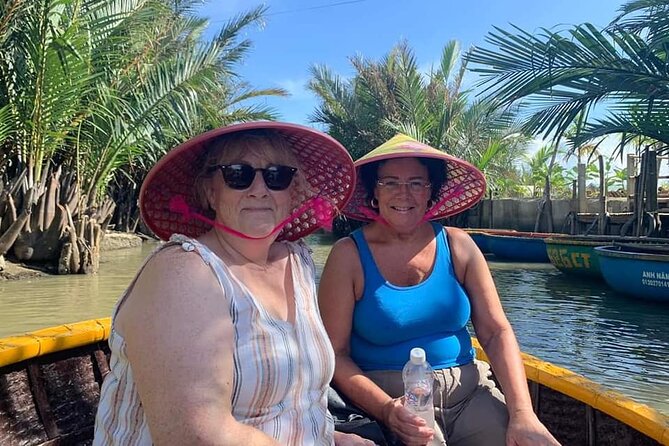
The day starts with Bay Mau Coconut Forest, focused on nipa palm and the water-world around the Cam Thanh area. This is where you get the signature “how do I do this” moment: bamboo basket boat rowing.
You’ll get a chance to try fishing for crabs using traditional methods while local guides show you how the big fishing nets work. It’s not just a scenic ride. The point is learning by doing. You’ll get a feel for how locals use the landscape—thin channels, water plants, and low boats—to work with the water instead of fighting it.
A nice bonus here is that the guides also demonstrate small crafts made from coconut leaves. They make items like watches, fish, and grasshoppers from the leaves, and you’re given the souvenirs. It’s a small thing, but it gives you something to take home that’s tied to this exact environment, not a generic market item.
After the water time, there’s a meal cooked by a local family. Just note: the overall tour doesn’t list drinks as included, so plan on water or soft drinks being an extra cost if you want them.
What can feel challenging: you’ll be on the water and moving in and out of the boat experience. If you’re sensitive to getting splashed or you prefer fully seated, slow travel, this stop is still doable, but it won’t be a “dry and tidy” activity.
Tra Que Vegetable Village: farming tasks you actually do
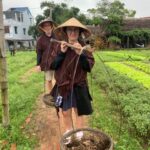
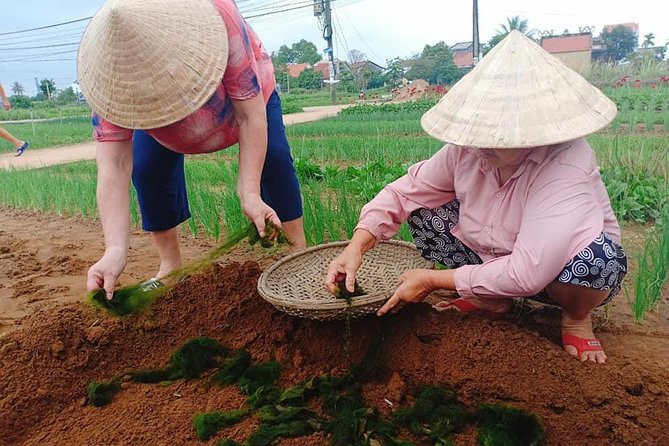
Next comes Tra Que Vegetable Village, a place built around herbs and vegetables grown using traditional methods. You meet a local family and share drinks while they tell stories about village life. This matters because it turns the day from “activity list” into context: you’re learning what the work supports, not only how the work looks.
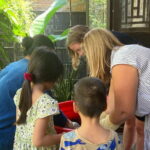
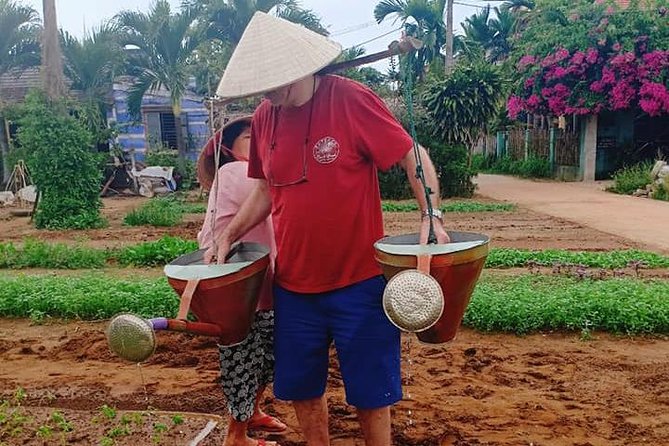
Then comes the hands-on part. The family demonstrates the growing tasks involved, and then it’s your turn. You work the soil, fertilize using seaweed (including stomping in the seaweed), sow plants, and water them the traditional way with two watering cans. It’s active, simple, and surprisingly physical for something that sounds like “a cultural stop.”
This is one of the most praised parts of the overall experience because it’s participatory. Families with kids especially tend to like it because it’s concrete. You can see what you’re doing and understand the cause-and-effect: stomp seaweed, help feed the soil; sow, nurture, water, repeat.
Practical takeaway: wear clothes you don’t mind getting dirty and expect to feel warm after some field work. If you’re carrying a phone, consider using a secure pocket or keeping it protected during the muddy bits.
Cam Thanh water buffalo ride: work the landscape, then rest
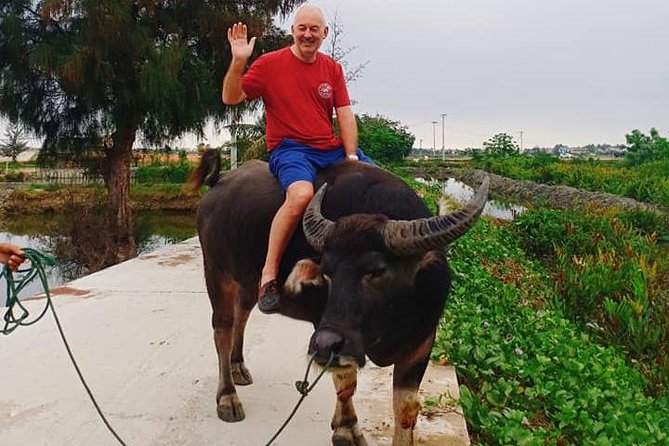
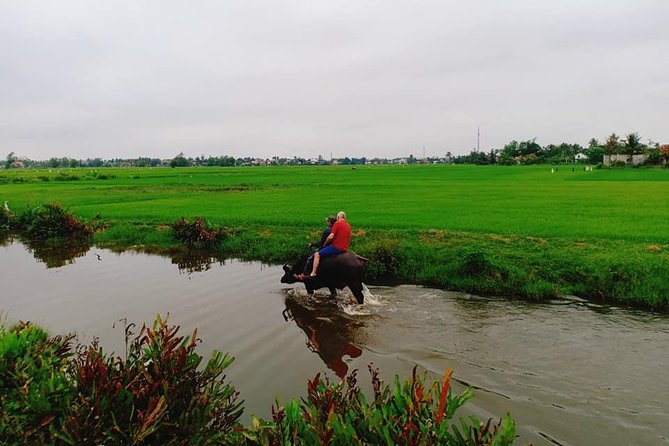
After your farming time, you move into the Cam Thanh village area and take a water buffalo ride. The buffalo ride is a highlight type experience because it’s iconic for the region—but it’s also practical in the way it connects animals, water, and fields.
There’s also important local context here. During the Vietnam War, Cam Thanh acted as a shelter for locals and soldiers hiding. That background gives the water and plant-world you’re traveling through a deeper layer than “pretty scenery.”
Then you take a break at a local family. This rest stop is not just downtime; it helps you reset between active segments. It’s the moment that turns the day into a story with a rhythm instead of nonstop motion.
If you’re trying to plan your energy, this is where you’ll appreciate the break. You’ve already done water-related activity and field work, and the buffalo ride adds another “hands-on” element. Taking a pause after keeps the overall pace comfortable.
Thanh Ha pottery village: make a cup or vase, then sign your souvenir
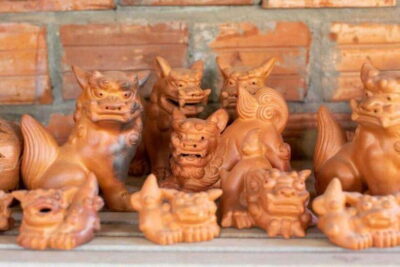
After the countryside work, the route shifts to craft at Thanh Ha Pottery Village. Here, you’ll walk the village with your guide and stop at a typical family business to learn pottery making and take home souvenirs.
The hands-on element is the best part for most people: you learn how to make a tea cup or vase using clay, then write your name on the product. That little “this is mine” moment makes the souvenir more meaningful than a store-bought item because your hands shaped it.
This stop gives a different type of value than the farm and boat portions. You’re switching from outdoors labor to a calmer, skill-focused craft. If your body is tired from the seaweed stomping and walking in the fields, this is a welcome change.
Watch for timing: pottery sessions are often short and focused. You’ll likely have enough time to make and decorate what you can, but it’s not a multi-day workshop. It’s perfect for a half-day traveler who wants a real try without getting stuck for hours.
You can also read our reviews of more tours and experiences in Hoi An



The food and what’s (and isn’t) included
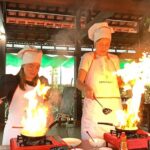
Here’s what the tour provides in terms of food support: there’s mention of a meal cooked by a local family after the coconut forest stop. That’s a nice inclusion because countryside trips can easily turn into “buy food wherever you can.”
But drinks and the meal details are listed as not included in the overall package. That means you should expect to pay for water, soft drinks, and any extras you want during breaks. If you’re the type who needs a steady hydration plan, bring a little cash for drinks so you’re not deciding on the spot.
Also, because this is an active day, plan for snacks if you tend to get hungry between the stops. The schedule is structured, but countryside routes can mean you’re moving through different areas in short bursts.
Price and value: is $76.42 worth it for a private 4–5 hours?
At $76.42 per person, this isn’t priced like a cheap “bus tour.” It’s closer to a value-driven private experience because you get a private car or minivan plus a professional English-speaking guide, and you also pay activity fees that many similar tours either skip or push into add-ons.
What makes the cost feel fair:
- Private transport from your hotel lobby
- English-speaking guide
- Included farming activity fee
- Included basket boat fee
- Included water buffalo ride and water
- Included village entrance tickets
Where the value might feel lighter:
- Drinks are not included, so you can add a small extra cost.
- You’ll still want your own comfort items (water bottle, phone protection, basic sun protection), since the package doesn’t list those extras.
For me, the real “value test” is this: do you get real participation instead of only watching? Here, you do. You row, you farm, you ride the buffalo, and you make pottery. For a countryside day that typically would take multiple tickets and planning, bundling it into one smooth route is a smart way to spend a few hours in Hoi An.
Who should book this Hoi An countryside tour
This tour fits best if you want more than a photo walk.
You’ll like it if you:
- Want hands-on experiences like seaweed fertilizing, sowing, and traditional watering
- Enjoy water activities but also don’t mind getting a little dirty on land
- Travel with family and want kids to have jobs, not just seats
- Appreciate context beyond scenery, like the wartime shelter note connected to Cam Thanh
You might think twice if you:
- Prefer fully passive tours where you watch everything
- Are not comfortable with getting muddy during farming tasks
- Need lots of included food and drinks, since only a local family meal is mentioned and drinks are not included
Also, because this is private—only your group participates—you get a more personal pace. That’s especially helpful if your group has different energy levels (adults who want activity plus kids who need extra breaks).
Short practical FAQ
FAQ
How long is the Hoi An countryside tour?
It lasts about 4 to 5 hours.
What time does pickup happen?
You can be picked up at 8:30 a.m. for the morning option or at 2:00 p.m. for the afternoon option.
Is this tour private?
Yes. It’s private, so only your group participates.
What’s included in the activities?
Included are farming activities, the bamboo basket boat fee, and a water buffalo ride, plus village entrance tickets.
Is the meal included?
A meal cooked by a local family is mentioned, but drinks and personal food costs are not listed as included.
What if the weather is bad?
This experience requires good weather. If it’s canceled due to poor weather, you’ll be offered a different date or a full refund.
Should you book it: my decision guide
If you’re choosing between another quick Hoi An sightseeing loop and a day with real work, this is the kind you should book.
I’d pick it if you want bamboo basket rowing, Tra Que farming with seaweed, and Thanh Ha pottery all in one afternoon or morning—without having to stitch together tickets and directions yourself. The private transport and English-speaking guide also make it easier to enjoy the day instead of managing logistics.
Book it with a realistic mindset: you’re doing activities, not just touring. Bring a little flexibility, be ready for outdoor mess during the farming segment, and you’ll likely come away feeling like you learned something about how people actually live around Hoi An.