REVIEW · HOI AN
Hoi An Countryside Back Road Tour
Book on Viator →Operated by Hoi An Native Tours · Bookable on Viator
Back roads replace busier Hoi An streets. This countryside circuit slips you out of town for a calm morning of working villages and craft families, with the emphasis on seeing real daily routines instead of just snapping photos. I like how the route feels quiet and purposeful, not tour-bus hurried.
What I really liked was the way the guide brings the culture to life, with English-speaking narration and a playful attitude I’ve seen attributed to guides like Luc and Hanni. You’ll get time to meet the people behind the products, from pottery makers to carpenters and straw weavers, and you’re not just looking through a shop window.
One thing to consider: the tour starts early (around 7:00 am) and includes countryside riding, which can feel a bit bumpy or active if you’re not used to back-road travel.
In This Review
- Key things to know before you go
- Why this back-road route feels more like real Hoi An
- Pickup, timing, and how the ride typically works
- Thanh Ha pottery village: where everyday skill meets family tradition
- Kim Bong carpentry village: woodcraft with boatbuilding roots
- Cam Nam Island straw weaving: mats, yoga mats, and the logic of fibers
- The included breaks: coffee/tea and bottled water at the right moments
- Value and cost: why $41 can work here
- Who this tour is best for (and who should think twice)
- Should you book Hoi An Countryside Back Road Tour?
- FAQ
- What’s the duration of the Hoi An Countryside Back Road Tour?
- Is pickup available for this tour?
- What’s included in the $41 price?
- Which places does the itinerary include?
- Is this a private tour?
- What’s the cancellation policy?
Key things to know before you go
- A private 4-hour morning built around craft villages and countryside roads
- Admission included at each main stop, so you’re not digging for tickets
- Thanh Ha pottery with a family/workshop feel and hands-on viewing time
- Kim Bong carpentry tied to traditional wooden boatbuilding and wood craft
- Cam Nam area straw weaving focused on mats and everyday woven items
- Coffee or tea plus bottled water included, and no alcohol in the package
Why this back-road route feels more like real Hoi An

Hoi An has plenty to see, but it can also feel like you’re watching the same scenes from the same angles as everyone else. This tour is built around a different vibe: quiet roads, everyday work, and families who actually depend on these crafts and local agriculture.
I also like that it’s not just “watch and leave.” The experience is designed around meeting peasants and working people, plus the idea of a farming-day feel. Even when you’re not actively farming, the tone is about labor, tools, and routines—why people do what they do, and how skills pass through generations.
Another plus: the stops are spread across three focused craft themes, so your morning has a rhythm. You move from pottery to woodcraft to straw weaving without the sense that you’re bouncing randomly from one landmark to another.
You can also read our reviews of more tours and experiences in Hoi An.



Pickup, timing, and how the ride typically works
This is a morning tour with a 7:00 am start, usually around 4 hours total. The early start matters more than you might think. You’re more likely to get comfortable temperatures and a calmer atmosphere before the day’s bigger crowds fully kick in.
Pickup is offered, which helps if you don’t want to coordinate transport on your own. You’ll also use a mobile ticket, which keeps things simple once you’re at the meeting point.
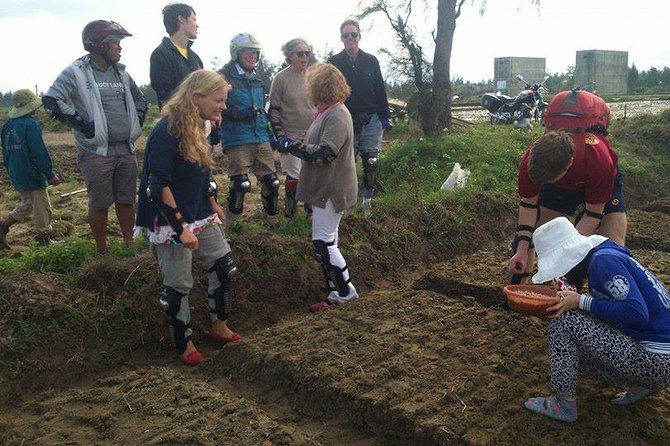
As for the ride itself, the experience is described as a back-road tour and the style can lean toward a jeep or a motorcycle/scooter setup depending on your group. People who’ve done similar countryside versions with this operator describe routes that feel off the beaten path and guides who keep the pace controlled. If you’re comfortable on a scooter, that can make the trip feel faster and more intimate; if not, you’ll still be able to enjoy the route by staying in the arranged vehicle.
Practical tip: wear light layers and closed-toe shoes. The villages are hands-on places, and you’ll often be standing near workshops and craft spaces where dust and tools are normal. Bring sun protection too, since it’s an early morning start but you’re still in Vietnam’s strong daylight.
Thanh Ha pottery village: where everyday skill meets family tradition

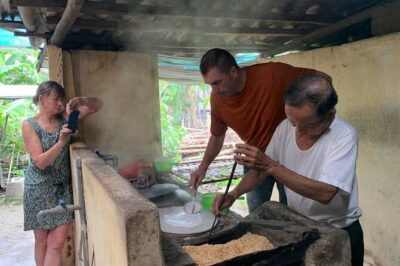
The first stop is Thanh Ha Pottery Village, with about 30 minutes on site and an admission ticket included. This is the best opening act if you want to understand how craft villages work from the inside.
What makes Thanh Ha interesting is that pottery here isn’t just a product—it’s a craft with recognizable styles and a living lineage. The tour description emphasizes watching how pottery styles have changed and influenced each other over time. In practical terms, that means you’re more likely to see different shapes and techniques and ask better questions, instead of just looking at the final vase and moving on.
During your visit, plan on spending your time in two modes:
1) watching the workflow and tools
2) talking with the family makers about what they do and why their approach matters
A downside to consider: 30 minutes is a real time limit. It’s enough to appreciate the basics and see the workshop rhythm, but it’s not enough to become a pottery expert. If you love slow, deep craft sessions, you may want to follow up later in Hoi An with a longer workshop experience on your own.
Kim Bong carpentry village: woodcraft with boatbuilding roots
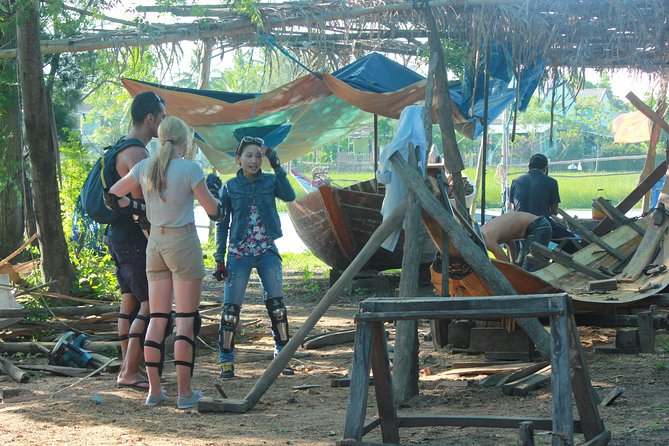
Next is Kim Bong Carpentry Village, again around 30 minutes with admission ticket included. This stop is especially valuable if you care about how traditional skills survive in daily life.
The key idea here is traditional dockyard craft. The tour describes wooden fishing vessels being built using traditional techniques, and then it connects that woodworking knowledge to handcrafted furniture and sculptures. That connection is what makes the stop feel more than a generic craft showroom. You’re seeing how materials and techniques translate across different kinds of woodworking work.
What you’ll likely notice if you pay attention:
- wood is treated like a system, not just a raw material
- the same discipline used for vessel work can show up in furniture details and sculptural pieces
- families keep skills alive by using them consistently, not just on special occasions
One small consideration: like the pottery stop, the time window is short. You’ll see a lot, but you won’t have hours to compare every tool or ask every question. The best strategy is to focus on one thing you care about—joints, finishing, carving style, or how the workday is organized—and ask your guide to point it out.
Cam Nam Island straw weaving: mats, yoga mats, and the logic of fibers
The final major craft stop is in the Cam Nam Island area, described through Cam Kim straw weaving village. You get about 30 minutes here, and admission is included.
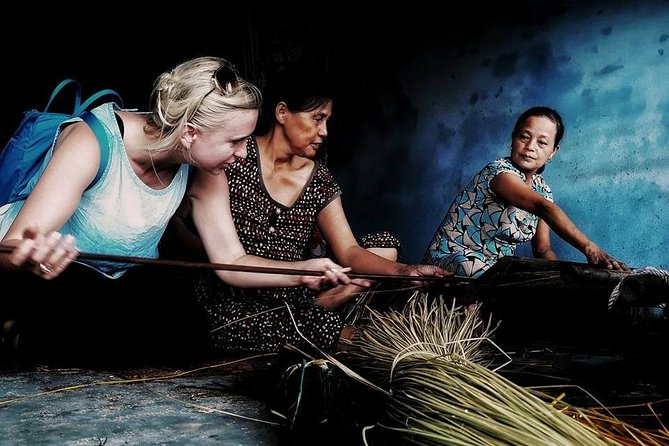
Straw weaving is a great choice for this tour because it connects directly to everyday objects: the tour description specifically mentions sleeping mats and yoga mats made from straw. That detail helps you picture the craft function, not just the aesthetics. Woven items are everywhere, but you rarely get to see how the fiber becomes something useful and durable.
This part also highlights how weaving styles have changed and influenced each other over time. Even without a long lecture, that concept encourages you to look for differences: pattern choices, thickness, weaving tension, and how mats are finished. It’s like learning to read the object instead of just viewing it.
A drawback to keep in mind: weaving villages can feel busier in a quieter way—people working with hands on tasks. If you expect a calm museum pace, you might feel slightly rushed, because the craft process is happening around you. Still, that’s exactly why this stop works: you’re seeing the real labor, not just a staged demo.



The included breaks: coffee/tea and bottled water at the right moments
The tour includes coffee and/or tea plus bottled water. This matters because a rural morning can drain energy faster than city strolling. You’ll want your hydration and caffeine without having to step away and negotiate on the spot.
Also, since the schedule is compact—three 30-minute craft stops—you don’t want to spend time searching for snacks. The included drinks keep the pace moving but not frantic.
Because alcoholic beverages are not included, plan on sticking to tea/coffee and water during the tour. If you’re a light sleeper and starting at 7:00 am feels early, caffeine (or a warm tea) can be a smart move.
Value and cost: why $41 can work here
The price is $41 for roughly 4 hours, and it’s private, with pickup offered and admission included for each craft stop. That’s the big value story.
Many tours at this price either:
- skip the admissions (so you pay later), or
- pack in lots of stops with little meaningful time, or
- use public transit logistics that eat your time.
Here, you’re paying for a curated morning circuit with three clearly defined craft villages plus practical extras like water and coffee/tea. The private format also helps. It’s easier to ask questions when your group isn’t sharing the guide with multiple families and friends.
If you’re traveling as a couple, private tours can often be the best deal per person versus joining a large group. You also get control over pace—especially useful when you see something you want to linger on for another few minutes.
Who this tour is best for (and who should think twice)

This experience is a strong fit if you:
- love craft and want to see how it’s made, not just what’s sold
- enjoy countryside routes and early starts
- prefer a smaller, private feeling over large-group sightseeing
- want a morning that breaks you out of the old-town routine
It may be less ideal if you:
- hate early mornings or prefer late starts
- want hours of one location rather than short, focused stops
- are very sensitive to roadside riding conditions (since the route uses back roads and may involve motorbike/jeep style travel)
If you’re unsure, think about your travel style. If you get energized by meeting working families and watching daily production, this will likely hit the right note.
Should you book Hoi An Countryside Back Road Tour?
I’d book it if you want a practical, local morning with clear stops and real people at the center. The combination of Thanh Ha pottery, Kim Bong carpentry, and Cam Kim straw weaving gives you a balanced view of rural craft life around Hoi An, and the included admissions keep the cost sense clean.
I’d hesitate only if you’re looking for a slow, deep experience at one site or if early morning + back-road riding sounds miserable for you. For most people, though, it’s a smart way to spend a morning: you get out of town, you learn something you can actually apply when you shop later, and you leave with a stronger sense of how these crafts function day to day.
FAQ
What’s the duration of the Hoi An Countryside Back Road Tour?
The tour lasts about 4 hours.
Is pickup available for this tour?
Yes, pickup is offered.
What’s included in the $41 price?
Coffee and/or tea, bottled water, and admission tickets for the main stops are included.
Which places does the itinerary include?
The tour includes Thanh Ha Pottery Village, Kim Bong Carpentry Village, and Cam Nam Island / Cam Kim straw weaving village.
Is this a private tour?
Yes. It’s a private tour/activity, and only your group participates.
What’s the cancellation policy?
You can cancel for a full refund up to 24 hours before the experience’s start time. Free cancellation applies under that window.