REVIEW · HOI AN
Da Nang/Hoi An: Market & Old Town Private Tour with Transfer
Book on GetYourGuide →Operated by Hoi An Life Cycle · Bookable on GetYourGuide
Hoi An old town reads like a story. On this private 3-hour walk, you start at Hoi An Central Market and head toward the Japanese Covered Bridge, with a guide who turns street scenes into context. It’s a fast, structured way to understand how Hoi An works—past and present—without feeling like you’re guessing your way around.
I also liked the way the route pushes past postcard stops, moving into homes and crafts with stops at Tan Ky ancient house and a silk weaving workshop. The only real drawback is the walking: you’ll be on your feet through narrow old-town lanes, so plan for slower pace if it’s hot or crowded.
In This Review
- Quick takeaways
- Why a 3-hour private old-town walk makes sense
- Price and value: what you’re really paying for
- Getting picked up in Da Nang (and arriving without stress)
- 8:00 start at Hoi An Central Market: watch trade, not just stalls
- Phuc Kien Assembly Hall: faith, community, and immigrant influence
- Japanese Covered Bridge: the city’s symbol with hidden details
- Art shops and galleries along the way: souvenirs and local taste
- Tan Ky ancient house: late-18th-century life you can feel
- Hoi An Folk Museum: comparing old and modern life
- Silk weaving workshop: why craftsmanship still matters
- Traditional music and dance performance: timing is everything
- Finishing around 11:00: what to do with your extra time
- Who should book this private tour
- Should you book it?
- FAQ
- How long is the tour?
- What time does the tour start?
- Where do pickups happen?
- What stops are included during the tour?
- Are the Japanese Covered Bridge and Tan Ky included with tickets?
- What language is the guide?
- What should I bring?
- What extra costs should I expect?
Quick takeaways
- Market-first timing (around 8:00): you see daily trade early, when it feels most real.
- Three anchors in one loop: Phuc Kien Assembly Hall, the Japanese Covered Bridge, and old-house streets.
- Tan Ky House adds real texture: you’re looking at a late-18th-century home, not just exteriors.
- Folk Museum helps you read changes: you’ll learn how old vs modern Hoi An life differs.
- Silk weaving is hands-on to watch: you’ll see why the craft stuck around.
- Music and dance has fixed times (10:15 or 15:15): your start time should match the show you want.
Why a 3-hour private old-town walk makes sense
Hoi An can feel like it has “too much to see” and “not enough time.” This tour is built to solve that. You get a guided overview of how the town developed—through daily life, worship spaces, architecture, and craft—without spending the whole day bouncing between far-flung sights.
Starting from Da Nang (or picking up from your hotel in central areas) is also a huge help. Instead of figuring out transport on your own, you get a private car transfer and a tight schedule that still leaves room to breathe. You’ll finish back at your hotel around 11:00 when the morning route lines up.
The private format matters too. You’re not stuck waiting for a slow group or getting separated from your guide. You can ask questions when something catches your eye—like what a building is used for now, or why certain communities formed in Hoi An.
You can also read our reviews of more private tours in Hoi An



Price and value: what you’re really paying for

It costs $40 per person for about 3 hours. On paper, that’s not “cheap,” but you’re buying a bundle: an English-speaking guide, private transport, old-town entrance access, and entrance fees for the activities included in the day’s stops. You also get bottle water, which sounds small until you’re walking the streets and heat hits.
The strongest value angle is logistics. If you’re coming from Da Nang, the private transfer alone can turn into the biggest hidden cost of trying to do this independently. Then there’s the old-town entrance ticket and guided visits that are more efficient when someone else handles timing.
What’s not included is simple: tips and personal expenses. That’s typical, but it’s good to know so you don’t do mental math during the tour.
One more note to keep in your back pocket: from February 8 to 15, transportation services charge an additional 300,000 VND due to overtime around the TET holiday. If your dates fall in that window, you’ll want to budget for it.
Getting picked up in Da Nang (and arriving without stress)
You’re picked up at your hotel lobby in either Hoi An or Da Nang (central areas), and then you go by private car. That matters because Hoi An streets are old and narrow, and it’s not the kind of town where you want to waste time negotiating rides at the edge of the Old Town.
The transfer also sets the tone for the day. You start with a clear plan right away, and you don’t spend the first hour just trying to orient yourself. If you like travel days that feel organized, you’ll appreciate that.
And because it’s private, the schedule feels more like a conversation with your guide. You can generally move at a pace that makes sense for your group, rather than being pulled along by other people’s pace.
8:00 start at Hoi An Central Market: watch trade, not just stalls
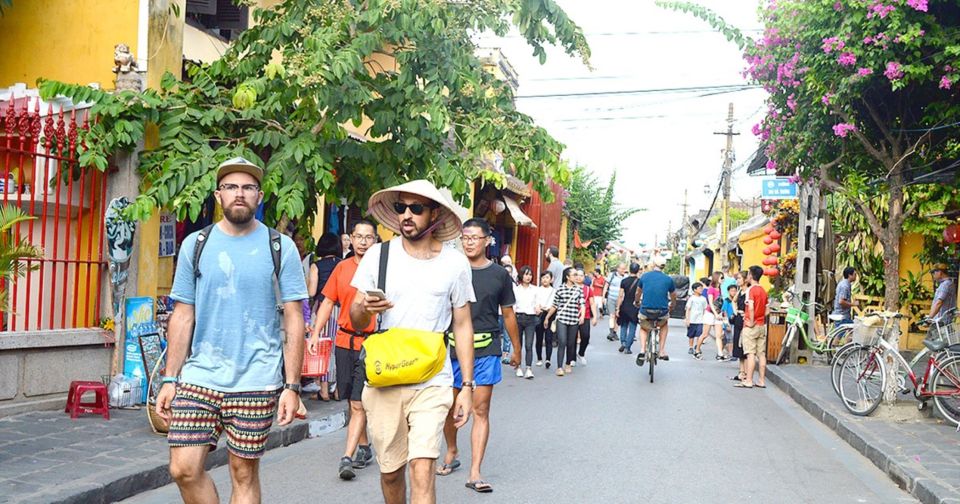
The tour kicks off around 8:00 at Hoi An Central Market. This is where you get your bearings fast. Markets in Vietnam aren’t just places to buy things—they’re information hubs. You’ll see how people live, what they’re working with that day, and what kinds of goods shape daily routines.
This stop works especially well early because the market has momentum. You’ll notice the flow: sellers preparing, buyers moving through, and the constant back-and-forth that makes the area feel like a living neighborhood rather than a tourist backdrop.
What I like most about this part is the guide’s framing. Instead of treating the market like scenery, you learn how trading actually functions in a traditional setting. That makes later stops make more sense because you understand the human story behind the buildings and crafts.
Potential drawback: markets mean crowds and lots of movement. Narrow aisles can feel tight, and you may need to step aside often for people carrying goods. Comfortable shoes really pay off here.
Phuc Kien Assembly Hall: faith, community, and immigrant influence
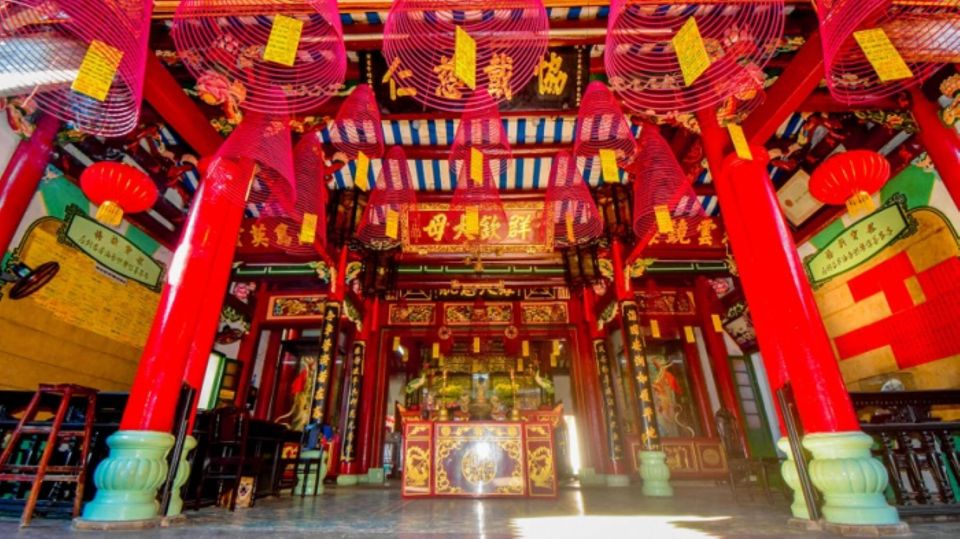
Around 8:30, you visit the Phuc Kien Assembly Hall (also linked with the Fujian community). This is a worship and gathering space tied to a specific Chinese heritage line in Hoi An.
What makes it valuable is that it explains why certain cultural patterns exist in town. Assembly halls like this weren’t only religious spaces. They were community anchors—places where people supported each other, observed shared traditions, and maintained identity.
In a short tour, you don’t get time to research everything alone. A guide helps you connect the dots quickly: you see the setting, you learn what happens there, and you get a clearer sense of how Hoi An became a crossroads town rather than a single-culture endpoint.
You can also read our reviews of more shopping tours in Hoi An






Japanese Covered Bridge: the city’s symbol with hidden details
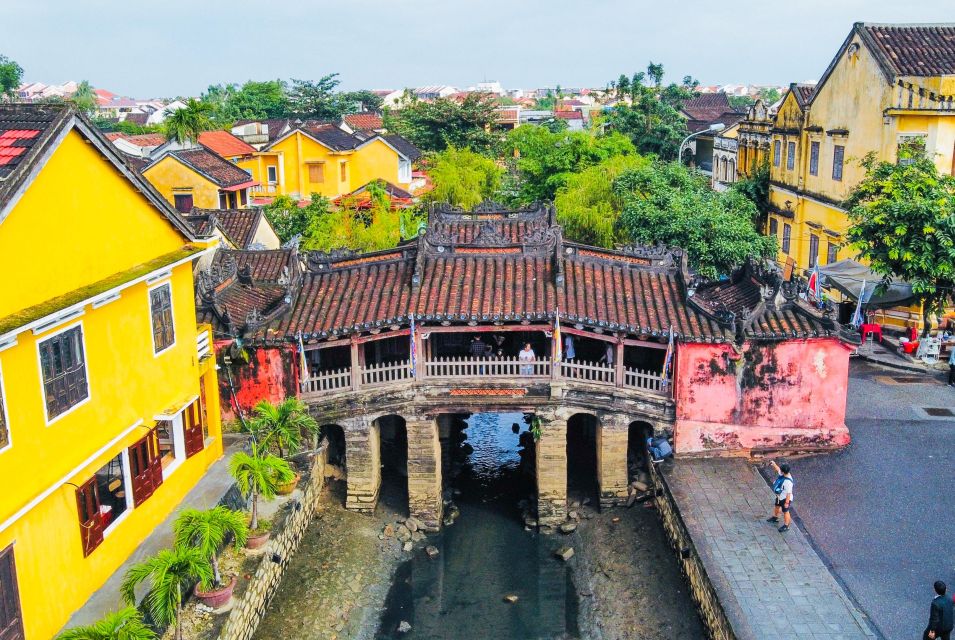
Next up is the Japanese Covered Bridge. It’s widely treated as a symbol of Hoi An, but the payoff here is learning how the bridge connects to cultural features and local daily life.
A covered bridge isn’t just a crossing. It’s a functional landmark with style, meaning, and a purpose beyond being photographed. With your guide, you’ll notice cultural features tucked into the structure that you might miss if you just rush in for a picture.
This is also a good time to slow down. The area is naturally a photo stop, but you’ll get more from it if you look like a visitor who’s trying to understand rather than just capture.
The possible drawback: this is one of the busiest spots. If you’re sensitive to crowds, don’t plan to linger without expecting people to pass through constantly.
Art shops and galleries along the way: souvenirs and local taste
On the way between stops, you’ll pass art shops and galleries. You might see daily-life-themed pictures displayed along the road, and you’ll get a sense of how Hoi An’s aesthetic stays profitable and personal at the same time.
This part can be hit-or-miss depending on your interest. If you like design and small craft objects, it can feel fun and easy. If you’d rather avoid commercial stops, it’s still useful because it shows how locals package the town’s charm for today’s visitors.
Practical tip: if you’re short on time or don’t care about shopping, use the guide’s explanations to get something out of the stop anyway. Even a quick look can tell you how the town’s images are sold and interpreted.
Tan Ky ancient house: late-18th-century life you can feel
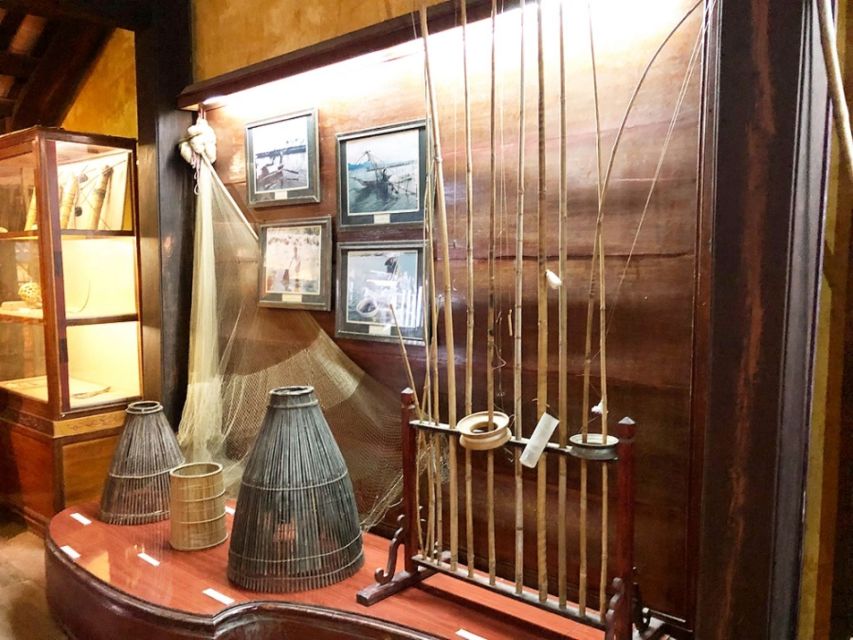
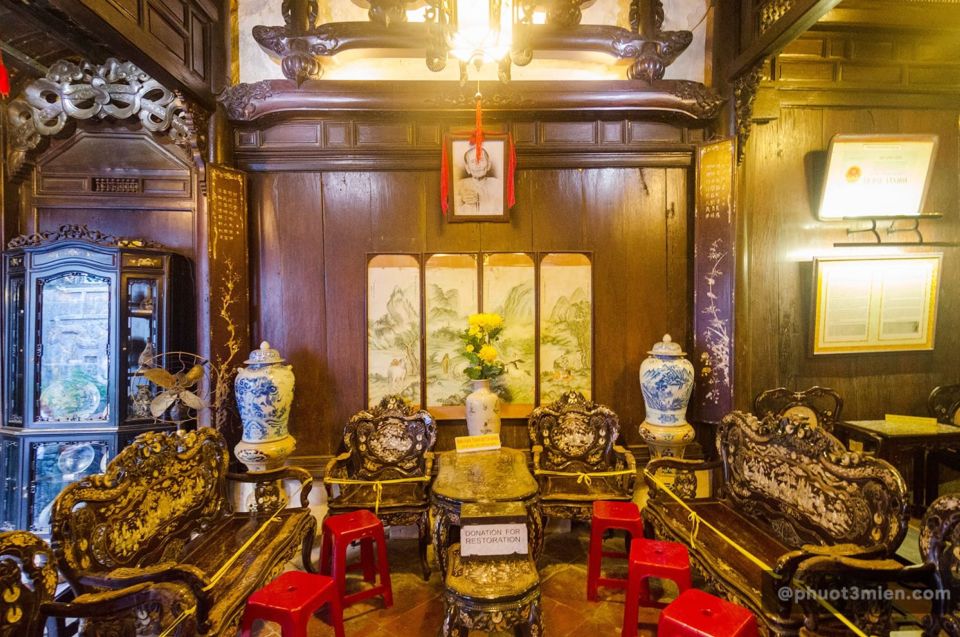
Then you reach Tan Ky ancient house, one of the oldest homes in the area, built in the late 18th century. This stop is where Hoi An stops being a concept and becomes a lived space.
With an ancient house, the key isn’t just age. It’s how the home reads—how rooms connect, how it’s oriented, and how the layout supports daily activity. Your guide helps you look beyond the facade, which is what turns a house visit from passive sightseeing into understanding.
What I like here is the contrast. After seeing the market and community worship space, you now have a household lens. You get to imagine the routines: visitors, family life, work, and the slower tempo of home life in centuries past.
Potential drawback: old houses often mean some uneven surfaces and stairs. You don’t need special mobility equipment, but you do need shoes with good grip.
Hoi An Folk Museum: comparing old and modern life
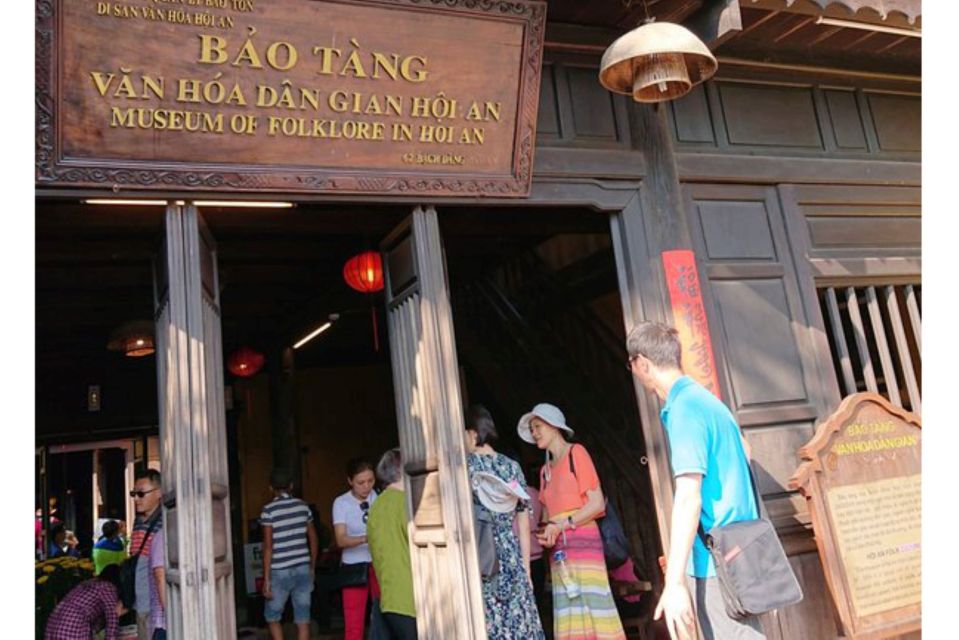
The Hoi An folk museum adds a helpful layer: it shows living culture and how people’s lives differ between older Hoi An and the modern version you see today.
This is a smart stop in a short tour because it gives you a reference point. When you’re walking through old streets and historic buildings, it’s easy to wonder what changed and what stayed the same. The museum helps you answer that with visuals and explanations tied to everyday life.
If you enjoy learning through objects, photos, and themed displays, you’ll probably get more out of this than you would just standing in the street.
Silk weaving workshop: why craftsmanship still matters
One of the most practical parts of the day is the silk weaving workshop. You learn about the traditional weaving and embroidery craft that has stuck with Hoi An over time.
This matters because silk isn’t just a souvenir story. It’s a work story: training, tools, patterns, and the patience behind the finished fabric. Even if you don’t buy anything, watching the craft process makes you understand why the industry lasted long enough to become part of the town’s identity.
In tours, workshops can sometimes feel like forced sales. Here, the value is the craft education and the chance to see the process as something real. If you want, you can also ask your guide what makes Hoi An’s silk and embroidery techniques distinct.
Traditional music and dance performance: timing is everything
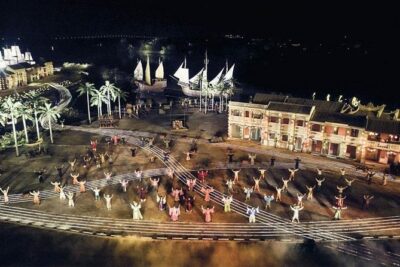
Your day includes a traditional music and dance performance at a traditional Hoi An house. The performance runs at set times each day: 10:15 or 15:15.
This is the one piece of the schedule that can make you feel rushed if you choose the wrong start time. If you care about the show, check your tour start time so you aren’t arriving mid-performance or missing the featured slot.
What I like about including a performance is that you stop treating culture as decoration. Music and dance give you a mood, a rhythm, and a sense of ceremony that buildings and markets can’t fully explain. It’s also an easy way to rest your feet for a bit while still staying engaged.
Finishing around 11:00: what to do with your extra time
After the show and final stops, you head back. The schedule you’ll likely follow returns you to your hotel around 11:00. If you’d like, you can also stay out in the area and walk on your own, then return later by yourself.
That “free walk” option is useful. Your guide can’t cover every street corner in three hours, but they can point you toward areas that match what you’re interested in—historic architecture, river-adjacent lanes, or just the places where local life still shows up.
If you’re the kind of traveler who likes to stretch the day, this ending gives you that flexibility without turning the trip into a whole separate project.
Who should book this private tour
This fits best if you want:
- a guided overview of Hoi An Old Town without getting lost
- an easy transfer from Da Nang
- a mix of history sites (like Phuc Kien and Tan Ky) plus real-life culture (market, museum, silk craft)
- an English-speaking guide who can point out what matters, not just recite facts
It’s also a great choice for first-timers who want to understand Hoi An quickly, and then use the remaining hours to wander with better eyes.
If you hate walking, hate crowds, or only want to see the most famous exterior photos, you might find some stops less satisfying. But if you’re happy to move at street pace, this tour is built for you.
Should you book it?
I’d book it if you want structure, context, and convenience. The strongest reasons are simple: private transport, a tight route that hits the town’s main cultural anchors, and included entrance access that saves time and decision fatigue. I also liked the human touch from my guide—one person I spoke with was able to share insights because they live in Hoi An, and that local perspective made the stops feel more grounded.
I wouldn’t book it if your ideal day is slow and aimless with zero organized stops. Also, if the 10:15 or 15:15 performance is your priority, check your available start times so you match the show slot.
If you line up those two points—comfort with walking and the timing of the show—this is a solid value way to get your bearings in Hoi An.
FAQ
How long is the tour?
The tour duration is 3 hours.
What time does the tour start?
It starts at 8:00, and there are also different starting times depending on availability.
Where do pickups happen?
Pickup is included at your hotel lobby in central Hoi An or Da Nang.
What stops are included during the tour?
You visit Hoi An Central Market, Phuc Kien Assembly Hall, the Japanese Covered Bridge, Tan Ky ancient house, Hoi An folk museum, and you also go to a silk weaving workshop. A traditional music and dance performance is included as well.
Are the Japanese Covered Bridge and Tan Ky included with tickets?
Yes. The old town entrance ticket and the entrance fees for the activities mentioned on the itinerary are included.
What language is the guide?
The tour includes an English-speaking guide.
What should I bring?
Wear comfortable shoes. The route involves walking through old-town areas.
What extra costs should I expect?
Tips and personal fees are not included. Also, from February 8 to 15, transportation services charge an additional 300,000 VND due to overtime for the TET holiday.