REVIEW · HOI AN
Cooking Class Lunch/ Dinner with Local Chef in Coconut Village
Book on Viator →Operated by Happy Tour · Bookable on Viator
Cooking class in Hoi An hits fast. In Coconut Village, you get a hands-on Vietnamese lesson for lunch or dinner, with a chef who also teaches ingredient choices and the Vietnamese names for what you use. I love the mix of practical cooking steps and real food pay-off, all in about 3 hours.
Two things I really like: the class stays small (max 10), so you’re not just watching from the sidelines, and you cook a full lineup instead of one single dish. If you get an enthusiastic guide like Anna, Linh, or Ling, the explanations feel clear and friendly, not stiff. One thing to consider: the menu can change based on ingredient availability, even though the core dishes stay the same.
In This Review
- Key Highlights You’ll Care About
- Coconut Village Cooking Class: Where It Starts in Hoi An
- The Menu You’ll Cook (and Eat): More Than a One-Dish Class
- 3 Hours, 2 Hours of Cooking: How the Class Actually Feels
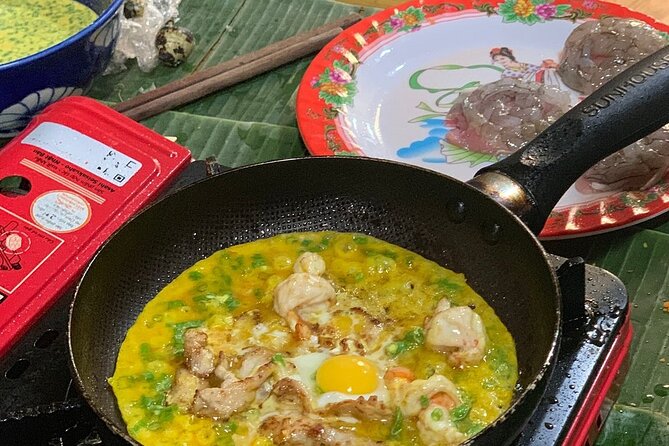
- Banh Xeo: The Rice Pancake Moment
- Cha Gio Spring Rolls: Crispy Skills Without Guesswork
- Goi Du Du Papaya Salad: Fresh, Tangy, and Very Learnable
- Lemongrass Chicken and Steamed Rice: The Reliable Comfort Duo
- Rice Milk and Seasonal Fruit: The Finishing Touches
- Vegetarian Option: Real Substitutions, Not an Afterthought
- Getting Value for $23: Why This Is a Smart Hoi An Activity
- Group Size, Pickup, and Timing: When It Fits Best
- Should You Book This Cooking Class Lunch/Dinner?
- FAQ
- How long is the cooking class?
- Is pickup offered?
- What is the class like, group or private?
- What is the maximum group size?
- What dishes are included in the menu?
- Can vegetarians join?
- How do you learn during the class?
- Where does the activity start and end?
- What is the price per person?
- What’s the cancellation policy?
Key Highlights You’ll Care About
- Real dishes, real timing: you learn multiple Vietnamese specialties in one 3-hour block
- Chef-led ingredient choices: you get help picking ingredients and learn Vietnamese names
- Small-group feel: capped at 10 people, mixed with other participants on a group tour
- Lunch or dinner included: you eat what you cook, plus seasonal fruit
- Vegetarian swaps available: mushrooms, tofu, and eggplant can replace meat-based items
Coconut Village Cooking Class: Where It Starts in Hoi An
Your day begins in Hoi An, at Hoi An Village Experience by Mr CuCẩm Thanh (Hội An, Quảng Nam, Vietnam). If you’ve got limited time in town, this is a nice fit: pickup is offered, and the activity is near public transportation, so you’re not stuck planning a complicated route.
The overall flow is designed for quick learning. You’re not expected to bring your own plan or pantry knowledge. The chef prepares the ingredients, then walks you through what you’re working with, including how to choose better ingredients and what they’re called in Vietnamese. That small shift matters: you start cooking with context, not just repeating steps.
And yes, it’s a group tour. That usually means shared energy and a schedule that moves along. Since the maximum group size is 10, you should still expect a more personal feel than you’d get on larger bus-style tours.
You can also read our reviews of more cooking classes in Hoi An

The Menu You’ll Cook (and Eat): More Than a One-Dish Class
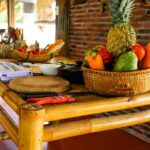
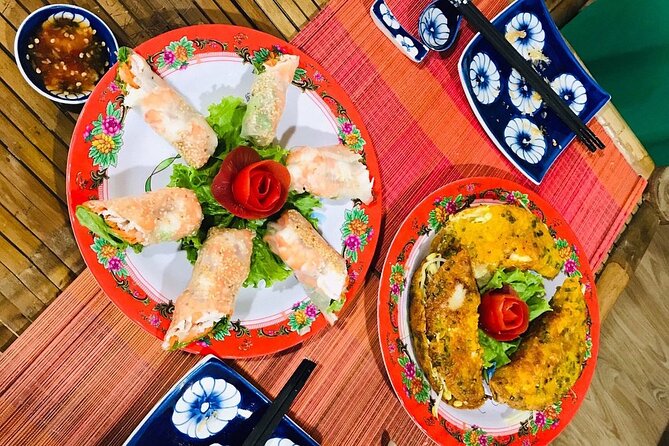
This isn’t a tiny demo. The experience is built around cooking and then eating a full meal. In the cooking class, you’ll make dishes from the set menu (with vegetarian substitutions if needed). Here’s the lineup you should expect:
- Sua gao (Rice milk)
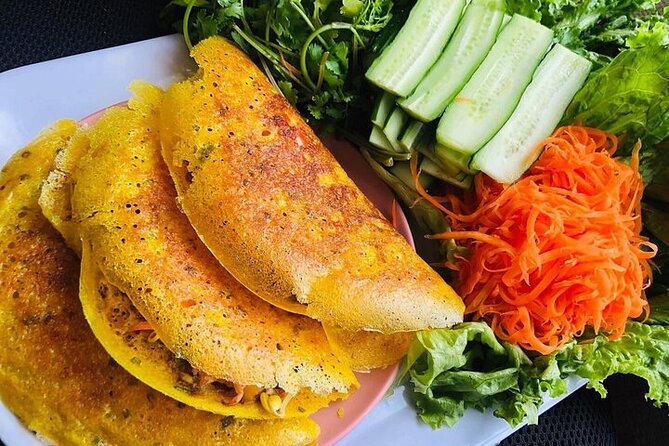
- Banh xeo (Rice pancake with fresh salad)
- Cha gio (Spring roll)
- Goi du du (Papaya salad)
- Ga chien (Chicken with lemongrass)
- Com trang (Steamed rice)
- Seasonal fruit
What I like about this menu is the balance. You get crunchy and fried (spring rolls), fresh and tangy (papaya salad), and a pancake-style dish (banh xeo) that’s very “Vietnam” without turning the lesson into a science project.
Also, you’re not just eating your class’s output as a formality. You finish with the fruits of your labor as your lunch or dinner. That makes the class feel like you’re leaving with a skill and not only a full stomach.
3 Hours, 2 Hours of Cooking: How the Class Actually Feels
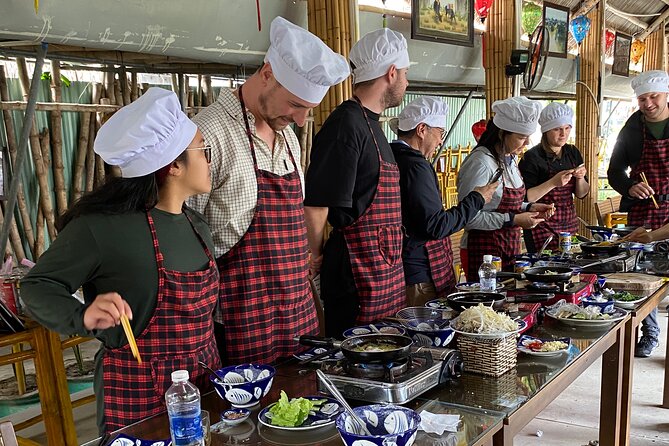
The schedule is tight: about 3 hours total, with roughly 2 hours devoted to the hands-on cooking. The rest of the time is for meeting up, getting oriented, and eating.
In a good cooking class, the chef doesn’t just say do this, add that, repeat. Here, the chef prepares the ingredients in advance, but still explains how to choose the best ones and what they’re called in Vietnamese. That’s a practical combo. You get structure for speed, while also learning how to shop and cook smarter after the class.
A helpful note: the class runs as a group tour combined with other participants. Even with multiple people, the cap of 10 keeps the pace realistic. You won’t feel like you’re waiting forever for someone else’s turn.
Banh Xeo: The Rice Pancake Moment
Banh xeo is one of the signature dishes in the class: a rice pancake served with fresh salad. In plain terms, it’s the dish that turns the lesson into an actual sensory experience, because you’re building something you can hold, fold, and eat.
What you’re really learning with banh xeo isn’t just one technique. It’s how Vietnamese cooking often works: simple components plus a clear assembly logic. You make the pancake, then you work with it as part of the meal, not as a standalone item.
If you’ve ever felt nervous around crepe-like or pancake-style foods while traveling, this is a good antidote. You’re guided through it, and the chef’s focus on ingredient quality means you’re cooking with intention instead of guessing.
Cha Gio Spring Rolls: Crispy Skills Without Guesswork
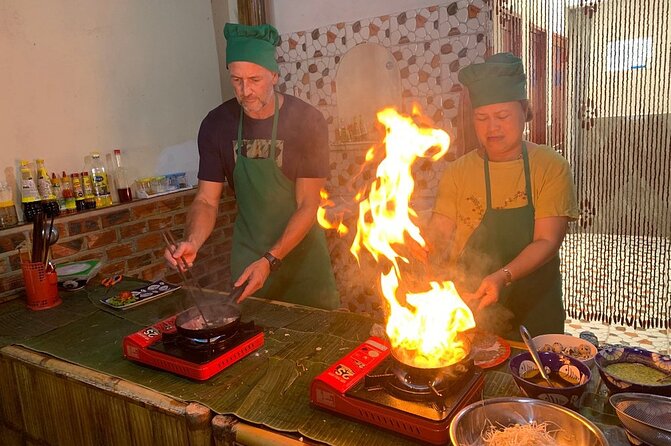
Then comes cha gio (spring rolls), described as deep-fried spring rolls in the class menu. Frying can feel intimidating, but the setup helps. The chef prepares ingredients, and you’re shown how to handle the process step-by-step instead of being left alone with a pot and hope.
This is also a good dish for learning because spring rolls are one of those foods you’ll see everywhere in Vietnam. If you understand the basic structure from the class, it’s easier to read menus and spot what’s different when you try them later.
And since it’s deep-fried, it brings immediate payoff. You can tell quickly whether the food is going well, and that feedback loop makes the class feel fun rather than stressful.
You can also read our reviews of more tours and experiences in Hoi An



Goi Du Du Papaya Salad: Fresh, Tangy, and Very Learnable
Goi du du is papaya salad, and it’s the other “anchor” dish in the lineup. This part of the menu stands out because it’s fresh and bright compared to the cooked and fried items.
You’re not just mixing a sauce and calling it a day. The class is set up so you learn how the components come together. That matters because papaya salad is all about balance. When you understand that idea, ordering it in Vietnam becomes easier. You’ll notice what you like and what to ask for next time.
Even better: papaya salad tends to be the dish that makes a cooking class feel different from just making one hot meal. It adds freshness, crunch, and a flavor contrast that keeps the lunch or dinner from feeling heavy.
Lemongrass Chicken and Steamed Rice: The Reliable Comfort Duo
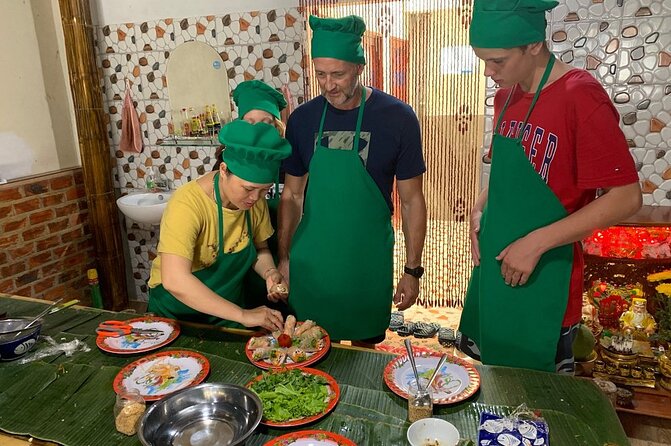
For the main “comfort” portion, the menu includes ga chien (chicken with lemongrass) and com trang (steamed rice). This combination is smart for a cooking class because it covers a classic pairing: a fragrant cooked protein plus a neutral base.
The chef helps you focus on technique and ingredient choices rather than guesswork. And because rice is so central to Vietnamese meals, learning com trang gives you something genuinely usable when you cook at home later.
If you’re thinking about value, these items are important. They make the meal feel complete, not like a snack sampler.
Rice Milk and Seasonal Fruit: The Finishing Touches
Sua gao (rice milk) and seasonal fruit show up as part of the meal you eat after cooking. This is more than a sweet afterthought. It rounds the meal out so you don’t leave with only savory flavors.
Rice milk also fits the overall learning approach of the class. You see how Vietnamese cuisine uses familiar ingredients in different ways, and you get an easy drink to remember.
Seasonal fruit keeps it local and light, and it’s one more way the class keeps your meal feeling real, not staged.
Vegetarian Option: Real Substitutions, Not an Afterthought
Good news if you’re vegetarian: the class notes that ingredients can be changed to veggies. You should expect swaps like mushrooms, tofu, and eggplant.
I like vegetarian accommodations that specify the replacements, because it tells you the kitchen is prepared and the menu isn’t just a vague maybe. In practice, this means you’ll likely still get the full dish lineup and not a stripped-down version.
If you’re traveling with dietary needs, this class is a strong candidate. Just make sure you flag your vegetarian preference clearly when booking, so ingredient planning happens before you arrive.
Getting Value for $23: Why This Is a Smart Hoi An Activity
At $23 per person, this class is priced in the range of a single casual meal, but you’re getting much more than dinner. You’re getting instruction, ingredient guidance, and the chance to cook multiple dishes you’d normally spend time ordering one by one.
The biggest value win is the “learn, then eat” structure. Most food experiences in Vietnam either show you cooking or sell you food. Here, you do both. That’s why the class can feel worth it even if you’re only in Hoi An for a short stay.
Also consider the pacing. The entire experience is about 3 hours. That’s long enough to matter, short enough to still enjoy the rest of your day in Hoi An without rearranging everything.
Group Size, Pickup, and Timing: When It Fits Best
This is ideal if you:
- Want a hands-on food experience without needing advanced cooking skills
- Prefer a smaller group (max 10)
- Like the idea of learning dish names and ingredient choices you can use later
- Need a meal plan that already includes lunch or dinner
It might be less ideal if you:
- Hate group pacing or being part of a schedule
- Want a super deep, slow cooking session for just one dish (this class is built for multiple dishes)
The time mix is the trade-off. You’ll cook enough to feel accomplished, but you won’t get hours and hours of one technique. For most people, that’s exactly right.
Should You Book This Cooking Class Lunch/Dinner?
I’d book it if you want a practical, friendly way to understand Vietnamese flavors in Hoi An. The menu coverage is strong, and the class structure is built for quick learning: chef-prepped ingredients, hands-on cooking, then a full meal at the end.
If you’re vegetarian, the availability of specific veggie swaps like tofu, mushrooms, and eggplant makes it an especially safe choice.
One more smart reason to book: you’ll likely leave with a short list of dishes you can recognize by name and spot on menus. That makes your next meal in Vietnam easier and more fun.
FAQ
How long is the cooking class?
The cooking class experience lasts about 3 hours.
Is pickup offered?
Yes, pickup is offered.
What is the class like, group or private?
It is a group tour. You’ll be combined with other participants.
What is the maximum group size?
The experience has a maximum of 10 travelers.
What dishes are included in the menu?
The menu includes rice milk, banh xeo, spring rolls, papaya salad, chicken with lemongrass, steamed rice, and seasonal fruit.
Can vegetarians join?
Yes. If you’re vegetarian, ingredients can be changed to vegetables such as mushrooms, tofu, and eggplant.
How do you learn during the class?
The chef prepares the ingredients, and you’ll learn how to cook the dishes plus how to choose the best ingredients and their Vietnamese names.
Where does the activity start and end?
It starts at Hoi An Village Experience by Mr CuCẩm Thanh in Hội An, Quảng Nam, Vietnam, and ends back at the meeting point.
What is the price per person?
The price is $23.00 per person.
What’s the cancellation policy?
Free cancellation is available up to 24 hours in advance for a full refund. If you cancel less than 24 hours before the start time, the amount paid is not refunded.