REVIEW · HOI AN
WAR TOUR to MY LAI MASSACRE & KY ANH TUNNELS & GOLDEN PAGODA
Book on Viator →Operated by Hoi An Cham Cham Travel · Bookable on Viator
War history hits close to home. This Hoi An day trip pairs the My Lai memorial with Ky Anh tunnels, then balances it with the Golden Pagoda. You’ll get a clear sense of how the Vietnam War was lived and fought across villages and countryside, not just shown on paper.
I love the way the day is guided by Vincent, with an easy, respectful flow between stops. I also like the practical setup: admission is included for the main sites, and it’s a private tour for your group.
One possible drawback: this is heavy, emotional history. If you’re after light sightseeing or jokes all day, you may not enjoy how sobering the My Lai portion is.
In This Review
- Key things I’d circle before you go
- A war tour that stays on the subject
- Son My Memorial: a 20-minute film, then the village and museum
- Chùa Minh Đức Golden Pagoda: Quan Am on a scale you feel
- Ky Anh Tunnels: an emotional walk through quiet countryside
- Nui Thanh and Chu Lai Air Base: a short stop with a clear time window
- Price and value: what $94 gets you in the real world
- Timing and comfort tips for a long, serious day
- Who this tour is for (and who should think twice)
- Should you book this war tour from Hoi An?
- FAQ
- What time does pickup start, and where does the tour end?
- How long is the tour?
- Is this a private tour?
- What stops are included in the tour?
- Are admission tickets included?
- Does the My Lai stop include a documentary?
- Does the tour depend on weather?
- Is free cancellation available?
Key things I’d circle before you go
- Vincent’s focused war storytelling ties the My Lai tragedy to the broader 1968 Tet-era fighting
- My Lai gets time for context, including a 20-minute documentary before the memorial visit
- Chùa Minh Đức Golden Pagoda adds a cultural breather, including the tall Quan Am statue
- Ky Anh Tunnels are handled as an on-the-ground walk, not just a photo stop
- Nui Thanh / Chu Lai Air Base is short but meaningful, and it’s included without an admission fee
A war tour that stays on the subject
If you’ve seen Vietnam War pop-culture images and expected something like the famous Napalm Girl story, set that expectation now. This tour is about the My Lai Massacre, the Chu Lai Air Base, and the tunnels used by Viet Cong, with no detours into unrelated war narratives.
That focus matters because it shapes the whole day. You’ll start with the Son My memorial area, then move into Ky Anh tunnels, and later stop at the US Marine Corps air base site at Nui Thanh. The result is a full day that feels like one connected route through places tied to the conflict.
The day starts with a hotel pickup around 8:15 am in Hoi An. It runs about 8 to 9 hours, and the tour ends back at the meeting point, so you’re not wondering where you’ll land afterward. Since it’s private, it’s just your group, with no mixing with strangers unless you’re traveling as a small crew.
You can also read our reviews of more tours and experiences in Hoi An.



Son My Memorial: a 20-minute film, then the village and museum
The My Lai stop is the emotional heart of the tour. You’ll arrive at My Lai Village and first watch a 20-minute documentary film about the tragedy. That short film is a smart way to set the tone without rushing you straight into the memorial.
After the film, you’ll spend about an hour touring the museum and the village area dedicated to the My Lai Massacre. This is not the kind of stop where you treat it like a normal tourist attraction. The schedule gives you enough time to slow down, read, and take in what the site is meant to communicate.
The value here is pacing. Going straight to a memorial without any context can feel disorienting, especially if you haven’t studied the event before. This tour does the groundwork first, then lets the site speak.
Practical note: plan to behave like you’re visiting a place with real meaning. It’s the kind of location where your tone matters, even when you’re only taking photos of walls and exhibits.
Chùa Minh Đức Golden Pagoda: Quan Am on a scale you feel
After the heaviness of My Lai, the tour shifts gears to a major cultural landmark in Quang Ngai Province: Chùa Minh Đức, also known as the Golden Pagoda. The temple is described as becoming a landmark because of both its cultural significance and its size.
The standout detail is the tallest Quan Am statue in Southeast Asia. Even if you don’t know the religious background in depth, you can’t ignore the scale. It’s the kind of stop that resets your senses for a bit, with architecture and worship spaces that feel carefully designed to draw people in.
This is scheduled for about one hour, with admission included. That timeframe is usually just enough: long enough to walk the grounds, look around, and take in the statue area, without feeling like you’re being held hostage by a schedule.
A possible consideration: the contrast can be jarring if you’re very sensitive to mood shifts. One moment you’re in a place shaped by a massacre; the next, you’re looking up at a giant religious statue. For many people, that contrast is exactly what makes the day feel human. For others, it can feel like too much change.
Ky Anh Tunnels: an emotional walk through quiet countryside
Next comes Ky Anh Tunnels, set in the peaceful rural countryside of Quang Nam province, about an hour from Hoi An. The tour frames this stop as an emotional journey through places where history is hidden underground—literal and symbolic.
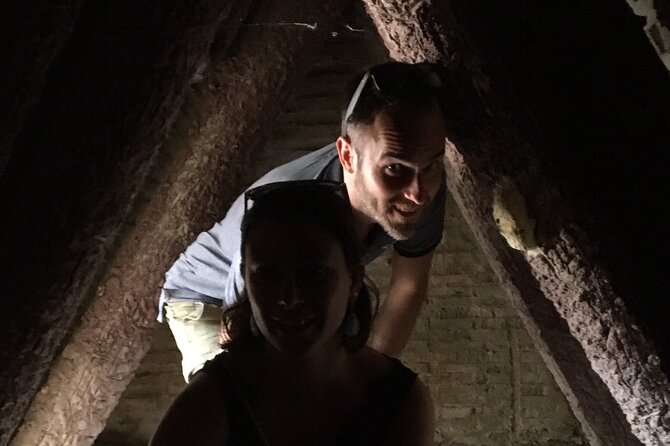
You’ll spend around 1 hour 10 minutes here, again with admission included. The experience is designed around walking through the tunnels rather than just looking from afar, which is a big reason people leave this stop with a stronger impression than expected.
This is also where you’ll likely feel the difference between “war history” as a lesson and war history as a physical reality. Tunnels change how people move, survive, and hide. Even without adding extra claims, the simple act of being in a tunnel space makes the topic feel more grounded.
If you’re someone who gets uncomfortable in tight spaces, this might be something to think about before you go. The tour information doesn’t spell out tunnel size or how much walking is involved, so you’d be smart to ask your guide what the route is like before you commit.
On the other hand, if you like hands-on history—war-era engineering, survival tactics, and seeing what people actually built—this is one of the clearest “why this tour exists” stops.
Nui Thanh and Chu Lai Air Base: a short stop with a clear time window
The final featured site is at Nui Thanh, tied to the Chu Lai Air Base. This was a military airport in Chu Lai, Vietnam, operated by the US Marine Corps between 1965 and 1970, located near Tam Kỳ city in Quảng Tín Province.
It’s a brief stop—about 20 minutes—and it’s free of admission fees. Even with the short time, it helps complete the day’s geographic and military picture: you’ve seen the tragedy at My Lai, the tunnel-world of Viet Cong, and then the US base footprint.
Because the stop is short, your best move is to pay attention to what your guide emphasizes. A 20-minute airport-area visit can feel like a quick roadside moment if you don’t connect it to what came before. In a tour like this, the guide’s thread matters.

Price and value: what $94 gets you in the real world
At $94 per person, this is priced like a full guided war-history day. The tour runs 8 to 9 hours, and it’s private, meaning you’re paying for direct guide attention and a route that isn’t diluted across many groups.
A practical plus: admissions for key stops are included. That means the Son My memorial/museum area, the Golden Pagoda (Chùa Minh Đức), and the Ky Anh Tunnels all come with admission tickets included. Nui Thanh / Chu Lai Air Base is listed as free for that stop.
So the $94 isn’t just paying for transportation. You’re also covering entry fees for most of the day’s “pay-to-enter” components, plus the documentary time and guided interpretation. Add in the mobile ticket setup and the included pickup at around 8:15 am, and it’s a pretty straightforward deal for a long day outside central Hoi An.
One more value signal: the tour is currently getting solid demand, with 5+ bookings last month. That doesn’t prove quality on its own, but it usually means the day-to-day operation is working enough for people to keep choosing it.
Timing and comfort tips for a long, serious day
This is not a quick half-day. You should plan on being out for the better part of your day, from the 8:15 am pickup until you return to the meeting point.
Because the tour requires good weather, build in flexibility. Weather is also a real factor for memorials and outdoor walking, especially when the day includes both open spaces and underground tunnel areas.
For comfort, keep the basics simple: wear comfortable shoes and dress for humid Vietnam weather. Bring a light layer if the air conditioning on transport tends to be strong, and consider bringing water for the hours you’ll be on the move. Since the schedule includes multiple stops, energy management matters more than you might think.
Finally, consider your mood going in. My Lai is sobering. The day isn’t designed to be upbeat, and that’s the point. If you approach it with respect and patience, the experience lands in a meaningful way rather than feeling like a forced assignment.
Who this tour is for (and who should think twice)
This tour is a great match if you want Vietnam War context through real places tied to the conflict, including the My Lai Massacre site and Ky Anh tunnels. I especially like that the day connects multiple parts of the story instead of turning everything into separate photo ops.
It also fits you if you value a guide who can explain with care. The guide name Vincent comes up again and again for a reason: people feel the day is treated with seriousness and empathy, not turned into a casual history quiz.
Think twice if you’re looking for a relaxed “scenic and done” outing. This day spends real time with tragedy and wartime infrastructure. The Golden Pagoda stop brings a cultural breather, but it doesn’t erase the emotional tone set at Son My.
Should you book this war tour from Hoi An?
Yes, if you want a single, focused day that goes beyond generic battlefield talk and actually visits the sites tied to the My Lai tragedy, Ky Anh tunnels, and Chu Lai Air Base. The structure is practical, the admission inclusions help your budget, and the private setup makes the experience feel controlled rather than crowded.
Skip it if you’re hoping for a lighter theme or if you strongly dislike emotional memorial visits. This tour asks you to slow down and pay attention.
If you’re comfortable with a serious day, this is exactly the kind of off-the-main-route outing that makes Hoi An feel more than just a pretty river town.
FAQ
What time does pickup start, and where does the tour end?
Pickup starts at about 8:15 am from your location in Hội An. The tour ends back at the meeting point.
How long is the tour?
The tour runs about 8 to 9 hours.
Is this a private tour?
Yes. It’s a private tour/activity, and only your group participates.
What stops are included in the tour?
You visit Son My Memorial (My Lai Massacre), Chùa Minh Đức (Golden Pagoda) in Quang Ngai Province, Ky Anh Tunnels, and Nui Thanh (Chu Lai Air Base area).
Are admission tickets included?
Yes for My Lai Memorial (Son My), Chùa Minh Đức (Golden Pagoda), and Ky Anh Tunnels. The Nui Thanh stop is listed as free.
Does the My Lai stop include a documentary?
Yes. You’ll watch a 20-minute documentary film upon arrival at My Lai Village.
Does the tour depend on weather?
Yes. The experience requires good weather. If it’s canceled due to poor weather, you’ll be offered a different date or a full refund.
Is free cancellation available?
Yes. You can cancel up to 24 hours in advance for a full refund. If you cancel less than 24 hours before the start time, no refund is provided.