REVIEW · HOI AN
Private Tour at My Son Sanctuary with Dance Performance
Book on Viator →Operated by Win Tran Travel · Bookable on Viator
My Son can look like scattered stones—until someone connects the dots. This private tour from Hoi An turns the UNESCO-listed Champa ruins into a clear story, from what you’re seeing to why it matters.
I love how the timing and setup feel purpose-built: you leave around 7:30am, ride in an air-conditioned vehicle, and spend real time inside the temple cluster. I also like the human touch from guides such as Win and Nguyen, who make history feel practical, with strong English and patient explanations.
One drawback to plan for: My Son is mostly outdoor walking, and the experience depends on good weather. If conditions are bad, the tour can be rescheduled or refunded, so build some flexibility into your Hoi An dates.
In This Review
- Key points before you go
- My Son Sanctuary: A Champa Shiva Complex You’ll Understand Fast
- The Private Setup from Hoi An (and Why It Matters)
- 7:30am Pickup and the Drive That Sets the Mood
- Inside My Son: Towers, Temple Layout, and What to Look For
- The Included Champa Dance and Music Show: Why It’s Not Just Extra
- Price and Value: What $51 Buys You (and What It Doesn’t)
- What Guides Like Win, Huy, and Nguyen Add to Your Day
- Who Should Book This Private My Son Tour
- Should You Book It?
- FAQ
- How long is the private tour at My Son Sanctuary?
- What time does pickup happen from Hoi An?
- How long do we spend at My Son Sanctuary?
- Is transportation included?
- Do I need to buy a separate entrance ticket?
- Is bottled water included?
- Is there a performance included?
- What is the price per person?
- What should I plan to pay for myself?
- What if the weather is bad?
- Is free cancellation available?
Key points before you go
- Private group, private guide: it’s just you and your group, not a big bus shuffle.
- Early start timing: the morning pickup helps you get more comfortable viewing time at the sanctuary.
- See 20–25 temple structures: your guide focuses on the remaining well-preserved and maintained buildings.
- Shiva focus with local names: the temples were dedicated to Shiva, including the key name Bhadresvara.
- Champa dance and music show included: the performance adds cultural context after you’ve seen the ruins.
- All the essentials included: entrance ticket, bottled water, and transportation are part of the package.
My Son Sanctuary: A Champa Shiva Complex You’ll Understand Fast
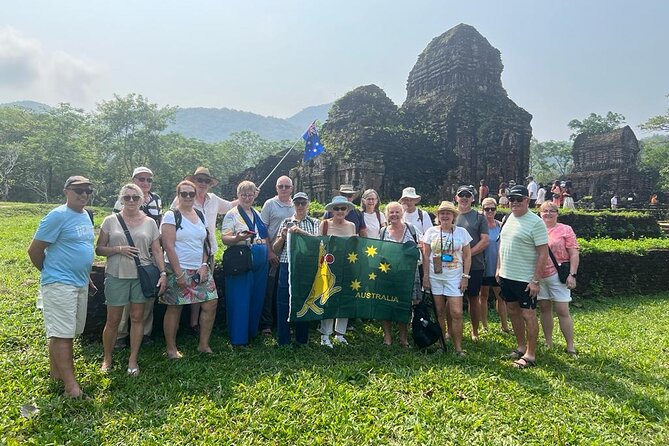
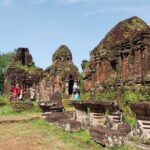
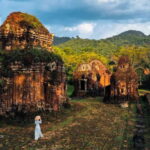
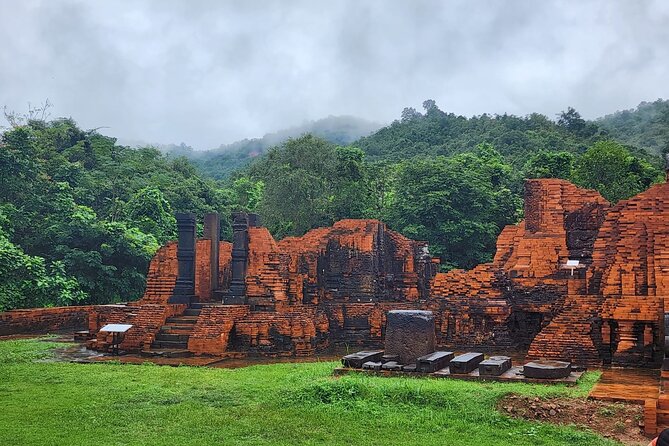
My Son Sanctuary is one of those places where the layout matters more than the individual stones. The site is a cluster of abandoned and partially ruined Hindu temples built from roughly the 4th to the 14th century AD by the kings of Champa. Even when things look broken, the purpose is still legible if you have the right guide.
Here’s what you’ll learn as you walk: these temples were dedicated to the god Shiva, known under various local names, with the most important one being Bhadresvara. That matters because it gives you a framework. Instead of treating each tower as random architecture, you can look for patterns tied to worship and temple planning.
You also get context on restoration. The main temple and smaller surrounding temples were restored in 1937 and 1938, which is why parts of the sanctuary look better preserved than the rest. It helps to know that you’re seeing a mix of original structure and later recovery work—so the site reads as a living historical place, not a museum diorama.
You can also read our reviews of more private tours in Hoi An


The Private Setup from Hoi An (and Why It Matters)
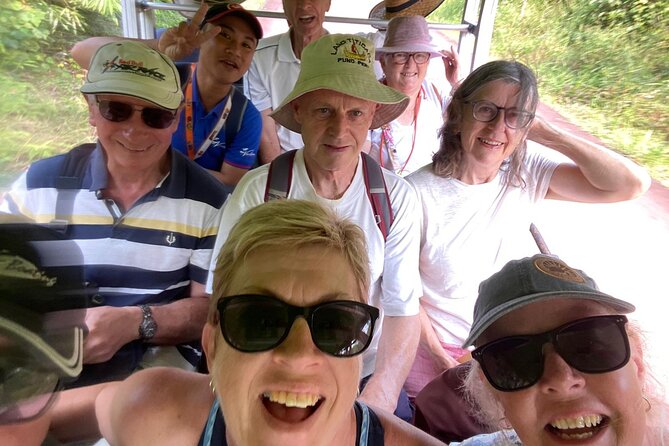
This isn’t a vague tour where you get dropped off and left to figure things out. It’s a private experience with guide service and private transportation, plus pickup offered from your hotel area in Hoi An.
That difference is simple: you can set the pace. Temples reward slow looking, because small details are often what you’ll hear about—tower shapes, temple layout, and the way worship spaces connect. A private tour also makes it easier for families. In past experiences with guides connected to this itinerary, guests mentioned getting great attention and explanations that held kids’ focus.
You’ll also get basic comfort items handled for you: bottled water, air-conditioned transport, and a smooth day flow that doesn’t require you to negotiate anything on the ground. The goal is to spend your energy on the sanctuary, not on logistics.
7:30am Pickup and the Drive That Sets the Mood
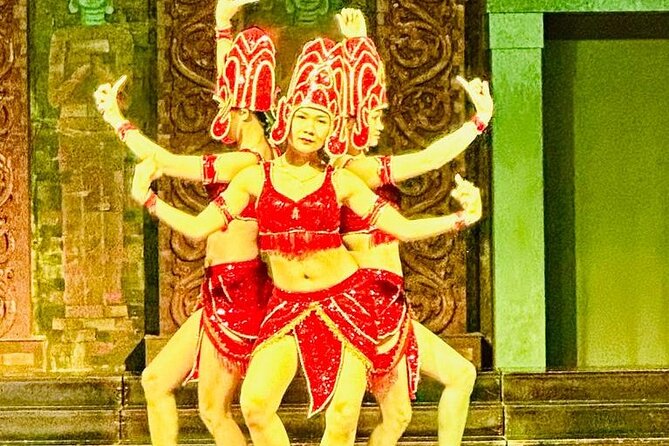
Plan for an early start. Pickup is at 7:30am, then you travel about one hour to My Son. That early timing helps in two ways: the morning is usually calmer, and the drive gets you into the site before the later rush.
As you head out, you’re building anticipation for what’s waiting—because My Son isn’t just one monument. It’s a whole temple complex, and the best way to see it is to approach it like you’re moving through a sacred neighborhood rather than “viewing a landmark.”
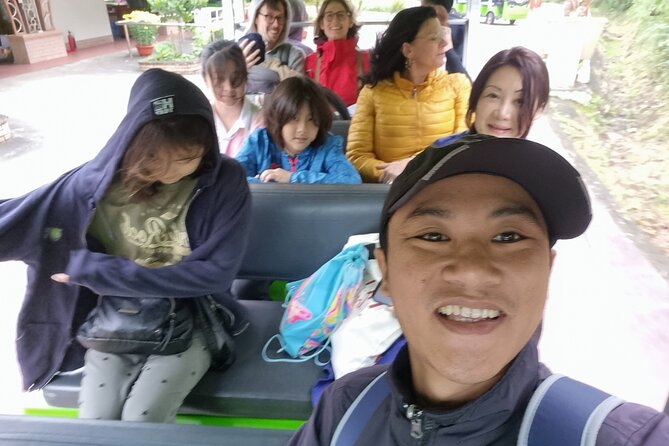
Also, this is a shared trip only in the sense that vehicles move together—not in the group size. It’s private, so you’re not stuck coordinating with strangers. That makes the day feel less stressful, especially if you’re traveling with someone who prefers a steady pace.
Inside My Son: Towers, Temple Layout, and What to Look For
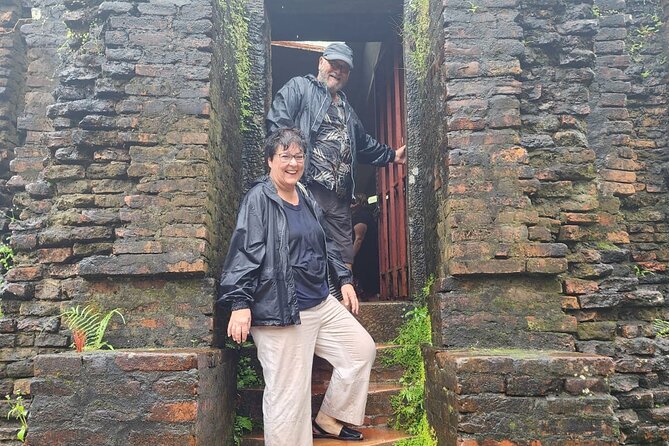
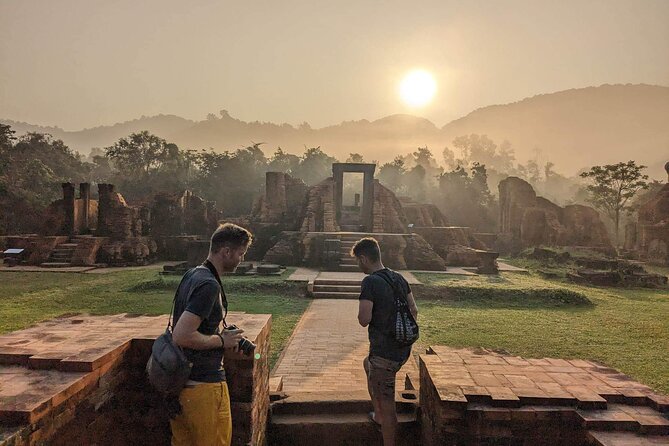
Your time inside the sanctuary runs about 2 hours 15 minutes, and that’s where the guide earns the money. The sanctuary includes remaining 20–25 temples that are well-preserved and maintained, even if many structures are partially ruined.
The temples were constructed by Cham builders under the Champa kings, spanning many centuries. That broad timeline is one reason the site can feel confusing at first glance. A good guide helps you sort it out by connecting architecture to purpose: Shiva worship, temple hierarchy, and the way dedicated spaces would have functioned.
As you move around, expect your guide to explain:
- How the towers were built to serve religious meaning
- Which parts of the sanctuary are tied to Shiva worship
- How restoration in the late 1930s shaped what you see today
- Why the temple complex became so important within the Champa Kingdom
If you’ve ever visited ruins and felt like you were reading a language you don’t speak, this is the opposite. Your guide translates the visuals into a storyline you can follow in real time. And if you like culture as much as architecture, this is one of the best types of stops in central Vietnam—because the site is both physical and historical.
A practical consideration: wear shoes you trust. Even with a guide directing your route, you’re still walking on uneven ground and between temple groups. Comfortable footwear makes the difference between a smooth afternoon and a limpy one.
The Included Champa Dance and Music Show: Why It’s Not Just Extra
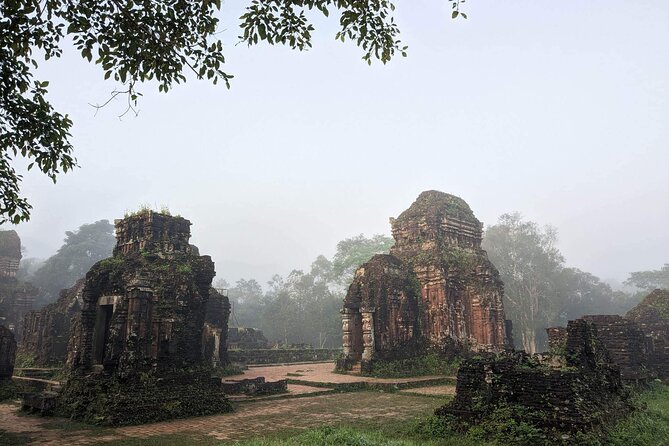
The tour includes a dancing show watching bonus, tied to Champa culture. This matters because it answers a common question: what did these temples feel like when they were active?
After you’ve walked through the sanctuary, the dance and music performance gives your brain something to “attach” to the history. It’s easier to remember temple details when you’ve just seen a living cultural expression from the same broader heritage.
In past experiences with guides associated with this itinerary, guests called the traditional dance charming and part of what made the day feel complete. That’s exactly the right way to look at it: the show isn’t a separate attraction you have to care about. It’s a finishing touch that turns ruins into context.
If you care about performance arts, you’ll probably enjoy this more than you expect. If you’re not sure, keep an open mind. You’re not just watching dancing—you’re watching culture used to communicate meaning.





Price and Value: What $51 Buys You (and What It Doesn’t)
At $51 per person, this tour is priced like a practical add-on to your Hoi An trip, not a luxury day. The value comes from what’s included:
- Air-conditioned vehicle
- Bottled water
- Private transportation and shuttle transfer
- Entrance ticket
- Guide service
- Champa dance performance
That’s a lot of “day-of costs” handled upfront. If you tried to piece it together yourself, you’d still be paying for transport, paying entry fees, and lining up a guide to explain what you’re looking at—usually the hardest part.
What’s not included is refreshingly simple: personal expenses. That leaves you free to buy snacks, drinks, or small souvenirs on your own terms. Just don’t show up with the plan of paying for everything later if you’re trying to keep the day tight-budget.
My practical tip: if you’re doing My Son from Hoi An, this kind of package is often worth it because My Son isn’t the kind of place where “I’ll just wander and figure it out” works well. A guide saves you time and makes the whole morning click.
What Guides Like Win, Huy, and Nguyen Add to Your Day
This tour has a private guide component, and the difference you’ll feel is mostly communication and pacing. Guests have highlighted guides such as Win, Huy, and Nguyen for making My Son feel alive, with strong English and patient explanations.
A couple of patterns show up from those experiences:
- The best guides help you beat the crowds by going early.
- They explain the site in a way that feels personal, not like a lecture.
- They also give you practical suggestions on what to do after you’re back in town.
So when you book, keep in mind that you’re buying more than admission. You’re buying interpretation. My Son rewards interpretation, because the ruins need a translator—someone who can connect the architecture to Shiva worship and Champa identity without turning the day into a test.
Who Should Book This Private My Son Tour
You’ll likely enjoy this if:
- You want a half-day that balances ruins with culture (not just sightseeing).
- You prefer a private format where you can ask questions.
- You’re visiting Hoi An and want a UNESCO stop that’s still manageable in one morning.
It’s also a solid choice for families, based on prior feedback about guides holding kids’ attention during the walk and explanations.
You might want to consider another style of outing if:
- You dislike early starts (pickup is 7:30am).
- You’re sensitive to outdoor walking and uneven paths.
- You don’t want any cultural performance added into your schedule.
Should You Book It?
Yes—if you want My Son to make sense, not just look impressive.
This tour is a good value because entrance, transport, and guiding are bundled into one clear package. The included Champa dance and music performance is a meaningful add-on that gives you cultural context right after the ruins. And with private pacing and strong guide feedback linked to this itinerary, you’re less likely to feel lost in the stones.
If your dates are tight and weather is questionable, keep a flexible mindset. Since the experience requires good weather, you’ll want to stay adaptable if you’re traveling during rainy periods.
If you’re in Hoi An and you want My Son to feel like a story you understand, this is the kind of tour that earns its place on your itinerary.
FAQ
How long is the private tour at My Son Sanctuary?
The tour is about 4 hours 30 minutes.
What time does pickup happen from Hoi An?
Pickup is at 7:30am.
How long do we spend at My Son Sanctuary?
You spend about 2 hours 15 minutes at the sanctuary.
Is transportation included?
Yes. You’ll travel by air-conditioned vehicle, with private transportation and shuttle transfer included.
Do I need to buy a separate entrance ticket?
No. The entrance ticket is included.
Is bottled water included?
Yes, bottled water is included.
Is there a performance included?
Yes. The tour includes watching a Champa dance and music performance.
What is the price per person?
The price is $51.00 per person.
What should I plan to pay for myself?
Personal expenses are not included.
What if the weather is bad?
This experience requires good weather. If it’s canceled due to poor weather, you’ll be offered a different date or a full refund.
Is free cancellation available?
Yes. You can cancel up to 24 hours in advance for a full refund.