REVIEW · HOI AN
Hoi An: Marble Mountain & Monkey Mountain in Afternoon Tour
Book on GetYourGuide →Operated by Da Nang Happy Tour · Bookable on GetYourGuide
One mountain, two very different vibes. This Hoi An to Marble & Monkey Mountains tour packs sea-level caves, temple viewpoints, and big Da Nang panoramas into one late-afternoon walk. You’ll climb among pagodas and grottoes at Marble Mountain (Ngu Hanh Son), then switch gears at Monkey Mountain for the Linh Ung pagoda and the famous Lady Buddha statue.
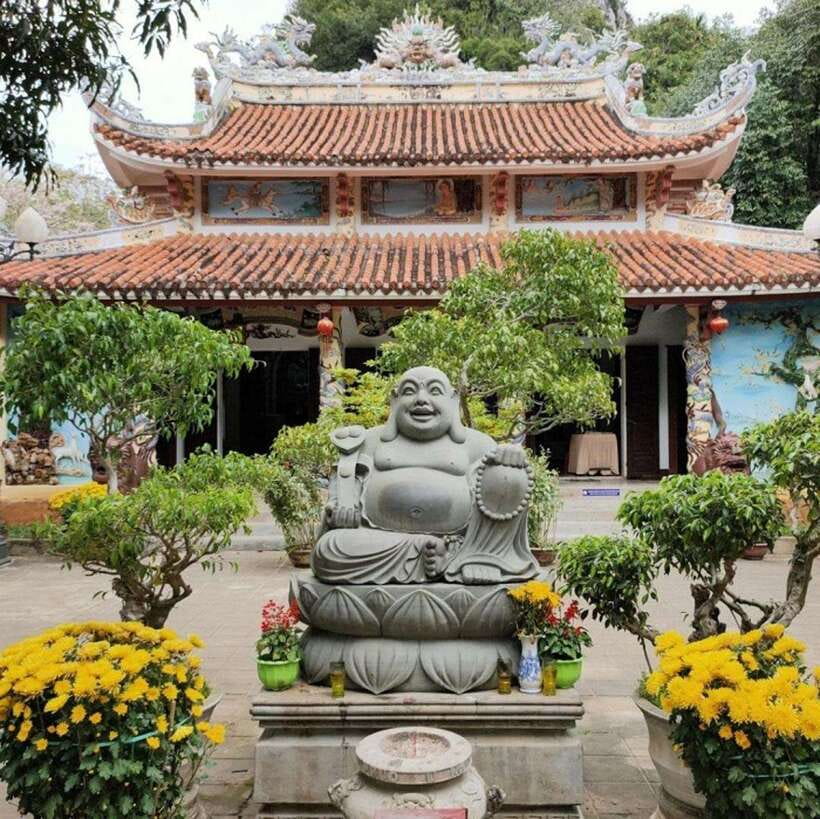
I especially love the way Marble Mountain turns into a small adventure park: caves, caverns, Hindu grottoes, Buddhist sanctuaries, and stairs that keep changing the view. The second thing I like is the payoff at Monkey Mountain—high up, you get wide Da Nang perspective, and if you’re lucky, you’ll see monkeys around the pagoda area.
The main drawback is simple: there are a lot of steps, and it’s not a good fit if walking is hard for you. Also plan on an extra fee paid at the end of the tour for adults and some kids.
In This Review
- Key things to know before you go
- Why this afternoon tour timing makes sense
- Marble Mountain (Ngu Hanh Son): five hills that feel like a challenge
- What makes it special for your visit
- Caves, caverns, pagodas, and grottoes: plan for religion and stairs
- Practical tip that saves energy
- The best payoffs: Marble Mountain viewpoints
- Marble craft village at the mountain’s foot
- Monkey Mountain: Linh Ung pagoda and the Lady Buddha statue
- The monkey factor
- What your guide actually adds (including Mysa)
- Price and the extra $13 you should budget
- Logistics that affect your comfort: pickup, meeting points, and what you carry
- Who should book this tour (and who should skip it)
- Should you book this Marble Mountain & Monkey Mountain afternoon tour?
- FAQ
- How long is the Marble Mountain and Monkey Mountain afternoon tour?
- What time does the tour start and end?
- What’s included in the price?
- Do I need to pay extra fees during the tour?
- Is food included?
- Where do I meet the group in Da Nang?
- Is this tour suitable for wheelchair users or limited mobility?
Key things to know before you go
- Stair count is real: Marble Mountain and Monkey Mountain both involve lots of climbing.
- Two major viewpoint moments on Marble Mountain help justify the effort.
- Religious sites in plain sight: Buddhist sanctuaries and Hindu grottoes are part of the route.
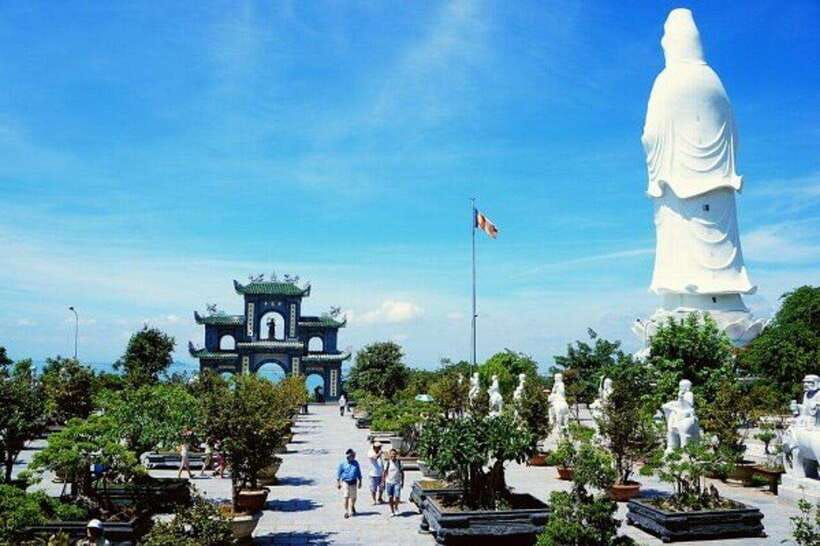
- Lady Buddha at Linh Ung pagoda: Monkey Mountain gives you one of Da Nang’s best known religious landmarks.
- Marble craft village at the base: You’ll pass the traditional fine art marble area tied to centuries of work.
- English-guided and organized: You’ll have hotel pickup/drop-off (Hoi An area) and skip-the-ticket-line entry.
Why this afternoon tour timing makes sense
This tour runs late afternoon, starting around 15:00 to 15:30 and finishing roughly 18:30 to 19:00. That timing is handy because you avoid a full-day grind while still getting daylight for the views from high viewpoints.
You’re also moving between two different “height experiences.” Marble Mountain gives you dramatic cave-and-temple angles. Monkey Mountain is more open and panoramic, with the feeling of being above Da Nang rather than inside a stone maze. If you like the idea of getting variety without rushing all day, this works.
You can also read our reviews of more tours and experiences in Hoi An.



Marble Mountain (Ngu Hanh Son): five hills that feel like a challenge
Marble Mountain is also known as Ngu Hanh Son, and it’s famous for the way the five limestone/marble hills look like five fingers lying close to the sea. It’s not just a pretty name. The shape helps explain why your route feels like a sequence of rises: each climb reveals another level, another cave mouth, another temple corner.
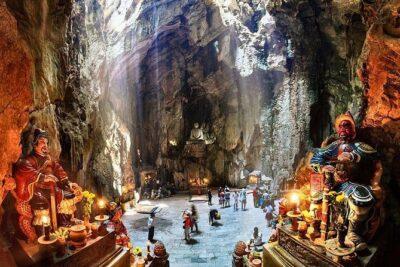
You’ll spend time exploring the mountain’s religious and scenic areas, including caves, caverns, and pagodas. Expect multiple photo stops, but also expect the route to keep pulling you upward and onward.
What makes it special for your visit
Marble Mountain isn’t one single attraction. It’s a whole set of locations on one mountain. That means your guide can help you “read” what you’re seeing—like why some sections feel more Buddhist and others show Hindu grotto influences.
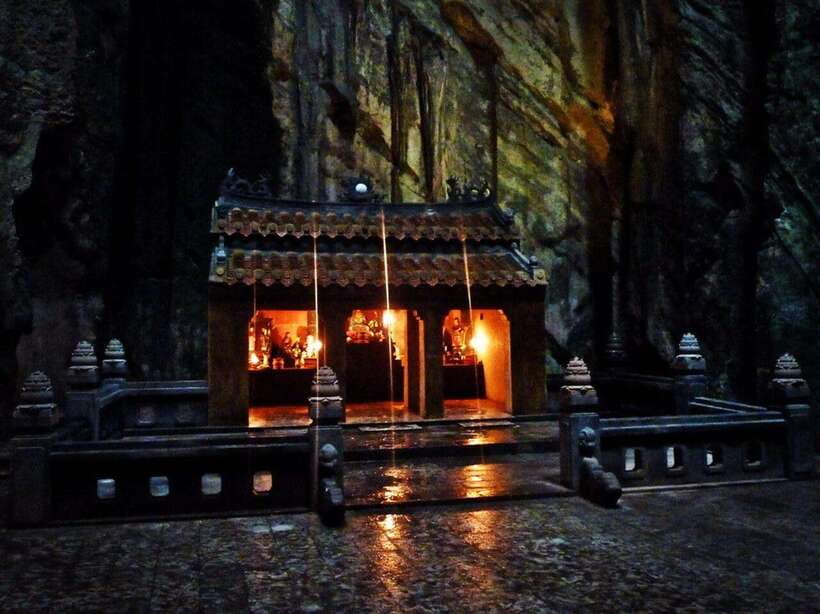
Also, you’re not only looking outward. You’ll be moving through interior spaces too, so it feels like you’re traveling between light and shadow as you go deeper into caves.
Caves, caverns, pagodas, and grottoes: plan for religion and stairs
The route through Marble Mountain includes beautiful caves and caverns, plus pagodas and other worship spots. The key detail for you: these are active spiritual locations for local people, so you’ll want to dress and behave accordingly.
Clothes that cover knees and elbows are recommended. That’s not about rules for the sake of rules. It makes the whole visit feel smoother—less friction with staff and less chance you’ll have to improvise at the last minute.
And then there are the stairs. You’ll climb many steps on Marble Mountain. They’re not optional. If you’re the kind of person who hates stopping every 20 meters, bring a steady pace mindset and take breaks when you need them.
Practical tip that saves energy
Wear comfortable shoes with grip. The surface can feel slick near cave entries or shaded stairways. Don’t pack your best “city sandals” for this one.


The best payoffs: Marble Mountain viewpoints
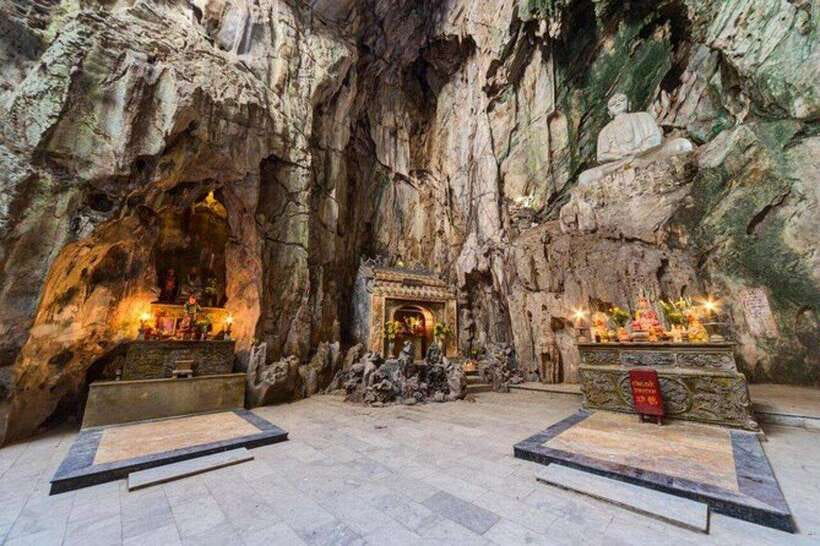
One of the reasons Marble Mountain is worth the climb is that it has two spectacular viewing points. Even if you’re not a “view person,” you’ll feel it because the structure of the mountain and the temple paths naturally funnel you toward those moments.
From up high, you can look across the coastal area and see why the hills are called out as landmark shapes. It also breaks up the time so you don’t feel like you’re only working through caves and steps for hours.
Think of these viewpoints as your receipt. The climbing is the price. The view is what justifies it.
Marble craft village at the mountain’s foot
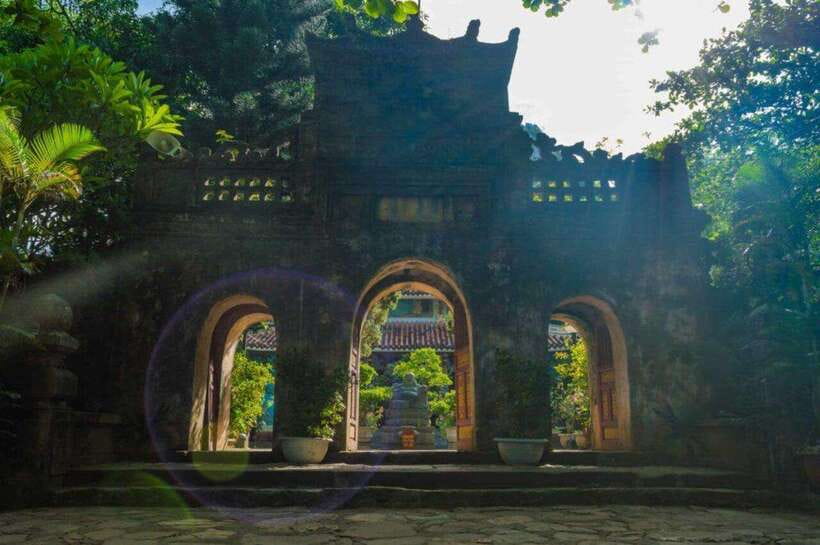
At the base of Marble Mountain, you’ll encounter a traditional marble fine art village that’s been active for over 300 years. This is one of those stops that quietly changes the tone of the day. You go from climbing temple paths to watching hands-on craftsmanship.
You’ll see skilled craftsmen working and admire the creativity behind their uniquely beautiful marble works. If you’ve ever wondered how Vietnam’s workshop culture stays alive for centuries, this is a good example. It’s not just selling souvenirs at a roadside stall. The focus is on the craft process and finished pieces made from the same stone that forms the mountain above.
Monkey Mountain: Linh Ung pagoda and the Lady Buddha statue
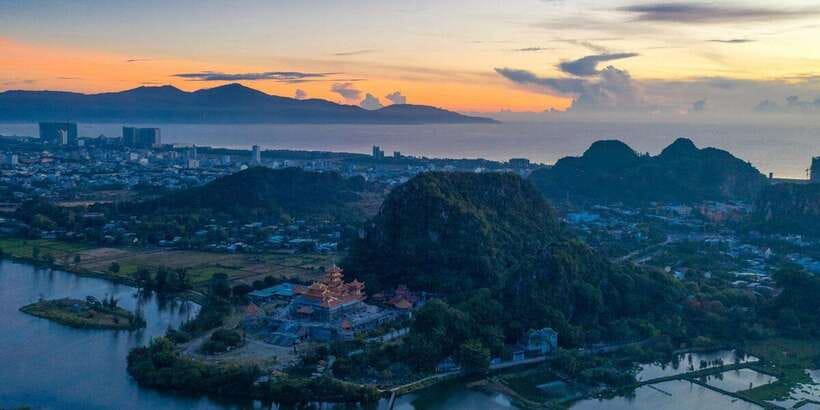
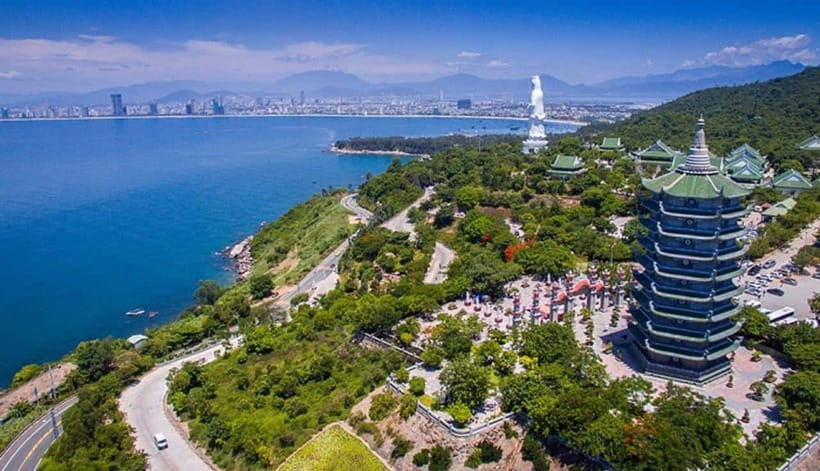
After Marble Mountain, the tour shifts you to Monkey Mountain, where the vibe becomes more temple-and-panorama than cave-and-stairs maze. You’ll get a panorama view of Da Nang from a high position, which is exactly what you want after the tight, enclosed feeling of caves.
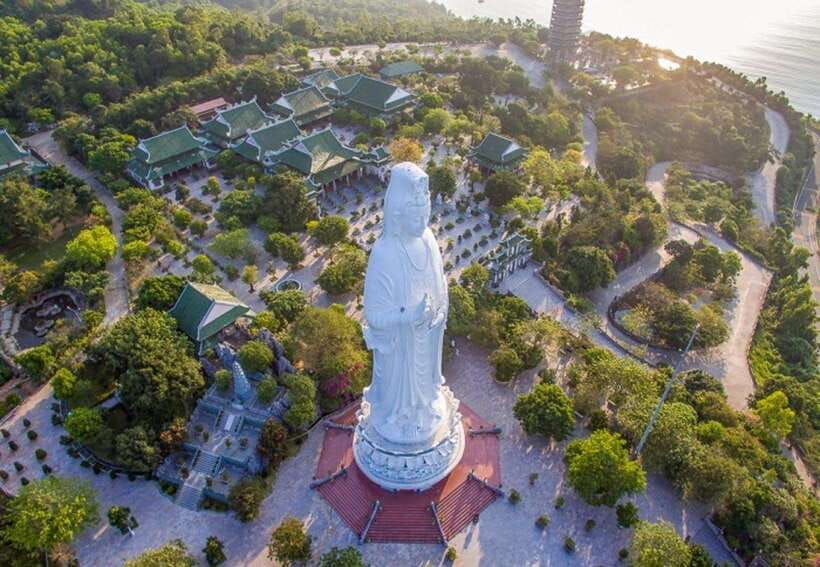
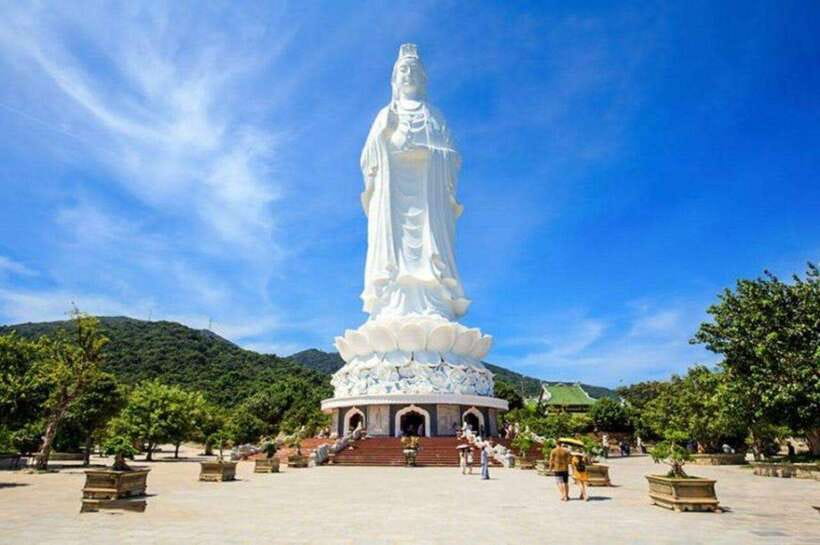
Your main stop here is Linh Ung pagoda, one of the biggest pagodas in Da Nang city. This is where you’ll also see the highest Lady Buddha statue in Vietnam. It’s a focal-point landmark, and your guide will help connect what you’re seeing to the place’s religious significance.
The monkey factor
If you’re lucky, you might see monkeys around the pagoda area. Don’t count on it like a guarantee, but it’s part of why Monkey Mountain feels lively. Even without monkey sightings, the pagoda setting gives you plenty to look at—architecture, worship spaces, and wide angles for photos.
What your guide actually adds (including Mysa)
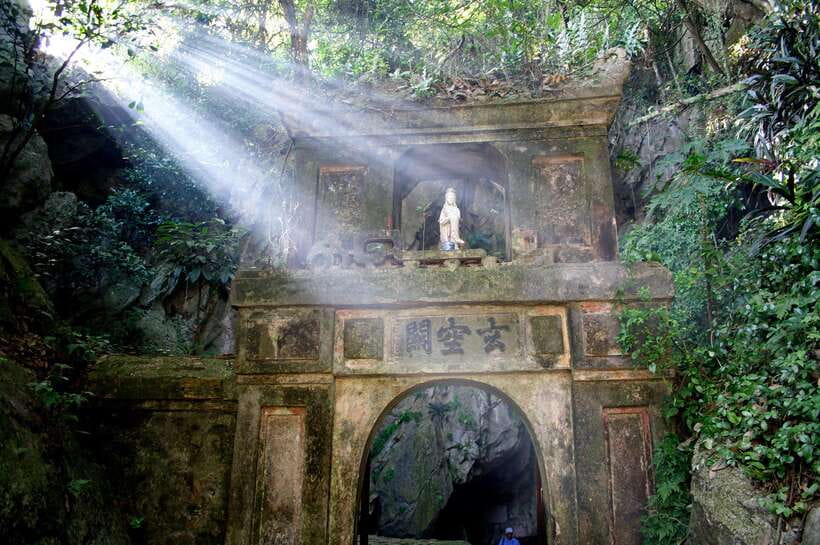
This tour uses an English-speaking guide, and that matters more than you might think when you’re dealing with caves and multiple sacred areas. A good guide helps you move efficiently and notice details you’d miss if you just followed signs.
In past departures, guides such as Mysa (also written as Misa) have been noted for speaking excellent English and staying friendly and close while explaining even small details. If you get a guide like that, you’ll enjoy the tour more because you won’t feel like you’re just walking from one stairway to the next.
Price and the extra $13 you should budget
The tour price you’ll see is $21 per person, with hotel pickup/drop-off (Hoi An area) or a meeting point in Da Nang. Entrance tickets and an English guide are included, and you also get skip-the-ticket-line entry.
But there’s an important line item you must plan for: you’ll need to pay an additional $13 USD per adult when finishing the tour. Kids under 3 are free. Kids ages 4–8 pay an additional $6.5 USD. Children from 9 are charged as adults.
So for a realistic budget:
- Adult total is about $34 USD, plus any snacks/drinks you choose.
- Food and drinks are not included, so you’ll likely want to bring water or budget for something small.
When I look at value, I think about time and included access. Three-ish hours with pickup, English guidance, entrance fees included, and two mountain areas is a fair package—as long as you’re comfortable with stairs and don’t mind paying that extra end-of-tour fee.
Logistics that affect your comfort: pickup, meeting points, and what you carry
Pickup is offered from hotels in the Hoi An area, and if you’re staying in Da Nang (or prefer a meeting point), the meeting address listed is 315 Le Van Hien Street, Da Nang for pickup/drop-off coordination. For booking from Da Nang, the meeting point may be 417 Le Van Hien Street, Da Nang.
Your guide will also drop you back after the tour, so you’re not stuck figuring out transport at the end when you’re tired from stairs.
What to bring is simple: comfortable shoes and clothes suitable for temple areas. What not to bring: pets and luggage or large bags. If you’re carrying bulky stuff from your hotel, plan on leaving it behind or traveling light.
Who should book this tour (and who should skip it)
This is a great fit if you like:
- short-to-medium walks with frequent viewpoint stops
- temples and caves in one afternoon
- seeing both craft culture (marble village) and religious landmarks (pagodas and grottoes)
It’s not a fit if you have mobility limitations. The tour is not suitable for wheelchair users and people with mobility impairments due to the amount of stair climbing.
Also, if you’re easily frustrated by stair-heavy sites, you’ll want to choose a slower day or a gentler option. Here, the steps are the main event.
Should you book this Marble Mountain & Monkey Mountain afternoon tour?
If your goal is a high-value afternoon with variety—caves and pagodas at Marble Mountain, plus Linh Ung pagoda, the Lady Buddha statue, and Da Nang views at Monkey Mountain—then yes, I’d book it. The route is short enough to keep momentum, but it’s packed with enough different sights to feel like you actually did something meaningful in one sitting.
Book it if you’re ready for stairs, you’re comfortable with temple dress expectations, and you want organized pickup with an English guide. Skip it if walking is hard for you or if you hate step-heavy sites. If you’re unsure, use that extra fee detail and budget it in ahead of time—then decide with a clear head.
FAQ
How long is the Marble Mountain and Monkey Mountain afternoon tour?
The duration is about 210 minutes (around 3.5 hours).
What time does the tour start and end?
It starts around 15:00 to 15:30 and finishes around 18:30 to 19:00.
What’s included in the price?
Hotel pickup and drop-off from hotels in the Hoi An area (or meeting point in Da Nang), an English-speaking guide, entrance fee tickets, and skip-the-ticket-line entry.
Do I need to pay extra fees during the tour?
Yes. When finishing the tour, adults pay an additional $13 USD. Children under 3 are free. Children aged 4–8 pay an additional $6.5 USD. Children from 9 pay as adults.
Is food included?
No. Food and drinks are not included.
Where do I meet the group in Da Nang?
The listed meeting point for bookings from Da Nang is 417 Le Van Hien Street, Da Nang.
Is this tour suitable for wheelchair users or limited mobility?
No. It is not suitable for people with mobility impairments or wheelchair users, since you will climb many steps.