REVIEW · HOI AN
Experience Calligraphy Learning Class in Old Town Hoi An
Book on Viator →Operated by DN Tour · Bookable on Viator
Hoi An gets loud fast, so this class is a gentler pace. In the Ancient City area, you’ll spend about 2 hours learning ancient and modern Vietnamese calligraphy with Master of Art Huynh Dong, plus hands-on work using traditional tools and paper. You’ll also hear how the art connects to Vietnamese culture, not just how to copy strokes.
I especially like two things here: the teacher’s quiet, kind style (this is the kind of class where you can actually focus) and the fact that you leave with something personal. You’ll make your own calligraphy artwork during the lesson, and Master Huynh Dong also creates a separate calligraphy work on rice paper using your name or your idea.
One possible drawback: because the class is hands-on and the group is capped at 5 people, you’ll want to arrive on time and be ready to slow down. If you’re hoping for quick sightseeing snapshots only, this won’t be that.
In This Review
- Key Highlights Worth Knowing
- Where the Lesson Happens: Old Town Hoi An, Ink in a Real Gallery
- Meet Master Huynh Dong: Why This Teacher Changes the Whole Experience
- Ancient and Modern Vietnamese Calligraphy: What You’ll Actually Learn
- Your Tools: Fur Pen, Chinese Ink, and Do Rice Paper
- Drawing Traditional Folk Painting and Water-Color Scenes
- The Moment Your Calligraphy Becomes Yours
- Timing, Group Size, and Why 2 Hours Works
- Tea, Calm, and the Real Reason to Step Out of the Crowds
- Price and Value: Is $37 Fair for What You Get?
- Who Should Book This Calligraphy Class in Old Town Hoi An?
- Booking Timing and Cancellations (Quick, Practical Notes)
- Should You Book Huynh Dong’s Calligraphy Class?
- FAQ
- How long is the calligraphy learning class?
- What does the class cost?
- Where do I meet for the class in Hoi An?
- Will I return to the same meeting point?
- Who teaches the class?
- What will I learn during the class?
- What materials will we use?
- Do I get anything to take home?
- What’s the group size limit?
- What is the cancellation policy?
Key Highlights Worth Knowing
- Master Huynh Dong’s multi-track arts training: calligraphy plus arts education across Vietnam’s universities and master-level training in the arts.
- You practice ancient + modern Vietnamese calligraphy, not just one style for photos.
- Traditional materials are part of the lesson: fur pen, Chinese ink, and Vietnamese Do rice paper.
- Your artwork is personal: you’ll create calligraphy during class, and you’ll receive a rice-paper calligraphy gift with your name or idea.
- You also learn traditional folk painting and water-color scenery painting basics, guided step-by-step.
- Small group vibe: maximum 5 people, so attention doesn’t get lost.
Where the Lesson Happens: Old Town Hoi An, Ink in a Real Gallery
The meeting point is at 33 Nguyễn Thái Học, Phường Minh An, Hội An, Quảng Nam. From there, the experience ends back at the same place—nice and simple, especially if you’re already walking Old Town and don’t want to plan a second stop later.
This is set up as a gallery-based class in Hoi An’s historic area, and that matters more than you’d think. Instead of standing around outside looking at art, you’re inside where the tools, paper, and techniques actually make sense. You’ll get a slower rhythm right from the start, with a chance to settle your hands before you start making strokes.
And yes, the setting is calmer than most busy parts of Old Town. The class is designed for focus, so you’re not fighting crowds while you try to learn something precise.
You can also read our reviews of more tours and experiences in Hoi An



Meet Master Huynh Dong: Why This Teacher Changes the Whole Experience
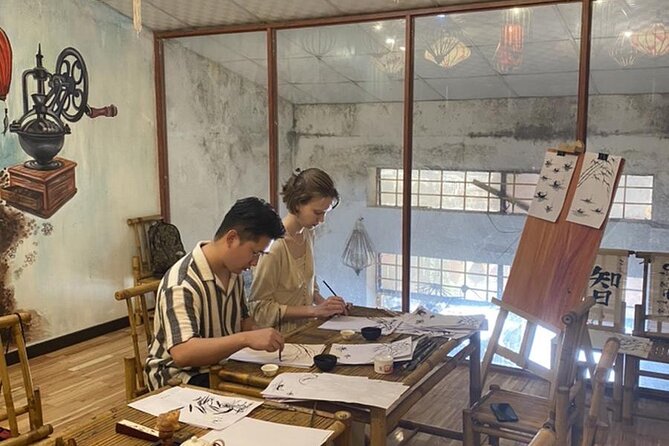
Master of Art Huynh Dong isn’t just described as an instructor—his education background is unusually layered. He’s born in 1958 and has deep roots in Hoi An, where he considers the Ancient City his native home. His path began with early studies of Chinese calligraphy, which then opened into broader arts and culture training.
What you should care about as a participant is how that training turns into teaching. The lesson is built around explanation plus practice, and the tone is calm. That matters for calligraphy because the best results usually come from controlled movement: slower hand, steady pressure, and patience with ink that behaves differently than marker or pen.
Also, he’s not teaching from a textbook only. You’re working in a traditional calligraphy environment with a teacher who can connect technique to meaning—especially important when you’re learning about ancient and modern Vietnamese calligraphy side by side. You’re not just copying shapes; you’re building an understanding of what those strokes represent.
Ancient and Modern Vietnamese Calligraphy: What You’ll Actually Learn
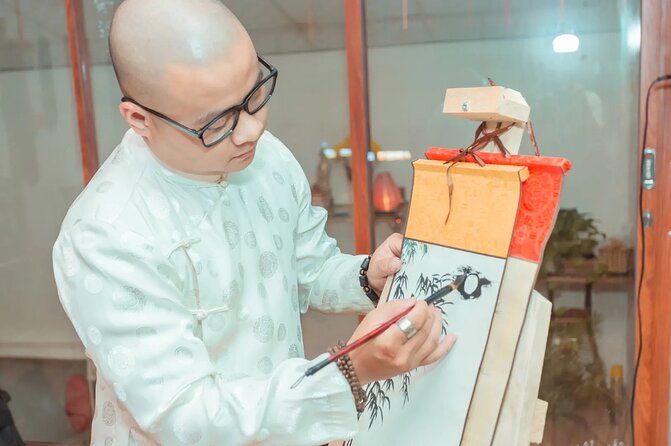
The class is set up so you can learn ancient and modern Vietnamese calligraphy. That combination is the big draw for people who want more than a single “starter” lesson.
Ancient calligraphy tends to focus on tradition—how characters are shaped, how lines start and end, and how style choices signal meaning. Modern calligraphy often shifts the look while keeping core principles: balance, proportion, and control. In practice, that means you’ll spend time learning how strokes should feel rather than only how they should look.
You’ll also get cultural context from Master Huynh Dong about the history and traditional art of Vietnamese calligraphy. The practical value here is psychological: when you understand why a style exists, you stop treating the strokes like random symbols. You start paying attention to structure—spacing, rhythm, and the way ink spreads on the paper.
If you’ve ever tried to learn calligraphy from a random online tutorial and felt stuck, this kind of guidance is what fixes the problem. The teacher helps you translate the technique into something your hand can reproduce.
Your Tools: Fur Pen, Chinese Ink, and Do Rice Paper
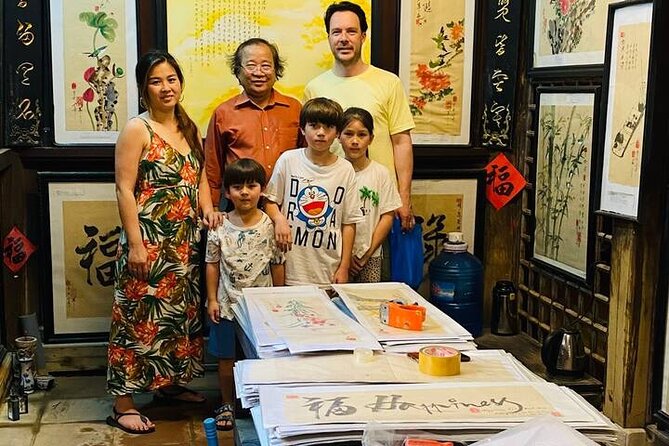
The hands-on part is where the class earns its keep. You’ll create your own calligraphy artwork using a fur pen, Chinese ink, and traditional Vietnamese Do rice paper. These aren’t props. They change how the strokes behave, so the lesson includes the basics of working with the materials.
Here’s what I think you’ll appreciate most about using the traditional set:
- Ink reacts on paper in a way that feels alive. You get different line thickness and edges depending on how you move.
- The fur pen responds to pressure and angle. If you lift or push too hard, the stroke tells on you right away.
- Do rice paper encourages patience. It doesn’t behave like office paper—so you learn control instead of rushing.
One comment that fits the experience well: the feeling of ink on paper is smooth, and the class encourages you to slow down. That’s not just poetic language. With calligraphy, rushing usually turns into messy strokes. Slowing down turns mess into learning.
If you’re the type who likes structured instruction, this is also a good setup. The teacher guides you, and you’re not left trying to figure out the materials alone.
Drawing Traditional Folk Painting and Water-Color Scenes
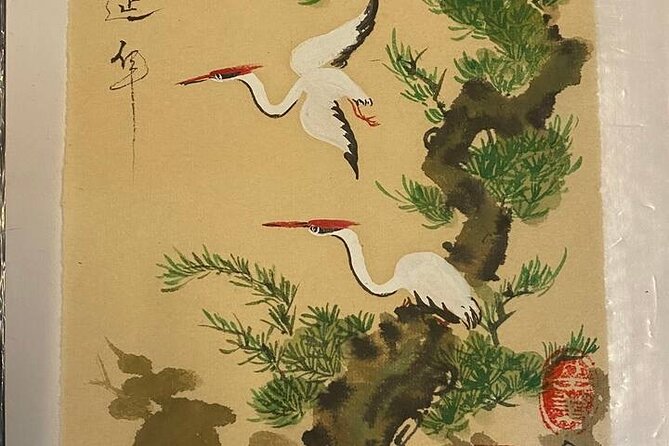
Calligraphy here isn’t the only creative lane. You’ll also learn how to draw traditional folk paintings and water-color landscape scenes (traditional scenery in water color).
Even if you mostly came for calligraphy, this part adds variety without changing the core theme: careful handwork. Folk painting often uses recognizable forms and simple but meaningful composition. Water-color scenery scenes add a different challenge—how pigment spreads and how water controls softness.
You’ll likely find this helpful if you’re worried calligraphy will be too narrow. It’s more like a creative workshop with a calligraphy core. You get to experience how traditional Vietnamese arts think about shapes, balance, and brush control—even when the subject changes.



The Moment Your Calligraphy Becomes Yours
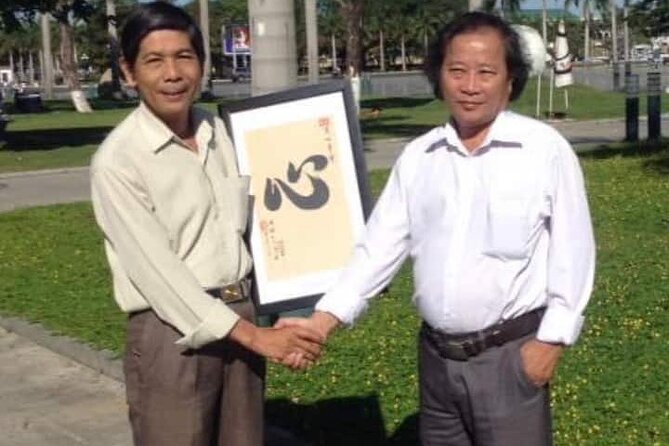
During the course, you’ll create your own calligraphy artwork. This is the part you’ll remember later, because it’s not a performance by the teacher. You’re making something with your own hand, using the same traditional materials discussed above.
Also, there’s a personal component after class. Master Huynh Dong will create a calligraphy work on rice paper with your name or your idea. It’s described as a gift from him, and that’s a big deal for value and emotion. The gift means you’re not leaving with just a practice page—you’re leaving with a finished piece connected to you.
That matters in Old Town Hoi An, where many souvenirs are mass-produced. Here, the takeaway feels linked to the lesson itself. You’ll have a story attached to the paper, and that story is the whole point.
Timing, Group Size, and Why 2 Hours Works
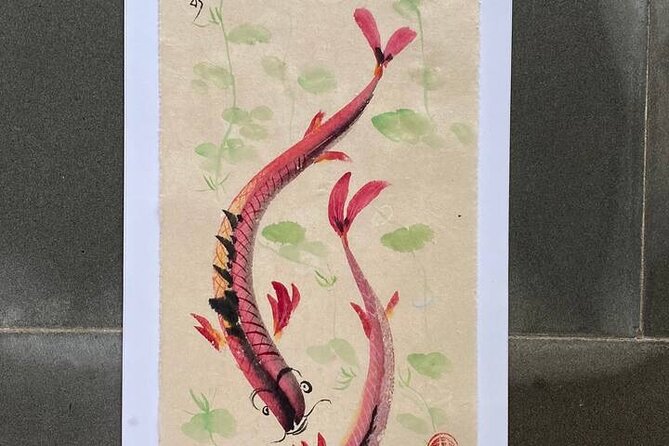
The class lasts about 2 hours. That time window is long enough to learn tools, practice strokes, and finish a piece, but short enough that it doesn’t swallow a whole day in Hoi An.
The group is also limited—maximum 5 people. In practical terms, that usually translates to better attention, especially when you’re learning a technique that depends on minute corrections. Calligraphy needs adjustments: where you start, how you hold the pen, and how you control ink flow. A small group helps a teacher spot patterns in your strokes and guide you faster.
If you hate long classes that turn into endurance tests, this schedule is a good fit. You get a real learning arc without feeling trapped.
Tea, Calm, and the Real Reason to Step Out of the Crowds
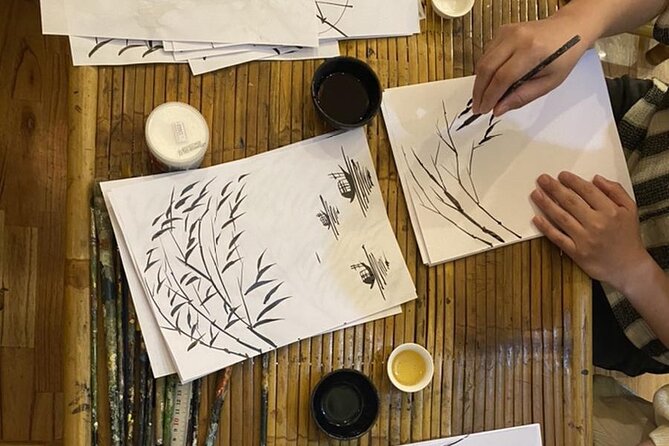
This class has a built-in mindset: slow down and focus. One of the strongest impressions from the experience description is the teacher’s soft-spoken, calm, kind demeanor. It’s the opposite of a hurried workshop where you can’t ask questions or reset your grip.
You’ll also have a chance to sip tea during the experience. That sounds small, but it supports the pace. Calligraphy is physical and mental. Tea turns waiting time into a gentle buffer so you start the art-making with a calmer head and steadier hands.
The practical takeaway: plan this when you want a breather. If you’ve been walking Old Town in the heat, or if your brain is fried from bargaining and crowds, this is a smart reset.
Price and Value: Is $37 Fair for What You Get?
The price is $37.00 per person for a roughly 2-hour class. On paper, it’s not “cheap,” but it doesn’t feel overpriced either because you’re getting more than a beginner demo.
What supports the value:
- A small class size (max 5 people), which usually means more direct teaching.
- Real traditional materials: fur pen, Chinese ink, and Do rice paper.
- More than one art skill area: calligraphy plus folk painting and water-color scenery drawing basics.
- A meaningful takeaway gift: Master Huynh Dong creates a calligraphy work on rice paper with your name or idea.
If your goal is only a photo stop, this will feel like too much. If your goal is to learn a craft, leave with art, and experience Vietnamese culture through hands-on technique, the price starts to look very reasonable.
It’s also a good use of money compared with buying souvenirs that don’t come with a story. Here, your money buys instruction, materials, and a personal output tied to you.
Who Should Book This Calligraphy Class in Old Town Hoi An?
This experience is especially well suited for:
- People who want something cultural but not formal or stiff.
- First-timers in calligraphy who want guidance and a gentle pace.
- Anyone who likes small groups and doesn’t want to feel rushed.
- Souvenir shoppers who’d rather take home something made for their name than a generic item.
You might skip it if:
- You only want sightseeing and don’t want hands-on work.
- You’re time-crunched with zero interest in learning a craft.
- You prefer purely visual experiences with no practice component.
Booking Timing and Cancellations (Quick, Practical Notes)
Confirmation is received at the time of booking, and you’ll use a mobile ticket. If plans change, the cancellation terms are free cancellation, with full refund if you cancel at least 24 hours before the start time. If you cancel later than that window, the amount paid isn’t refunded.
For most people, participation is described as possible, and the class is limited to a small group, so booking ahead is smart if you want a calm slot.
Should You Book Huynh Dong’s Calligraphy Class?
If you want a break from the crowd energy of Old Town Hoi An, I’d book it. The structure makes sense: learn ancient and modern Vietnamese calligraphy, practice with traditional tools, and take home both your own artwork and a rice-paper calligraphy gift with your name or idea.
Choose this if you care about technique and you like small, calm instruction. If you’re mainly chasing Instagram moments, you may find it slower than you expected. But if you’re the type who enjoys making something with your own hands, this is the kind of experience that turns into a keep.
FAQ
How long is the calligraphy learning class?
It’s listed as about 2 hours.
What does the class cost?
The price is $37.00 per person.
Where do I meet for the class in Hoi An?
The meeting point is 33 Nguyễn Thái Học, Phường Minh An, Hội An, Quảng Nam, Vietnam.
Will I return to the same meeting point?
Yes, the activity ends back at the meeting point.
Who teaches the class?
It’s taught by Master of Art Huynh Dong (also referred to as the Calligraphy Gallery by Master of Art Huynh Dong).
What will I learn during the class?
You can learn ancient and modern Vietnamese calligraphy, plus guidance on traditional folk paintings and water-color landscape scenes.
What materials will we use?
You’ll create your own artwork using a fur pen, Chinese ink, and traditional Vietnamese Do rice paper.
Do I get anything to take home?
Yes. You’ll create your own calligraphy artwork during the course, and Master Huynh Dong also creates a calligraphy work on rice paper with your name or your idea as a gift.
What’s the group size limit?
The class has a maximum of 5 people.
What is the cancellation policy?
There is free cancellation. You can cancel up to 24 hours in advance for a full refund. If you cancel less than 24 hours before the start time, the amount paid is not refunded.