
REVIEW · HOI AN
Hoi An Craft Villages And Lantern Making Tour
Book on Viator →Operated by Hoi An Express Travel · Bookable on Viator
The best part is watching crafts stay alive. This Hoi An craft tour pairs a relaxed Thu Bon River boat ride with real village workshops, so you see how wood, clay, and paper lanterns support local life.
I especially like the mix of working crafts: Kim Bong for carpentry and boat-building, then Thanh Ha for pottery. The other big plus is the lantern stop at the end, which ties the whole afternoon to the Hoi An nighttime tradition.
One consideration: the pottery time is short, and it can feel terracotta-focused and a bit plain if you were hoping for lots of different styles or glazes.
In This Review
- Quick Takes: What Makes This Tour Worth Your Afternoon
- Thu Bon River Craft Villages in About 4.5 Hours
- The Boat Rides That Turn Travel Time Into Part of the Experience
- Kim Bong Carpentry Village: Wood, Craft Skill, and Boat-Building Culture
- Thanh Ha Pottery Village: Watch Clay Turn Into Daily Objects
- The Lantern Craftsman Stop: A Quick Lesson That Fits Hoi An
- Price and Value: What $40 Buys You Here
- What You Should Expect From the Group Experience
- How to Get More Out of Each Stop (Without Overthinking It)
- Who This Tour Fits Best
- Should You Book the Hoi An Craft Villages and Lantern Making Tour?
Quick Takes: What Makes This Tour Worth Your Afternoon
- Thu Bon River cruise between villages keeps the pace calm instead of feeling like back-to-back shop stops
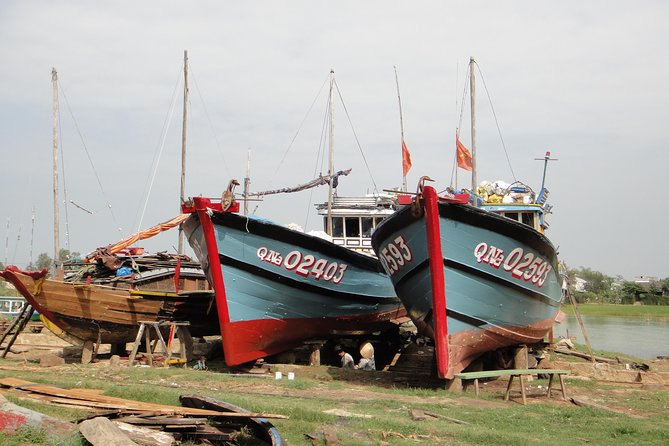
- Kim Bong’s carpentry and boat-building gives you a strong look at hands-on craft work
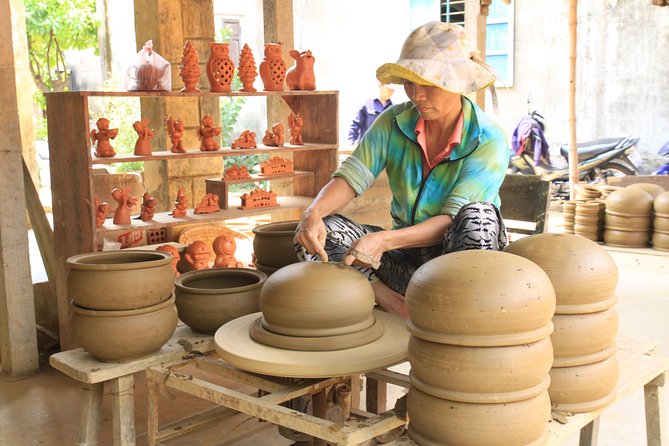
- Thanh Ha pottery village lets you watch everyday items being made (vases, pots, kettles)
- Lantern making learning stop connects the village craft world to what you’ll see in Hoi An at night
- Small group size (max 15) helps the guide keep things moving and answering questions
- Hotel pickup + English-speaking guide makes it easy to fit into a day without planning
Thu Bon River Craft Villages in About 4.5 Hours
This tour is designed for an afternoon stroll, just with boat rides and workshops instead of museum halls. You’ll be out roughly 4 hours 30 minutes, and the flow is gentle: travel by water, see a craft village, travel again, see another craft village, then finish with lantern craft learning.
The route also makes sense if you’re basing yourself in Hoi An city center. Pickup and drop-off happen in the city center, so you don’t waste time figuring out transport while your schedule is already tight.
At $40 per person, the value comes from what’s included, not just the headline price. You’re paying for an English-speaking guide, air-conditioned transport, entrance fees, and boat segments that connect the villages in a way you can’t easily replicate on your own without more legwork.
You can also read our reviews of more tours and experiences in Hoi An.



The Boat Rides That Turn Travel Time Into Part of the Experience

You don’t just “get to” the villages. The Thu Bon River is part of the show.
The day includes multiple boat rides, including about a 30-minute ride to Kim Bong and another boat transfer to Thanh Ha. When the water is moving and the river banks are passing by, it’s easier to shift from tourist mode into “slow down and watch” mode.
Also, the boat portion helps keep the group together. You’ll get the guide’s context while you’re still on the way, so when you arrive, the craft work feels less random.
Practical tip: bring a light layer. Even in warmer months, river breezes can cool you down, and you’ll likely spend short stretches outdoors while boarding or arriving.
Kim Bong Carpentry Village: Wood, Craft Skill, and Boat-Building Culture
This is the stop that tends to land hardest with first-timers. Kim Bong Carpentry Village is focused on woodworking traditions and boat-building related work, and it’s not a one-dimensional “look and leave” visit.
A key detail is the village’s background: it was established in the 15th century by artisans who came from Thanh Hoa, Nghe An, and Ha Tinh. That matters because you can feel the craftsmanship as something carried across regions, not just a local hobby that popped up recently.
In the time on site (around 1 hour 30 minutes, with an admission ticket included), you’ll be observing the way carpentry work fits together—wood pieces, tools, and practical finishing. The guided explanations help connect what you’re seeing to why carpentry is so useful in coastal and river communities.
One more subtle benefit: this stop gives you a visual contrast to pottery. Woodwork shows you the structure and process in a way that’s easy to follow even if you’re not a craft expert. If you like watching physical work—cutting, shaping, joining—Kim Bong is usually your best bet.
Thanh Ha Pottery Village: Watch Clay Turn Into Daily Objects

Then you move on to Thanh Ha Pottery Village for pottery observation. You’re not signing up for a pottery class here. Instead, you’ll watch villagers making items such as vases, pots, and kettles.
You’ll spend about 45 minutes at this stop, and an admission ticket is included. The short timing is the trade-off: you’ll get a snapshot of the craft process, but you won’t see every step in depth from start to finish.
Here’s the consideration I think you should know upfront. Some visitors find the pottery village experience more terracotta-focused and fairly straightforward in appearance, with less variety than they hoped for. A terracotta museum is part of this kind of visit, and even when it helps you see how pottery evolved over time, it might not feel like a “grab your attention” moment if you’re expecting lots of modern styles.
So how do you make it worth it? Go in with the right expectation: this stop is best if you’re curious about making functional objects and seeing workshop routine, not if you want glossy studio ceramics or a wide rainbow of glazing.
The Lantern Craftsman Stop: A Quick Lesson That Fits Hoi An
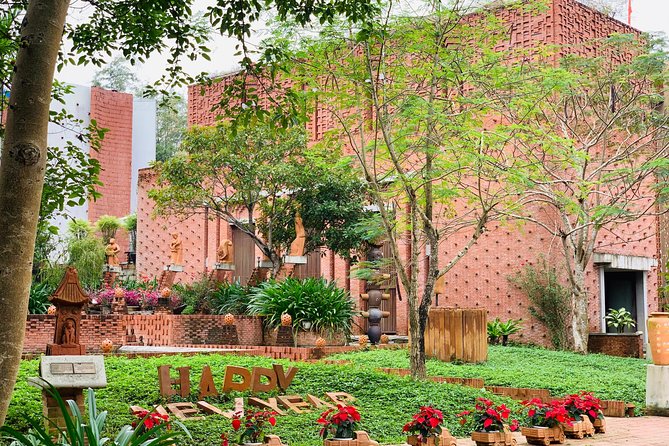
The tour ends with a visit to a local lantern craftsman to learn the traditional art of lantern making. This segment runs about 40 minutes, and the admission is free.
Even if you don’t buy anything, this stop is valuable because it puts Hoi An into context. You’ll see that lanterns are not just decoration for photos; they’re the result of craft choices—materials, shaping, and construction—meant to create something that works visually in the streets at night.
This is also a smart time to slow down and look closely at details. Lantern craft is the kind of skill where small decisions matter, like keeping lines straight and building a frame that holds its shape.
If you do want a souvenir, this is the most logical moment to shop. After you’ve seen woodworking and pottery, you’ll better appreciate what lantern makers do, and you’ll likely ask more meaningful questions.



Price and Value: What $40 Buys You Here
Let’s be honest: $40 can mean many things depending on what’s included. In this case, the value comes from stacking lots of costs you’d otherwise pay separately.
You get:
- Hotel pickup and drop-off in Hoi An city center
- English-speaking guides (other languages may be available with a surcharge)
- Air-conditioned transportation
- Entrance fees and boat segments as part of the itinerary
- Bottled water
- Travel insurance
And you’re not paying extra for the core “how do I see the villages?” problem. You’re using local transport and river routes that keep the experience flowing. If you tried to DIY this, you’d likely spend time coordinating rides, paying separate fees, and figuring out how to connect the villages efficiently.
The other value angle: the tour caps at 15 travelers. That size usually helps the guide keep explanations clearer and reduces that chaotic feel some group tours can have.
What You Should Expect From the Group Experience

The maximum group size is 15 travelers, and the tour has room to stay calm. That doesn’t mean it’s private, but it does mean you can still hear instructions and ask questions without fighting for attention.
Also, your guide will be speaking English. That matters more than you might think. Craft villages can be full of small steps and practical details, and a good explanation helps you notice the things you’d otherwise miss.
One name that comes up positively in feedback is Emily. The praise centers on her clear English and her ability to make the carpentry and pottery stops feel engaging. If you’re assigned a guide with that kind of energy, the tour feels less like a schedule and more like a conversation.
How to Get More Out of Each Stop (Without Overthinking It)

You don’t need a craft background. You do need the right approach.
Here’s what I’d do:
- Bring curiosity, not shopping goals. Watch first, ask second.
- At Kim Bong, pay attention to how the wood pieces are handled and connected. That’s where the carpentry story lives.
- At Thanh Ha, look at the objects as everyday tools, not just decoration. A kettle or pot is a functional craft outcome.
- At the lantern craftsman stop, look for the construction basics. You’ll spot how shape and structure control the final look.
- Wear comfortable shoes. Even when the stops are short, you’ll still be moving around workshops and walking between viewing areas.
If you get there with a calm pace, the “craft village rhythm” clicks. If you treat it like a race to check boxes, you’ll miss the best part.
Who This Tour Fits Best
This tour works especially well if:
- You want a culture-focused afternoon but still like a relaxed pace
- You’re curious about how everyday crafts support local livelihoods
- You like seeing real working spaces, not only storefronts
- You want an easy win while you’re already in Hoi An
It’s also a good match for people who prefer guidance. Even when the sights are interesting, craft villages can be confusing if you don’t know what you’re looking at.
On the flip side, if your main goal is a high-variety “wow” pottery gallery or a long hands-on studio experience, you might feel the pottery side is short. The wood-and-craft portion tends to satisfy more visitors in terms of impact, while the pottery segment is more of a focused snapshot.
Should You Book the Hoi An Craft Villages and Lantern Making Tour?
I’d book it if you want an efficient way to see multiple village crafts connected by the Thu Bon River—and you value guided context. The price is fair for the package: pickup, air-conditioning, English guide, entrance fees, and boats bundled into a smooth afternoon.
I wouldn’t book it as confidently if pottery variety is your top priority. Go in expecting terracotta-forward observations and a short window to absorb the craft process.
If you’re the kind of traveler who likes to look closely and ask practical questions—how things are made, why they’re made, and how they survive as livelihoods—you’ll likely enjoy this tour a lot.