
REVIEW · HOI AN
Countryside and Villages Tour By Motorbike
Book on Viator →Operated by Hoi An Adventure · Bookable on Viator
Two wheels beat a taxi every time. This Hoi An motorbike countryside tour takes you past rice fields and into working villages around town.
I love the flexibility: you can drive the scooter yourself or ride as a passenger on the back of an experienced guide. I also like that the stops focus on crafts and day-to-day farming, from Thanh Ha Pottery Village to Tra Que’s vegetables, with English guidance from people like Truong, Thomas, and Thai.
One consideration: it’s still a scooter ride, so if you’re sensitive to sun, heat, or bug bites, you’ll want to come ready. I’d pack mosquito spray and sunscreen and plan for time in the open air.
In This Review
- Key things I’d watch for on this tour
- Hoi An on Two Wheels: Why This Countryside Ride Works
- Price and What You Actually Get for $51
- Where You Start and How the Day Flows
- The Route at a Glance: Six Stops, Not One Long Village Loop
- Stop 1: Hoi An Adventure Segment and the Scooter Intro
- Stop 2: Thanh Ha Pottery Village and How the Kilns Work
- Stop 3: Kim Bong Carpentry Village and the Island Feel
- Stop 4: Tra Que Vegetable Village and the Flavor Logic
- Stop 5: Cua Dai Bridge Photo Stop for Wide Views
- Riding Options, Safety, and What to Bring
- Guides and Group Size: Why It Feels Personal
- Who This Tour Suits Best
- Should You Book This Hoi An Motorbike Countryside Tour?
- FAQ
- How long is the countryside and villages tour by motorbike?
- What is the price of the tour?
- Where does the tour start?
- Is pickup offered?
- Can I drive the scooter, or do I ride as a passenger?
- What’s included in the meal and drink?
- Are admission tickets included?
- How big is the group?
- Is alcohol included?
- What should I bring?
- Is there a cancellation option?
Key things I’d watch for on this tour

- Small-group feel with a small size (up to about 5) so it doesn’t turn into a cattle ride
- You choose your riding style: drive yourself or ride pillion, with the same price
- Real village crafts: pottery from a centuries-old wheel style and carpentry work tied to island communities
- Farming stop that makes sense: Tra Que’s herbs and greens are grown for flavor, not just photos
- Food included: lunch plus coffee or tea, along with bottled water
- Great Hoi An views at Cua Dai Bridge for that wide river-and-coast picture
Hoi An on Two Wheels: Why This Countryside Ride Works
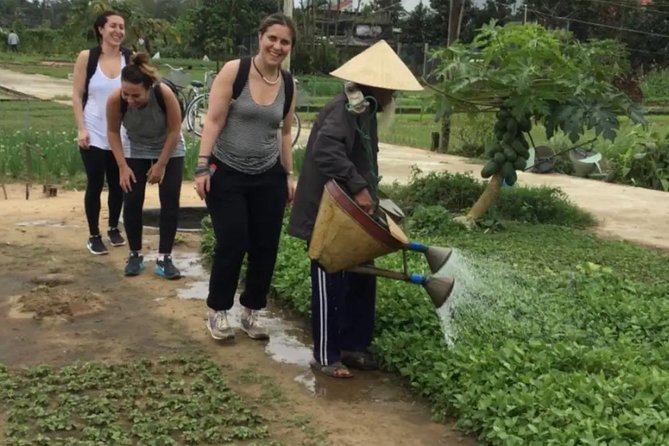
If your Hoi An days so far have been mostly for lantern streets and old-town lanes, this tour is the correction. It pushes you outward into the places where people make things and grow food, not just perform for visitors.
The route is built around short village visits, so you’re not stuck in one place for hours. You also get a local guide experience, and the guidance really matters on a scooter tour where small roads and traffic rhythms are part of the day. In past rides, guides such as Truong, Thomas, and Thai are specifically praised for being patient and for keeping the driving safe.
The big idea here is perspective. You’ll see the countryside around Hoi An as more than scenery. It’s a working system: kilns in backyards, carpentry connected to island life, and vegetable growing that’s part of how Tra Que is known.
You can also read our reviews of more tours and experiences in Hoi An.



Price and What You Actually Get for $51
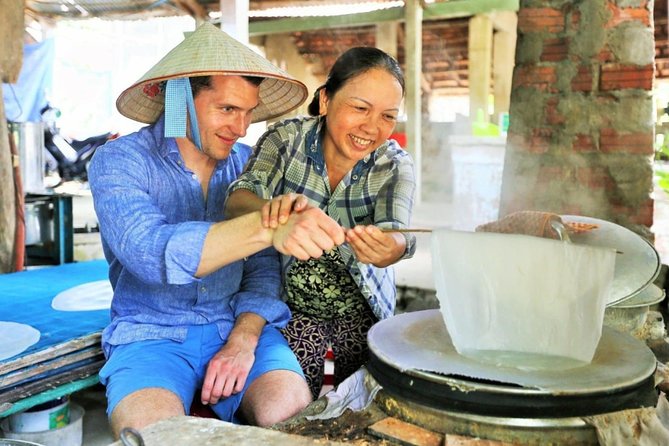
At $51 for about four hours, the value comes from what’s included rather than the sticker price alone. You get:
- Motorbike + English-speaking guide
- Lunch plus a light lunch (served during the tour)
- Coffee or tea
- Bottled water
- Admission tickets for the main village stops (with one photo stop being free)
That matters because scooter tours without food can turn into a day of extra purchases. Here, you at least start with a built-in meal plan, which makes it easier to budget and less stressful when you’re out in rural areas.
Also, the price is positioned as fair for a route that hits multiple traditional areas and includes guided time at each stop. If you’re doing Hoi An for the first time, this tour is also a way to learn what the region is known for, so your later choices (market shopping, restaurant picks, even museum visits) become more informed.
Where You Start and How the Day Flows
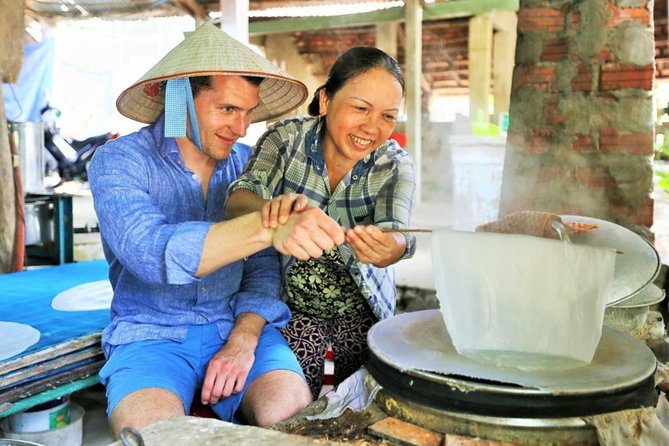
Most tours start from the Japanese Covered Bridge area. This one begins at the Japanese Covered-Bridge address and ends back there, which keeps things simple.
There’s also pickup offered, which helps if you’re staying a little farther out. And you’ll get a mobile ticket, so you’re not hunting for printed papers when you’re already thinking about sunscreen and water.
The timing is a smooth half-day format: roughly four hours, with segments ranging from about 15 to 60 minutes per stop. That pacing is useful in Vietnam heat, because it gives you variety without turning the ride into one long slog.
The Route at a Glance: Six Stops, Not One Long Village Loop
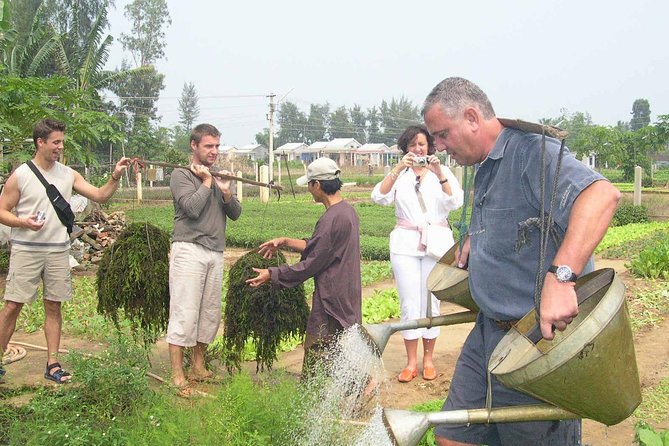
Even though the day has several pieces, the structure is straightforward: you ride out, pause at craft and farm places, take a scenic break, and head back.
Think of it as six parts:
1) The ride-and-introduction segment (about an hour)
2) Pottery at Thanh Ha
3) Carpentry at Kim Bong
4) Farming at Tra Que
5) Scenic views at Cua Dai Bridge
6) The wrap-up return to the starting point
One nice detail: the tour is set up for a small group. That keeps questions from getting lost and makes it easier for your guide to adjust the pace when traffic or road conditions change.
Stop 1: Hoi An Adventure Segment and the Scooter Intro
The day kicks off with the most active part: a guided scooter experience that sets the tone for everything else. This is where you get the “now I get it” moment about Hoi An geography. You’ll get a back-of-the-scooter viewpoint (when you choose passenger) that makes rice paddies, village edges, and everyday movement feel close and real rather than distant.
If you decide to drive yourself, you’ll still be with the guide team. The tour description also notes that you can ride yourself for the same price, which is great if you’ve already built a little confidence and want more control over stops and pace.
This first segment is also practical. It’s long enough to get out of town and start noticing how the countryside is laid out, so the later craft and farming stops feel connected instead of random.



Stop 2: Thanh Ha Pottery Village and How the Kilns Work

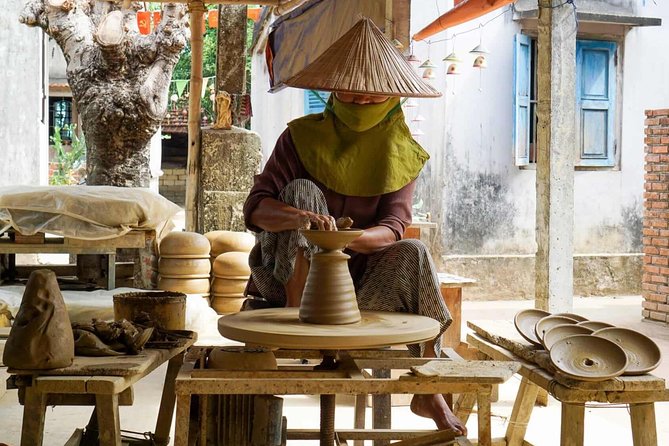
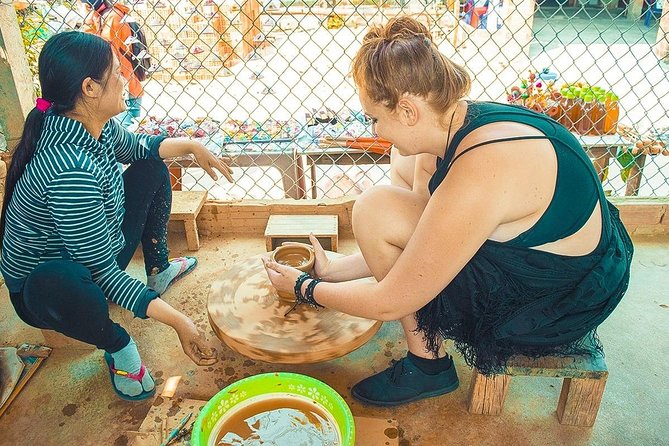
Thanh Ha is famous for pottery in a way that’s more than a photo stop. The village has been making pottery for over 400 years, and many artisans still use a two-man pottery wheel style. That’s a big deal because you’re seeing craft methods that haven’t been fully replaced by shortcuts.
What makes this stop memorable is how pottery happens in normal neighborhood settings. The kilns are described as red brick ovens built behind simple riverfront homes. You’ll often see production as something woven into daily life rather than staged.
Time here is about half an hour, so you won’t feel rushed. At the same time, it’s enough time to see the process and ask questions without dragging the rest of the day. If you like buying small items, this is one of your best chances because you’re there for the source, not a display shop.
Stop 3: Kim Bong Carpentry Village and the Island Feel
Kim Bong carpentry has an older timeline and a different feel than pottery. It’s described as being on Cam Kim lands with roots reaching back to the end of the 15th century. If you like woodworking, this is the kind of stop where you start noticing grain, joinery, and craft choices instead of just admiring finished pieces.
This stop is also tied to local geography. The route includes a short ferry ride (about 10 minutes) from the Hoi An area to reach Kim Bong on the island commune. That ferry piece matters because it slows the day down in a good way. It gives you a mental reset, and it helps you understand how communities here connect through water.
The visit itself is shorter, around 20 minutes. That’s enough for a quick look at carpentry work and for your guide to point out what’s worth noticing—especially if you’re new to Vietnamese village crafts. If you’re the type who wants deep hands-on practice, you might still wish there were more time, but this tour is built for variety rather than workshop length.
Stop 4: Tra Que Vegetable Village and the Flavor Logic

Tra Que is for people who like food that actually tastes like something. The village is known for planting vegetables such as lettuce, water spinach, cabbage, and herbs like basil, coriander, and fish lettuce. The key detail is that these crops contribute to Tra Que’s reputation for flavor, not just freshness.
This stop typically runs about 20 minutes. That’s short, but it’s effective because it gives you the “how they grow” context to pair with meals later. When you know the region grows herbs and greens for specific taste profiles, restaurants back in town start making more sense.
It’s also a good emotional counterbalance. After craft stops, watching farming practices helps you slow down. You’re no longer tracking tools and techniques; you’re seeing the living systems that feed local life.
Stop 5: Cua Dai Bridge Photo Stop for Wide Views
Cua Dai Bridge is your elevated pause and your big-picture moment. The viewpoint is described as dramatic in all directions, with views over the river, mountains, and coastline. You’ll likely see golden-lit scenes depending on the light and time of day, which is why this stop works well for photos.
Time here is brief, about 15 minutes, which helps keep the tour on schedule. But it’s a smart inclusion. After several village stops that are close-up and grounded, the bridge gives you that wide Hoi An perspective and helps the day feel complete.
If you’re photo-focused, I’d treat this as your “get your best shot, then relax” moment rather than trying to do everything else in the same timeframe.
Riding Options, Safety, and What to Bring
One of the best parts of this tour is choice. You can ride pillion with an experienced driver, or you can drive your own scooter. That makes the tour flexible for different comfort levels.
Past rides also highlight safe driving as a key reason people felt confident on the roads. Still, scooter days are scooter days. Come with realistic expectations: you’ll be in motion, you’ll feel the sun, and you’ll want to protect yourself from bugs.
Bring:
- Sun cream
- Mosquito spray
- Sunglasses
And if you’re driving yourself, wear clothing that feels practical for heat and movement. Also, keep your hands steady around your bag and phone. The roads aren’t described as extreme, but they’re not slow walking either.
Guides and Group Size: Why It Feels Personal
This is one of those tours where the guide presence can make or break the day. The experience is designed around English-speaking guidance, and multiple reviews call out guides like Truong, Thomas, and Thai for being patient and helpful.
Some reviews also mention the guide helping with local shopping questions, including negotiating items’ prices. That’s not just a shopping perk. It helps you avoid awkwardness and increases the chance you end up with something you actually want.
Group size also shapes the vibe. With a small group (around five participants), you’re more likely to get direct answers and a smoother experience at each stop. And it’s set up as a private tour for your group, so you’re not blending into a larger crowd.
Who This Tour Suits Best
This tour is a strong fit if you want:
- A fast way to understand what Hoi An is surrounded by
- Hands-on culture through crafts and farming
- A half-day plan that includes food without planning ahead
- A scooter experience that still feels guided and controlled
It’s especially good for first-time visitors who feel like the old town alone is too narrow.
It may be less ideal if:
- You dislike scooter rides or are easily uncomfortable with sun and bugs
- You want long, deep workshop-style training in one craft
- You’re hoping for a full day with lots of downtime and minimal motion
Should You Book This Hoi An Motorbike Countryside Tour?
Yes, if you want your Hoi An trip to feel like more than a pretty waterfront. The value comes from the combination of guided scooter time, multiple village craft and farming stops, and included lunch and coffee. It’s a practical introduction to the countryside and the working culture around town.
Book it when you want variety in a single morning or half-day. If you’re worried about heat or scooter comfort, pack the basics and consider riding as a passenger. Either way, this route gives you a clear sense of how people here live, make, and grow.
FAQ
How long is the countryside and villages tour by motorbike?
It runs for about 4 hours (approx.).
What is the price of the tour?
The price is listed as $51.
Where does the tour start?
The start point is the Japanese Covered-Bridge area in Hoi An.
Is pickup offered?
Pickup is offered.
Can I drive the scooter, or do I ride as a passenger?
You can ride yourself if you want, or ride as a passenger. The information says you can do either for the same price.
What’s included in the meal and drink?
Coffee and/or tea are included, along with lunch. There is also bottled water, and a light lunch is included.
Are admission tickets included?
Admission tickets are included for the village stops. The Cua Dai Bridge photo stop is free.
How big is the group?
The tour is described as a small group with 5 participants, which keeps it more personalized.
Is alcohol included?
No. Alcoholic drinks aren’t included, though you can purchase them.
What should I bring?
Bring sun cream, mosquito spray, and sunglasses.
Is there a cancellation option?
You can cancel for free up to 24 hours in advance for a full refund.