REVIEW · HOI AN
WAR TRAILS TOUR to KY ANH TUNNELS & CHAM RUINED SANCTUARY
Book on Viator →Operated by Hoi An Cham Cham Travel · Bookable on Viator
Ky Anh Tunnels put Vietnam War history underground. This small-group half day out of Hoi An mixes war-era tunnel passages with a later stop at Chien Dan Cham Tower ruins, so you get two very different slices of Vietnam. I especially like the way the tour keeps the experience grounded, including time with a veteran guide who helped build parts of the tunnels and can connect details to real life, and I also like the practical pacing with a noodle stop. The main thing to consider is that this is an emotionally heavy visit in tight, dim spaces, and the site experience depends on good weather.
You’ll also appreciate the logistics are simple: hotel pickup around 8:30 am, about 5–6 hours total, and a group capped at 15. One drawback: because you’re going into the tunnels, it’s not a great match if you dislike confined areas or slippery footing in shallow pools.
In This Review
- Key highlights worth your time (and your questions)
- Morning pickup and why the timing works
- Ky Anh Tunnels: walking the 32 km under the villages
- What Mr. Thom adds to the story
- A practical warning before you go in
- Chien Dan Cham Tower: a change of pace with real archaeology
- The noodle break: simple fuel that makes the afternoon easier
- Returning to Hoi An by 1:00 pm
- Price and value: what $64 buys you
- Who this tour is perfect for
- Small-group feel and guides that matter
- Quick planning tips so you’re comfortable
- Should you book War Trails to Ky Anh Tunnels and Chien Dan?
- FAQ
- Where does the tour start and end?
- What time does the tour start?
- How long is the tour?
- How many stops are included?
- Are admission tickets included?
- Is pickup offered?
- How much does it cost per person?
- What is the group size limit?
- What happens if the weather is poor?
- Are service animals allowed?
Key highlights worth your time (and your questions)
- Ky Anh’s tunnel network: built by resistance forces from 1965 to 1967, with a system length of about 32 km
- Veteran-led storytelling: your guide includes Mr. Thom, who helped build the tunnels
- A look at survival tech: you’ll hear about warning systems designed to protect villages from detection
- Cham heritage at Chien Dan: three sanctuaries facing east from the late-10th to early-11th centuries
- Evidence of a specific reign: the Chien Dan inscription ties the towers to King Harivarmadeva’s era, with interpretation still open
Morning pickup and why the timing works
This tour runs as a compact, full morning into early afternoon. You’re picked up at your hotel in Hoi An starting at 8:30 am, and the day is designed to fit into your schedule without eating your whole day. Total time is about 5–6 hours, which makes it a realistic add-on even if you want to keep your afternoons open for Hoi An’s classic sights.
I like that the day is built around two sites with different energy levels. Ky Anh is about endurance and survival under pressure. Chien Dan Cham Tower is about stone, inscriptions, and religious architecture from the Champa kingdom. That contrast helps the whole day feel less repetitive.
You can also read our reviews of more tours and experiences in Hoi An.



Ky Anh Tunnels: walking the 32 km under the villages
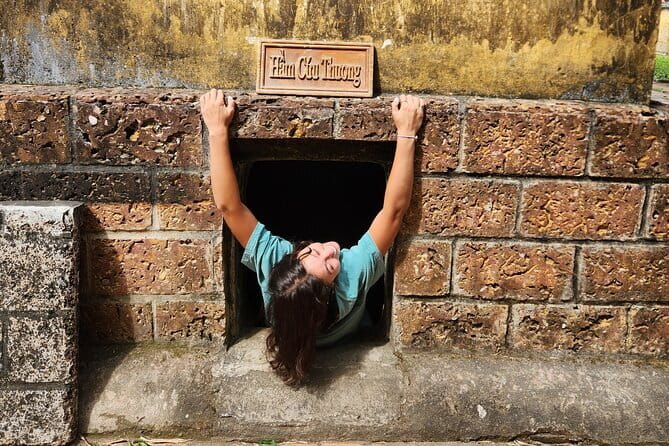
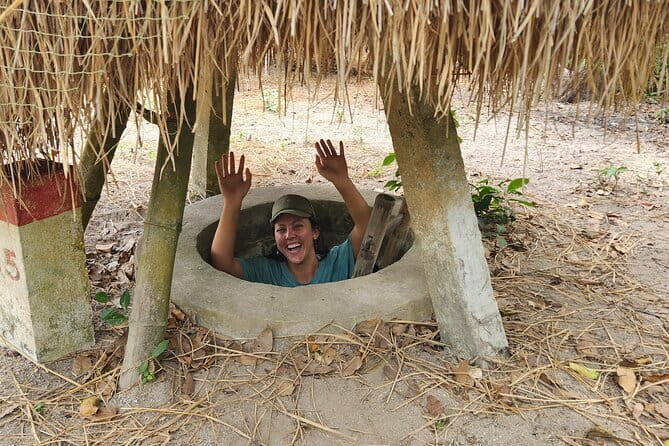
The core stop is Ky Anh Tunnel, with about 1 hour 30 minutes on site. The setting is rural Quang Nam province, with the tunnels described as weaving under villages and moving through places like houses, straw piles, bamboo bushes, and canals. You can think of it as an underground village system rather than a single “attraction hallway.”
You’ll get context first: Ky Anh Tunnel Systems was an important revolutionary base for the Vietnam War era resistance, built during the intense years of the resistance war against America, from 1965 to 1967. The aim was simple but life-or-death: create routes and hiding spaces so U.S. forces wouldn’t be able to detect them.
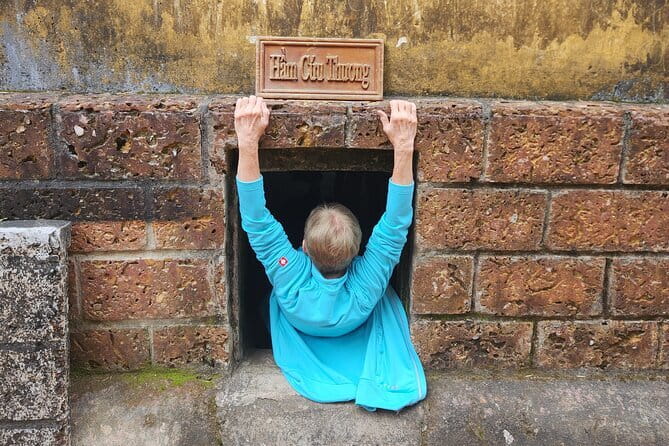
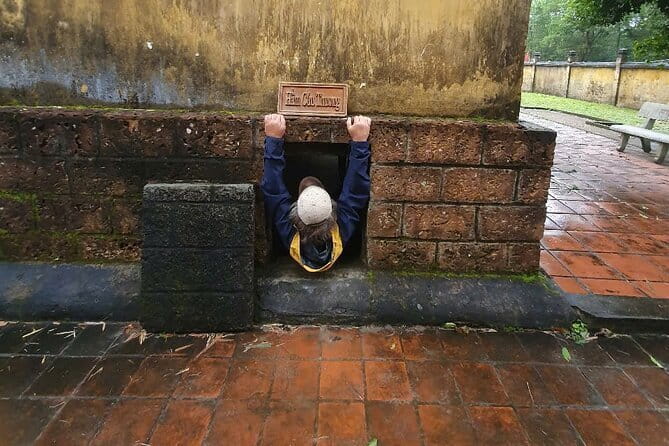
What makes the Ky Anh visit worth your attention is how physical it feels. Expect dimly lit passages and stretches where the footing can be awkward. The tunnel experience includes shallow water pools, which changes how you walk and pay attention. Instead of just looking at history from a safe distance, you’re moving through it. That’s exactly why it’s more emotional than the more famous, more commercial war sites.
What Mr. Thom adds to the story
One of the most praised parts of this tour is the guide setup. The tour highlights a veteran guide named Mr. Thom, who helped build parts of the tunnels. Even if you only catch a few details, that kind of first-person context shifts the tone from textbook to lived experience.
You also hear about how warning systems were set up to protect village life. Those systems matter because they explain what “survival” meant beyond hiding. You learn that people weren’t just waiting underground. They were managing risk, timing, and information while working in the dark.
A practical warning before you go in
If you’re sensitive to enclosed, dim spaces, plan for that. This isn’t a museum walk with bright lighting and clear paths. It’s hand-dug tunnel space, created during the 1960s with hammers and chisels, and it comes with the reality of damp ground and narrow passageways. Wear shoes that can handle wet surfaces, and keep your phone stowed unless your guide says it’s fine.
Chien Dan Cham Tower: a change of pace with real archaeology
After the tunnel stop, you head to Chien Dan Champa Towers, timed around 12:00. This part of the tour gives your body a break while still feeding your brain.
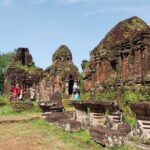
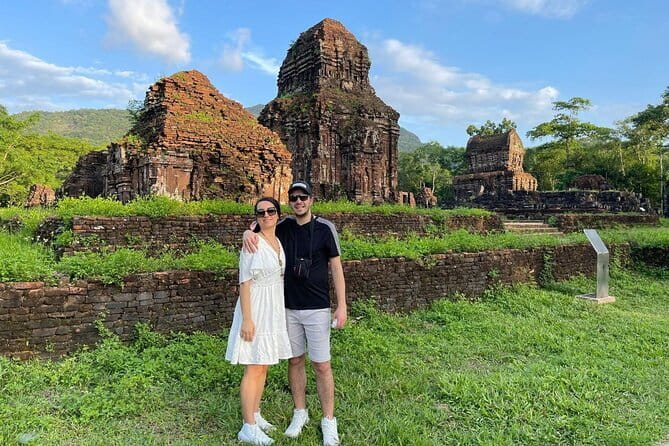
You’re looking at three sanctuaries built by the Champa kingdom between the late-10th and early-11th centuries. They face east, which is a detail worth noting if you like to connect architecture with belief systems and directional design.
On site there’s a large inscribed stone called the Chien Dan inscription. This inscription is treated as evidence that the towers were built during the reign of King Harivarmadeva. The interpretation is still open in terms of whether the king personally sponsored the monuments, but the inscription itself anchors the era.
This stop is only about 1 hour, which is a smart length. You’ll have enough time to appreciate the placement and read what’s available, without turning this into a full historical seminar. I like that the tour doesn’t overstuff the day; it keeps your attention on what you can actually see.



The noodle break: simple fuel that makes the afternoon easier
Between the two main stops, the tour includes time to have local noodles. You’ll eat around 12:30.
That might sound basic, but it’s a real value add. After time in the tunnels and time walking outdoors, you’re going to want something warm and filling. This stop also gives your guide a chance to reset the group before heading back.
Returning to Hoi An by 1:00 pm
You’re back at your hotel by around 13:00. That early return is one of the quiet benefits of this tour. Instead of sacrificing your entire day, you get a complete story arc: war history first, then a cultural history stop, and then you’re done.
For many Hoi An itineraries, that matters. You might want the afternoon for the Old Town’s slower pace, riverside strolls, or an extra museum stop. This tour helps you avoid the common problem of packing your schedule so tightly that nothing feels unrushed.
Price and value: what $64 buys you

At $64 per person, this is priced as a short, guided experience with a real on-the-ground component. You’re not paying for a long drive or for a huge itinerary with dozens of stops. You’re paying for transportation from Hoi An, guided interpretation, and admissions at both sites.
The admissions are included for the tunnel and the Chien Dan stop, which helps the price feel more “all-in.” You also get a meal component, plus the benefit of a small group cap of 15 travelers. In tours that involve physically demanding sections like tunnels, a smaller group can make things easier for your guide to manage and easier for you to move at a comfortable pace.
Is it expensive or cheap? Compared to a generic half-day that only scratches the surface, it feels fair because Ky Anh is the main event and it comes with real context. Compared to very budget day trips, it’s pricier, but you’re also getting the veteran-led angle and the cultural site stop.
Who this tour is perfect for

This fits best if you want more than sightseeing photos.
You’ll likely enjoy it if:
- you have an interest in the Vietnam War and want a less-touristy battlefield setting than the most famous tunnel sites
- you like guided history that includes personal stories, especially from veteran contributors like Mr. Thom
- you want a focused half day, not a long day with endless transfers
- you’re also interested in Cham-era history, not just 20th-century events
You might want to rethink it if:
- you dislike enclosed spaces, dim lighting, and wet footing
- you’re looking for a light, carefree outing rather than an emotional historical visit
Small-group feel and guides that matter
The tour caps at 15 travelers, and you should expect a more controlled experience than in big-bus formats. You also have hotel pickup, so you’re not trying to coordinate transport on your own.
The most memorable part, based on the tour’s emphasis, is how much weight the veteran story carries. The tour doesn’t treat history as distant. It presents it as something with names, decisions, and physical conditions that people lived through.
Quick planning tips so you’re comfortable
A few things help you get more from the day:
- Wear shoes suitable for shallow water pools and uneven tunnel footing.
- Bring a lightweight layer. Even if it feels warm above ground, enclosed spaces can feel cooler.
- Keep your day pack simple so you can move easily through tight areas.
- If weather looks rough, be ready for schedule adjustments since the experience requires good weather.
Should you book War Trails to Ky Anh Tunnels and Chien Dan?
If you’re in Hoi An and you want one history-heavy morning that doesn’t feel like a drive-by, I’d say yes, book it. The value comes from two things: the Ky Anh Tunnel experience with veteran-led context, and the thoughtful follow-up at Chien Dan Cham Tower with the Chien Dan inscription and King Harivarmadeva connection. That mix is rare for a single half-day.
But make the call based on your comfort level. If you’re okay with confined, dim, and wet spaces, this tour offers a serious sense of place. If you want bright, airy sightseeing only, or if war sites are hard for you emotionally, consider a different day plan.
Either way, this is the kind of tour that leaves you with more than a souvenir photo. It gives you stories you’ll remember when you’re back in Hoi An.
FAQ
Where does the tour start and end?
The tour starts in Hội An, Quảng Nam, Vietnam, and ends back at the meeting point.
What time does the tour start?
Pickup begins at 8:30 am.
How long is the tour?
The duration is about 5 to 6 hours.
How many stops are included?
There are two main stops: Ky Anh Tunnel and Chien Dan Champa Towers, with noodles included between them.
Are admission tickets included?
Yes. Admission tickets are included for Ky Anh Tunnel and for the Chien Dan Champa Towers stop.
Is pickup offered?
Yes, hotel pickup is offered.
How much does it cost per person?
The price is $64.00 per person.
What is the group size limit?
The tour has a maximum of 15 travelers.
What happens if the weather is poor?
The experience requires good weather. If it’s canceled due to poor weather, you’ll be offered a different date or a full refund.
Are service animals allowed?
Yes, service animals are allowed.