
REVIEW · HOI AN
Hoi An Ghosts, Death, Mystery Unveiled
Book on Viator →Operated by Momo Travel · Bookable on Viator
Death is usually left unspoken.
This Hoi An tour turns that taboo into a noisy-at-night street story—complete with dark alleys, a medieval graveyard feel, and the legends locals still trade. You’ll also get a practical sense of the city’s layers—fun first, then meaning—after dark, when the Old Town’s details hit harder.
I love the way the tour blends myth with everyday life, from how families protect their homes to what people avoid during Fullmoon. I also love the movement: about 1 mile (around 1.5 km) on foot, so you see key lanes and landmark areas without turning it into a stamina test.
One possible drawback: this is inherently spooky—if you’re expecting light sightseeing only, the death-and-spirits theme may feel too intense for your taste.
In This Review
- Key Highlights You’ll Actually Want
- Your Evening Starts at 6:00 pm—And It’s Meant to Feel Uncanny
- Walking Route: What You’ll See Between Old Town Lanes and the Japanese Covered Bridge
- Stop 1-Theme: A 200-Year-Old Grave and the Cost of Not Talking About Death
- Ghost Alley and the “Living People Connect With Death” Idea
- Medieval Graveyard Death Rituals: Why the Tour Focuses on Ritual, Not Just Monsters
- The “Why” Behind Taboos You’ll Hear About
- The Old Town Stories: 108 Traders, a King’s Apology, and the War That Changed Homes
- House-Protection Spirits: How Locals Guard Homes From Dark Energy
- What If Your Guide Is Sanh? Expect High-Energy Spooky Storytelling
- Logistics That Actually Affect Your Night (Not Boring Stuff)
- Price and Value: $19.58 for a 2-Hour Themed Walk That Teaches You How to Read Hoi An
- Who This Tour Fits Best
- Should You Book This Hoi An Ghost Tour?
- FAQ
- Where does the tour start and end?
- What time does the tour begin?
- How long is the tour?
- How much walking is involved?
- Is this a private tour?
- Is a mobile ticket used?
- Is the tour appropriate for most people?
- What’s the cancellation policy if weather is bad?
- Are service animals allowed?
- How far in advance is it typically booked?
Key Highlights You’ll Actually Want
- Dark alleys + a 200-year-old grave to set the tone quickly
- Medieval graveyard death rituals and the living habits tied to them
- Stories like the murder of 108 traders and the king’s apology
- House-protection taboos—what locals avoid and why
- Lantern-linked mysteries and the “monster” legend in Hoi An
- A walk that ends at the Japanese Covered Bridge, great for pairing with nearby night plans
Your Evening Starts at 6:00 pm—And It’s Meant to Feel Uncanny
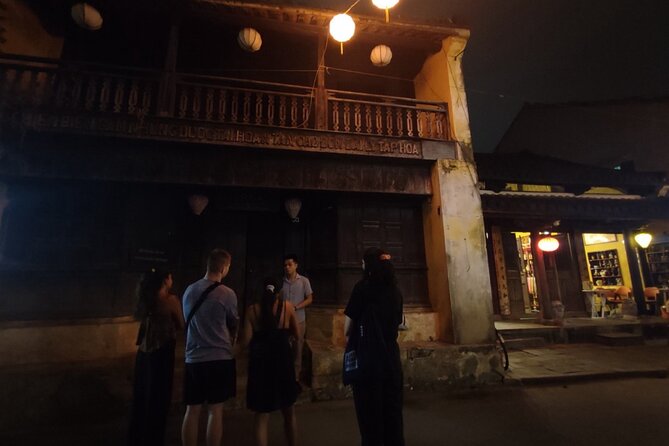
This is an evening ghost-themed walking tour in Hoi An that starts at 40 Trần Hưng Đạo (Phường Minh An) at 6:00 pm. The route is designed for the moment the streets begin to darken, so those “hidden places” feel like they’re hiding on purpose, not just because the signage is poor.
You’re looking at roughly 2 hours total, covering about 1.5 km / about a mile. It’s an easy distance, but it’s not a sit-down show. You’ll be doing small turns, lane-hopping, and slowing down at stops where the guide explains what you’re seeing and the story behind it.
Because it’s private—just your group—it tends to work well if you want questions answered on the spot, or you simply prefer not to share ghost rumors with strangers.
You can also read our reviews of more tours and experiences in Hoi An.



Walking Route: What You’ll See Between Old Town Lanes and the Japanese Covered Bridge
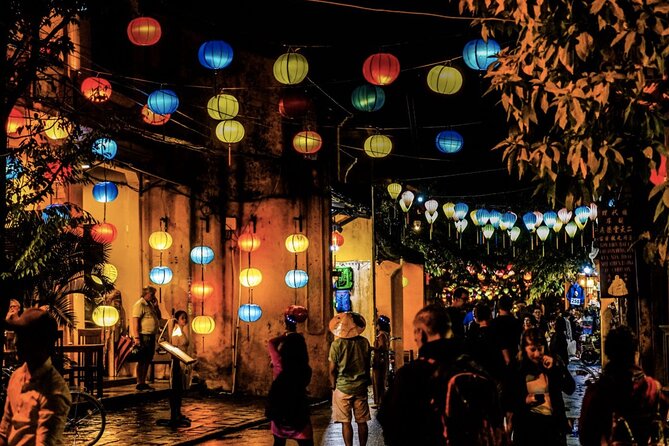
You’ll finish near the Japanese Covered Bridge on Nguyễn Thị Minh Khai (Phường Minh An). That matters, because it anchors the tour in a central, photogenic part of the Old Town—so you can transition smoothly into dinner or a short stroll afterward.
The walk focuses on a string of locations that build a theme: death rituals, spirits, taboos, and legends tied to specific spaces. The experience also mentions mystery of lanterns, an ancient haunted house, and a ghost alley—all of which are the kinds of details you’d miss if you just wandered.
Stop 1-Theme: A 200-Year-Old Grave and the Cost of Not Talking About Death
Early on, you’ll be pointed toward a 200-year-old grave and other graveyard-feeling spots. This is where the tour’s main job begins: breaking the taboo around death in Vietnamese belief.
Instead of treating death as only something to fear, the guide frames it as something people remain connected to—through rituals, respect, and habits of daily life. If you’ve ever wondered why religious or spiritual practices in Asia can feel both intimate and public, this is the section that explains the logic in street-level terms.
What you’ll like here: the tour slows down enough that the space feels real, not just decorative.
What to consider: if you’re uncomfortable with death-focused topics, be honest with yourself—you’ll be in that mood early.
Ghost Alley and the “Living People Connect With Death” Idea
Next comes the ghost alley element. This portion is about more than jump-scare vibes. The tour’s angle is cultural: you’ll hear how living people “stay connected” to death, and how those beliefs show up in the built environment.
The practical value here is that it gives you a way to read the city. When you look at narrow lanes, old façades, or specific corners later, you won’t just see a photo spot—you’ll remember the reasoning the guide gives for why people behave the way they do.
And yes, it’s meant to be fun. The “mystery” tone is doing double duty: it keeps you engaged while explaining something that might otherwise feel heavy.
Medieval Graveyard Death Rituals: Why the Tour Focuses on Ritual, Not Just Monsters
One of the most distinct parts of this experience is the mention of a medieval graveyard feel and learning the death ritual, plus the way people link the living world with what comes after.
Rituals can sound abstract until you’re standing near the kind of space that would have shaped them. Here, you’re learning what people do and what that doing communicates—respect, memory, caution, and connection.
This is also where the tour’s title makes sense: Hoi An Ghosts isn’t only about spooky stories. It’s about how communities explain what they can’t control, including danger and uncertainty.



The “Why” Behind Taboos You’ll Hear About
As the route continues, you’ll get into taboos and the “things you are not allowed to do.” That’s a big part of the tour’s usefulness because it changes how you’ll behave as a visitor.
For example, the tour mentions rules and taboos tied to Fullmoon. Even without memorizing every detail, you’ll understand the spirit of it: certain times call for restraint. If you’ve ever felt like you’re walking through someone’s world with invisible rules, this tour gives you a key to those rules.
The Old Town Stories: 108 Traders, a King’s Apology, and the War That Changed Homes
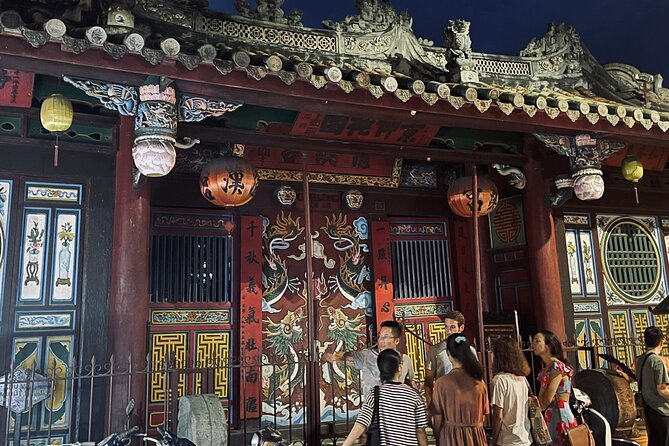
As you keep moving, the tour introduces larger legend beats that connect back to specific locations. You’ll hear about the murder of 108 traders and the apology of the King. These details are presented as legend/lore, but they’re still useful because they explain how communities build meaning around trauma and moral lessons.
Then you’ll learn about the war that made immigrants abandon their houses—told “in the shadow of the oldest house in the old town.” Even if you’re not a history buff, this section matters because it shows how history sticks to places. A building isn’t only architecture here. It’s a container for memory.
That’s why the tour works even if you’re not chasing “paranormal proof.” It’s giving you story-shaped context—how people talk about fear, conflict, and consequences, and how those stories travel from generation to generation.
House-Protection Spirits: How Locals Guard Homes From Dark Energy

Another thread running through the walk is how locals protect their houses from dark spirits. You’ll also hear about taboos tied to the home—rules that govern how people act and what they think could go wrong.
This is where the tour becomes surprisingly practical. It teaches you how to observe without being intrusive. Instead of pointing and saying what looks weird, you learn to notice what people do to feel safe and respected.
You’ll also hear about lantern-linked mystery and other small-lore elements that show the same pattern: the city’s charm is tied to beliefs, not only aesthetics. That means you’re not just entertained. You’re trained to look.
What If Your Guide Is Sanh? Expect High-Energy Spooky Storytelling
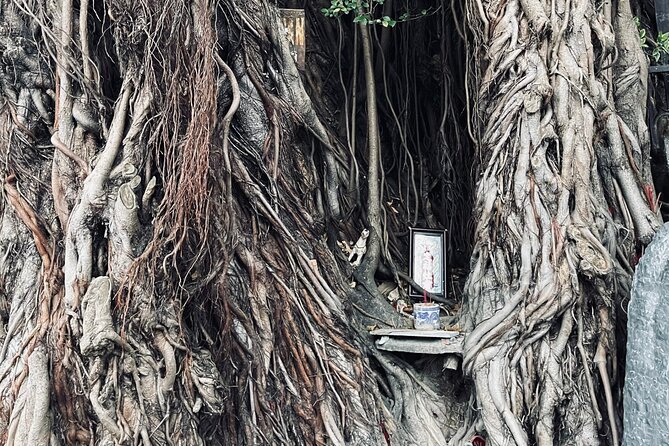
One thing I take from the strongest feedback on the experience is how much the guide matters. In one standout case, the enthusiastic guide Sanh brought a lively, spooky tone to Hoi An’s history and legends.
If you’re the type who likes a guided walk where the stories actually land, this is exactly the kind of energy you’ll be hoping for. And even if your guide is different, you can use this as a cue: ask questions, and don’t just listen passively—this tour rewards engagement.
Logistics That Actually Affect Your Night (Not Boring Stuff)
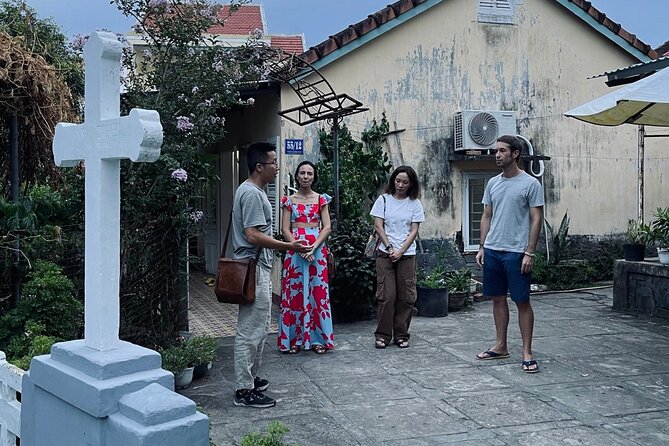
This is a private tour/activity, so you only share the experience with your group. That’s a plus if you want a quieter pace or better chances to ask questions.
You’ll also get a mobile ticket, and confirmation happens at booking time. The tour is close to public transportation, which helps if you’re not staying right inside the Old Town.
It’s best to treat this as a weather-dependent walk. The experience notes it requires good weather—so if rain hits, the plan may change.
Price and Value: $19.58 for a 2-Hour Themed Walk That Teaches You How to Read Hoi An
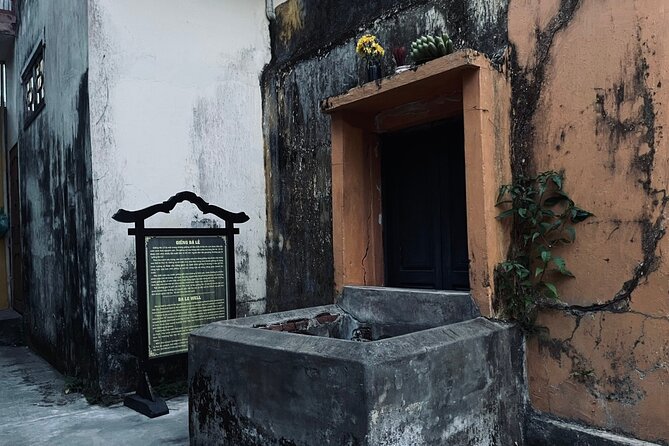
At $19.58 per person, you’re paying for a focused guide-led experience that takes roughly 2 hours and includes storytelling stops centered on death rituals, taboos, and local lore.
Is it “cheap” compared to a museum ticket? Yes. But the value isn’t in admissions—it’s in the interpretation. You’re getting someone to explain the meaning behind what you’re seeing: why certain places feel ominous, why certain times matter, and why locals use taboos and rituals to manage fear.
For me, the best value comes when you’re the kind of visitor who wants more than photos. If you like walking tours that connect the dots between people’s beliefs and the street-level reality, this price-to-time ratio makes sense.
If you only want classic sightseeing at night, you might feel the theme is too heavy. But if you enjoy story-driven travel—especially the kind grounded in local ways of thinking—you’ll likely feel this is money well spent.
Who This Tour Fits Best
This fits you best if:
- you enjoy ghost and legend storytelling with cultural context
- you like night walks that don’t feel like a bar crawl
- you want to understand how people behave around death and spirits, not just hear spooky words
- you’re comfortable with the theme being dark
It may not be for you if:
- you want a light, romantic Old Town evening only
- you dislike death-related topics and taboos
- you’re hoping for a “mostly paranormal effects” show
Should You Book This Hoi An Ghost Tour?
I’d book it if you’re curious about how beliefs shape everyday behavior in Hoi An. The best part is that the tour doesn’t treat the supernatural as random thrills. It connects stories like the murder of 108 traders, the king’s apology, house protections, and Fullmoon taboos into a single way of seeing the Old Town after dark.
I wouldn’t book it if you need a purely cheerful outing. This one is built for darkening alleys and a heavy theme, told in a way that’s meant to be engaging—not sanitized.
If you do book, wear shoes that work on uneven lanes, and plan dinner afterward near the finish by the Japanese Covered Bridge. This is a great way to end the day with stories that stick.
FAQ
Where does the tour start and end?
The tour starts at 40 Trần Hưng Đạo, Phường Minh An, Hội An and ends near the Japanese Covered Bridge on Nguyễn Thị Minh Khai, Phường Minh An.
What time does the tour begin?
It starts at 6:00 pm.
How long is the tour?
It lasts about 2 hours.
How much walking is involved?
Expect about 1.5 km of walking, roughly a mile of distance mentioned for the experience.
Is this a private tour?
Yes. It’s private, meaning only your group participates.
Is a mobile ticket used?
Yes, the tour uses a mobile ticket.
Is the tour appropriate for most people?
The experience states that most travelers can participate.
What’s the cancellation policy if weather is bad?
The experience requires good weather. If it’s canceled due to poor weather, you’ll be offered a different date or a full refund.
Are service animals allowed?
Yes. Service animals are allowed.
How far in advance is it typically booked?
On average, it’s booked 19 days in advance.