REVIEW · HOI AN
Gardening at Tra Que Vegetable Village and cooking class
Book on Viator →Operated by Dragon Travel Viet · Bookable on Viator
Farming in Hoi An feels oddly calming. I love the hands-on Tra Que Vegetable Village morning where you actually hoe, plant, and harvest, and I love ending with a cooking class plus lunch that’s included. One thing to consider: you’ll be on a bicycle for part of the day and you should be fine getting a little dusty and muddy.
This tour is built for people who want more than photos. You get door-to-door pickup, a small group capped at 15, and a clear flow from field work to fun field photos (hello, buffalo ride) to food you can recreate later. It’s also family-friendly in a practical way since the schedule is straightforward and the host helps everyone stay part of the action.
What I like most is that it mixes real village work with real village food, without turning it into a show. The herbal foot wash and foot massage help you reset after the morning effort, so the last part of the day feels like a reward, not a finish-line.
In This Review
- Key highlights to watch for
- Getting to Tra Que: pickup, bikes, and a calm rural ride
- Farmer time: what you’ll do (and why it feels authentic)
- Buffalo-back grassland ride: silly photos, real memories
- Herbal foot wash and foot massage: the reset you’ll appreciate
- The cooking class that actually teaches: tam huu and banh xeo
- Lunch included: what you should expect from the meal
- Price and what it really covers (plus likely extras)
- Who should book this tour in Tra Que—and who might skip
- Should you book? A practical checklist
- FAQ
- How long is the Gardening at Tra Que Vegetable Village and cooking class?
- How much does the tour cost?
- Is hotel pickup and drop-off included?
- Does the tour include food?
- Do I get a bicycle?
- Is the cooking class included?
- Is there a vegetarian option?
- Is the buffalo ride guaranteed?
- Is the herbal foot wash and foot massage included?
- What’s the group size limit?
- What’s the cancellation cutoff?
Key highlights to watch for
- Hotel pickup and drop-off so the countryside part starts without hassle
- Cycle through rice fields on a comfortable bike (plan for a short ride before you farm)
- Hands-on vegetable work including hoeing soil, planting, watering, and harvesting
- Buffalo-back photo time in the grassland area when available
- Herbal foot wash and foot massage to cool down after farming
- Cooking village specialties like tam huu rolls and banh xeo pancakes, then eating your results
Getting to Tra Que: pickup, bikes, and a calm rural ride
Hoi An is famous for old streets, but the Tra Que area is where you can feel the rhythm of farming life. Your day starts with hotel pickup and drop-off, which matters here because you’re heading out into countryside lanes rather than just walking around a neighborhood.
Once you’re ready, you’ll cycle down country lanes toward the vegetable village. Based on what’s worked well for past groups, the ride is short (around 5 km has been noted) and often takes about half an hour at an easy pace. Many stretches go through rice fields, and that makes the route feel safer and calmer than you might expect from the word bicycle.
A practical tip: this is not a spinning class. It’s a steady ride that gets you close enough to start working without draining your energy before you plant. Still, if you’re not comfortable pedaling, you should ask ahead. One past group had a friend who couldn’t cycle and sat behind the host’s motorbike instead. That may not be guaranteed every day, but it’s a helpful sign that the operator can sometimes adjust.
Group size is also part of the value. You’re capped at 15 travelers, which is small enough that you’re not just watching from the edge while everyone else farms.
You can also read our reviews of more cooking classes in Hoi An

Farmer time: what you’ll do (and why it feels authentic)
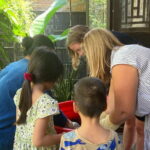
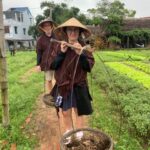
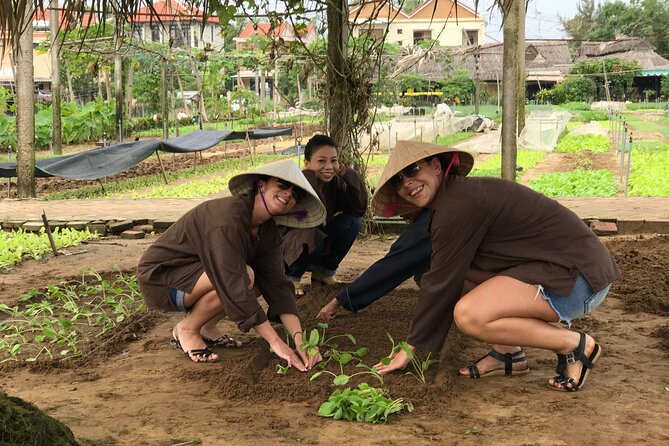
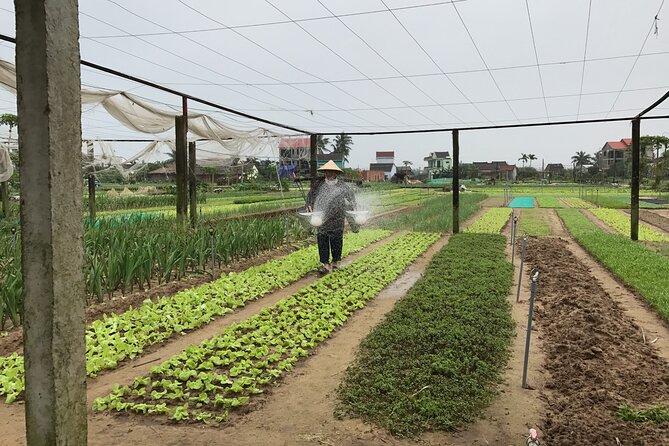
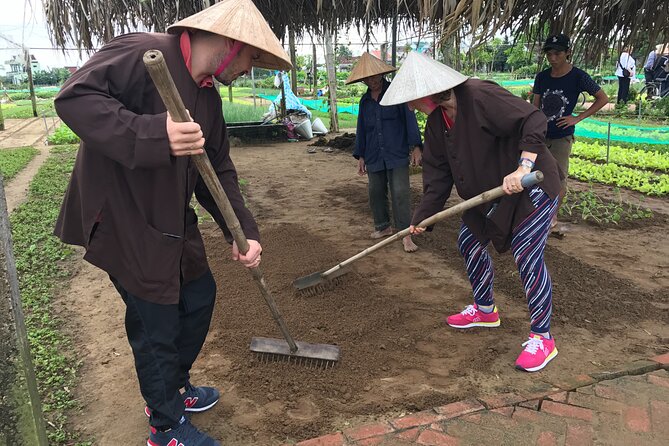
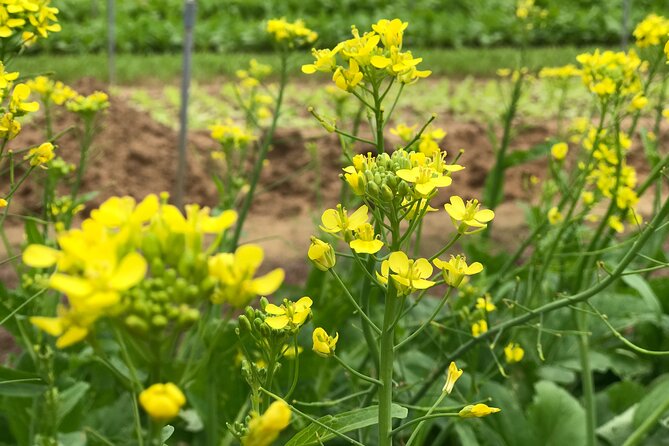
The core of this tour is your morning as a farmer at Tra Que Vegetable Village. You’ll be taken to vegetable gardens where you can see different crops, including fennel and other vegetables. Then you’ll work alongside local farmers, exchanging techniques—how to plant, how to care for vegetables, and what to look for as plants grow.
In plain terms, you’ll practice the main stages of farming:
- hoeing soil
- planting vegetables
- watering the garden
- harvesting vegetables
That sequence is what makes the experience satisfying. It’s not just a quick stop where someone points at beds and moves you on. You get to touch the process from ground prep through planting and care, and you’ll see the village approach up close.
Here’s why I think this matters for you: Vietnam’s countryside can look simple on postcards, but the daily reality is careful work. When you’re doing it with guidance, you understand why the vegetables here are so central to local life. Even if you’re only doing a short, supervised version, it changes the way you look at produce back in town.
Expect the work to be interactive. Some tasks may be easier than others depending on your comfort level, and the guide and farmers guide you step by step. If you’re traveling with kids, this kind of structured activity is easier than long museum-style walking because everyone can take part in a physical task.
Do plan for the day’s rhythm: you’ll work first, then move to the fun stuff (buffalo ride), then reset with your feet, and finally shift into cooking and eating.
Buffalo-back grassland ride: silly photos, real memories
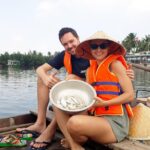
After the garden time, you’ll head out to the grassland area. This is where you can ride a buffalo-back for photos and a bit of filming.
Important note: it’s described as ride-available if any. In other words, the buffalo ride depends on conditions that day, not just your ticket. Still, it’s one of the standout “only in Vietnam” moments because the photo ops don’t feel staged. You’re riding through an outdoor farming landscape rather than posing in front of a prop.
What you’ll likely enjoy most is the combination of views and humor. You’ll see people trying to hold still for photos, then laughing when the scene changes. That sounds simple, but it’s exactly the kind of memory that tends to last longer than another group picture.
Practical advice: wear clothes you don’t mind getting a bit dusty. Even without mud, grassland and farm areas tend to leave you with dirt on hems and shoes. Bring water for after the ride if you can, since drinks with the meal are not included.
Herbal foot wash and foot massage: the reset you’ll appreciate
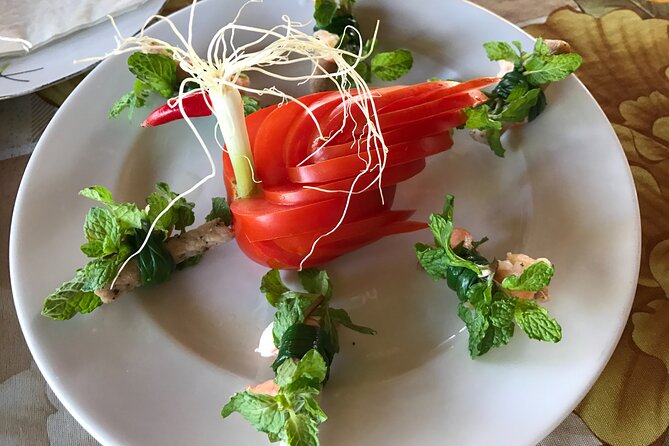
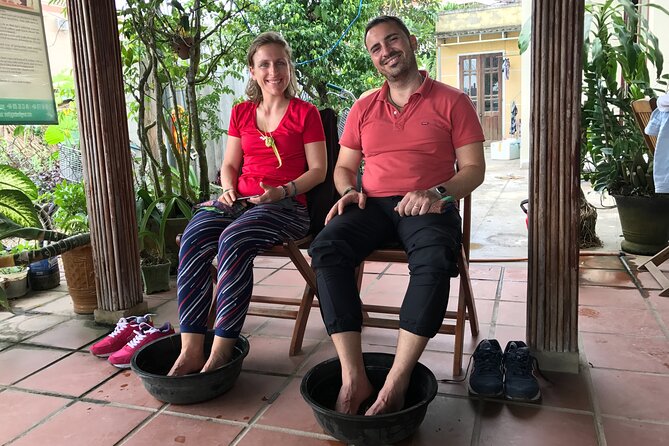
By the time you’re ready for relaxation, you’ll have done enough work that your feet will want a break. That’s where the tour’s traditional herbal foot wash and foot massage comes in.
This is one of those “small included comforts” that changes the whole day. Instead of heading straight into cooking on tired feet, you’ll feel more comfortable and relaxed before getting into the kitchen.
A careful note about costs: massage fee is listed as not included. The tour includes the foot wash and foot massage experience, but there may be an optional add-on if you want a longer or different massage service. If that matters to you, ask your guide how it works on the day. Either way, plan for the herbal reset as part of the normal flow.
What to do ahead of time:
- If you’re prone to sensitive skin, be aware you’ll be using herbal products.
- If you don’t like strong scents, let the staff know quickly.
This isn’t complicated. It’s just smart to think ahead so you can enjoy the treatment instead of wondering about it.
The cooking class that actually teaches: tam huu and banh xeo
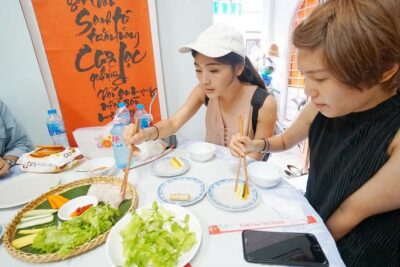
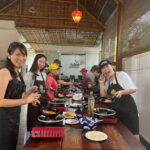
Now for the part that makes this tour useful after you go home: the cooking class. You’ll learn village specialties with a professional chef, and then you eat a delicious lunch.
The featured dishes are:
- tam huu rolls
- banh xeo pancakes
If you’ve never cooked these before, you’ll probably feel the difference between making something at home and cooking it in a Vietnamese rhythm with guidance. The training matters because these dishes rely on technique, not just ingredients.
What’s great here is how the cooking ties back to the morning. You spent the time working with vegetables, then you shift into cooking where those crops become real components on your plate. That connection is what makes the lunch feel earned rather than randomly scheduled.
Also pay attention to the pace. A good cooking class has enough structure that you’re not standing around waiting for someone else. Here, the day flows from farm work to buffalo photos to foot treatment to cooking, so it’s meant to keep momentum without turning stressful.
Vegetarian option is available if you advise at booking. If you’re vegetarian, tell them clearly ahead of time so your class and lunch stay aligned.
You can also read our reviews of more tours and experiences in Hoi An


Lunch included: what you should expect from the meal
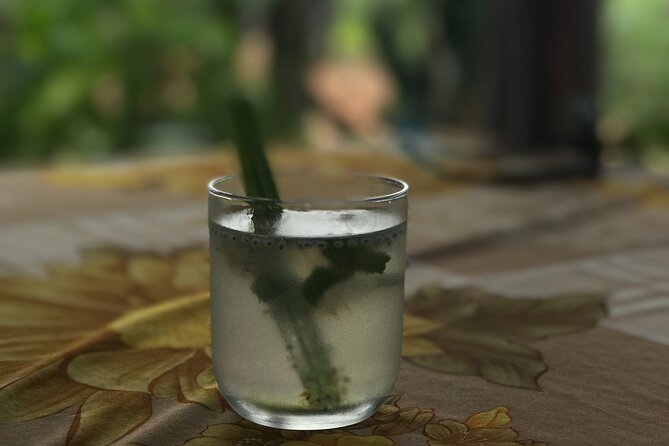
Lunch is included, which is one of the best value points for this tour. You’re not paying extra just to eat after all the morning activity.
Drinks are not included, so if you like bottled water or soft drinks, budget for that separately. Also, lunch is framed as part of the cooking class outcome—so you’re eating village dishes you learned to make, not a generic menu with no connection to the workshop.
If you have dietary needs beyond vegetarian (like allergies), you should communicate them when booking. The data only guarantees vegetarian option with notice, so it’s best to confirm anything beyond that directly with the operator.
Price and what it really covers (plus likely extras)
The price is $45.00 per person for about 5 hours. For Hoi An, that’s competitive when you factor in three big buckets:
- door-to-door hotel pickup and drop-off
- a structured half-day with bike, entrance fee, lunch, guide
- hands-on farming + cooking instruction
The value comes from the fact that you’re paying for an experience that includes both labor (farming) and craft (cooking), plus food. You’re not just buying a bus ride and a quick photo stop.
What’s not included:
- drinks on the meal
- personal fees
- tips for the guide
- massage fee (if there’s an optional add-on service)
My advice: set aside a little extra for drinks and tipping. That keeps the budget realistic, and it’s the easiest way to avoid the “wait, what about that?” moment later.
Who should book this tour in Tra Que—and who might skip
This tour fits best if you want active, practical travel. I’d steer you toward it if:
- you like hands-on experiences more than passive sightseeing
- you’re curious about how vegetables grow in Vietnam
- you want a cooking class you can replicate later
- you enjoy quirky photo moments (buffalo ride) and also want a comfort reset (herbal foot wash)
It might be less ideal if:
- you hate cycling or aren’t comfortable with a bicycle ride (even though it’s short, it’s still part of the plan)
- you’re looking for purely cultural history with zero physical activity
- you want more free time for wandering on your own instead of a set schedule
Group size is small, but it’s still a guided group day. If you’re someone who wants total independence, you’ll feel the structure. If you like the structure, it’s a great way to experience Tra Que without organizing everything yourself.
Should you book? A practical checklist
Yes, I think you should book this tour if you want a well-paced morning that mixes farm work, food skills, and a couple of memorable surprises. Here’s how to make the decision fast:
Book it if:
- you’re in Hoi An and want a farm-based day that’s short enough to still enjoy the rest of your vacation
- lunch + cooking instruction is important to you
- you’d enjoy cycling through countryside lanes before you start working
Consider alternatives if:
- cycling is a deal-breaker for you
- you only want photos and don’t want to participate in hoeing/planting tasks
- you’re very sensitive to herbal scents or skin treatments
And one more smart move: ask about the buffalo ride during booking. It’s described as if any, so confirming expectations ahead of time helps you avoid disappointment.
FAQ
How long is the Gardening at Tra Que Vegetable Village and cooking class?
It’s about 5 hours.
How much does the tour cost?
The price is $45.00 per person.
Is hotel pickup and drop-off included?
Yes, hotel pickup and drop-off are included.
Does the tour include food?
Lunch is included, but drinks on the meal are not included.
Do I get a bicycle?
Yes, a bicycle is included.
Is the cooking class included?
Yes. You’ll learn village specialties like tam huu rolls and banh xeo pancakes, then eat lunch.
Is there a vegetarian option?
Yes. A vegetarian option is available if you advise at booking.
Is the buffalo ride guaranteed?
The buffalo ride is described as available if any, so it may depend on conditions that day.
Is the herbal foot wash and foot massage included?
The experience includes a traditional herbal foot wash and foot massage, but a massage fee is listed as not included, which could mean optional add-ons. Ask on the day if you’re unsure.
What’s the group size limit?
The tour has a maximum of 15 travelers.
What’s the cancellation cutoff?
You can cancel for a full refund up to 24 hours before the experience starts.