
REVIEW · HOI AN
Discover Leather Workshops Experience in Old Town Hoi An
Book on Viator →Operated by DN Tour · Bookable on Viator
Leather in a quiet Hoi An studio is relaxing. What makes this workshop interesting is the way you turn a classic craft into a finished leather item, using professional patterns and tools rather than doing a half-day craft show. I like that it’s tucked near Old Town, but the studio itself is peaceful, with a small garden out front.
I especially love the hands-on step-by-step teaching. You learn practical skills like accurate leather cutting, punching holes (yes, with a hammer), shaping, and stitching—so you can see your project change hour by hour. You’re also not stuck with a big crowd; the group stays small, up to 10, and Anton can help directly as you work.
One consideration: the session runs about 2 hours. If you’re aiming for something larger or more complex, you may feel rushed and want to plan a simpler item for this time slot.
In This Review
- Key highlights worth knowing before you go
- Finding the calm: Old Town Hoi An, but quieter
- Choosing your leather project: the design part is real decision-making
- The core skills you’ll learn (and why they matter)
- Step-by-step: what your workshop time feels like
- 1) Set up and choose materials/designs
- 2) Pattern work and layout
- 3) Cutting leather accurately
- 4) Punching holes (the hammer moment)
- 5) Shaping leather
- 6) Stitching and finishing
- 7) Packing it to take home or gift
- Why the small-group size changes everything
- Who this leather workshop suits best
- What about time limits if you want a bigger project?
- Price and value: is $37 fair for 2 hours of real leathercraft?
- Quick practical tips before you go
- Should you book this leather workshop in Old Town Hoi An?
- FAQ
- Where is the workshop located and how does it end?
- How long does the leather workshop last?
- How much does it cost?
- How many people are in the group?
- Can I choose what I make?
- Will I finish the leather item and take it home?
- What is the cancellation policy?
Key highlights worth knowing before you go
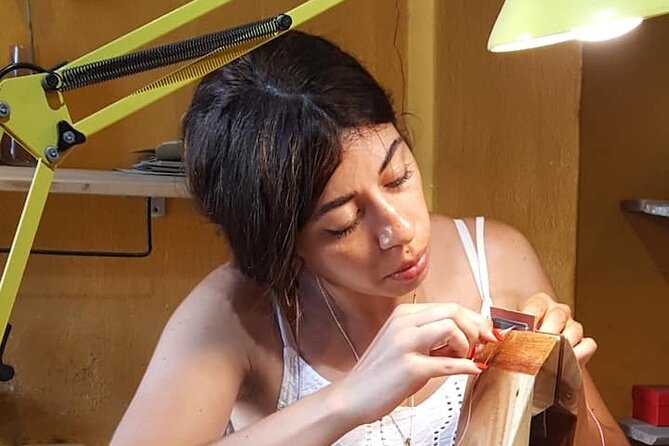
- A tranquil studio near Old Town Hoi An with a small garden in front, so you get a calmer break from the streets.
- Pick your leather item before you start (or choose from photos you send), with designs that fit different ages and abilities.
- Professional-pattern work so your wallet or purse actually lines up, instead of looking homemade in the bad way.
- Hammer-and-punch leather practice (a favorite part) that teaches you control quickly.
- Small group size (max 10) for more individual guidance while you stitch and shape.
- You leave with a finished leather good, packed to take home or gift.
Finding the calm: Old Town Hoi An, but quieter
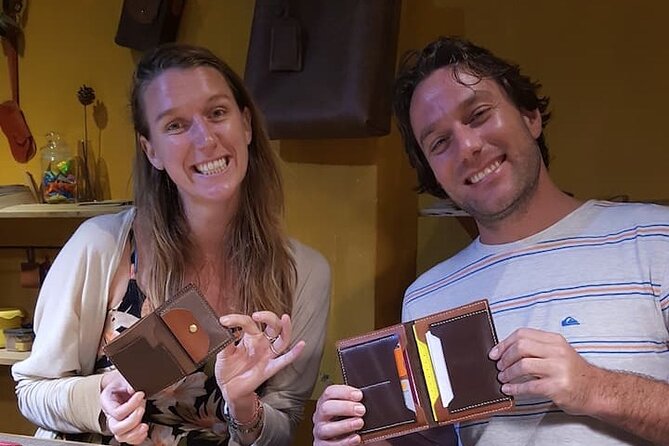
Hoi An’s Old Town can be lively, so I like that this workshop starts you in a different mood. The studio is close to the old town area, but it’s described as a tranquil place away from the noise. That matters more than you might think. Leather work rewards patience—clean cuts, controlled punching, and careful stitching don’t work well when you’re stressed.
When you arrive, you’re not sent wandering through markets or waiting in a loud storefront. There’s a small garden in front of the studio, and then you step into a cozy workshop space. The vibe is personal and focused, the kind of setting where you can concentrate on small, exact actions—especially when you’re learning pattern work for the first time.
Since the experience starts and ends back at the meeting point in Hoi An, you’re not juggling transport between multiple locations. In practical terms, you can plan this like a half-morning (or half-day) commitment and still keep the rest of your trip flexible.
You can also read our reviews of more tours and experiences in Hoi An



Choosing your leather project: the design part is real decision-making
A big part of the value here is that you don’t just sit through a demonstration. You choose what you’re making. Before you start, you can select an item in advance, or choose from photos Anton sends you.
That choice matters because leather goods are all about fit and layout. A wallet has different panel shapes, stitching lines, and thickness expectations than a purse, coin case, or other small accessory. Picking your item up front helps the workshop stay productive—so the time is spent making, not deciding.
From the description and the experience details, the items are designed to suit a range of abilities, ages, and genders. I think that’s a useful signal for you as a first-timer. You shouldn’t need prior crafting skill to finish something you’ll actually want to carry.
Also, consider what you want your souvenir to feel like. If you want something you’ll use every day, a wallet or small organizer usually wins. If you want more visual impact, a purse-style item is often more satisfying—just remember this is a ~2-hour session, so complexity should match the time.
The core skills you’ll learn (and why they matter)
This workshop is built around real leathercraft techniques, not just a shortcut. You’ll learn the sequence that makes the difference between a basic leather craft and a properly finished piece.
Here’s what’s included:
- professional pattern work
- cutting leather accurately
- punching holes (with hammering)
- shaping leather
- stitching
Why those steps matter:
Professional pattern work is the foundation. If your panels don’t match and your outlines aren’t aligned, everything after that will look off—especially at the edges and along seams.
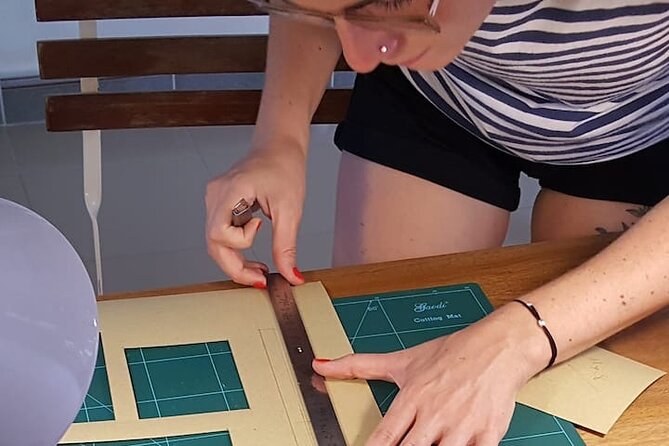
Cutting accurately is where you learn control. Leather is forgiving compared to some materials, but it still punishes sloppy measurement. Clean cutting helps the final item sit flat instead of warping.
Punching holes teaches placement. When holes are in the right spot, stitching looks straight and sturdy. And yes, hammering is part of it—so you get the satisfying, physical learning moment instead of just watching.
Shaping leather is what turns flat pieces into something that holds its form. This is also where your confidence grows: you stop thinking of it as craft paper and start thinking of it as a wearable object.
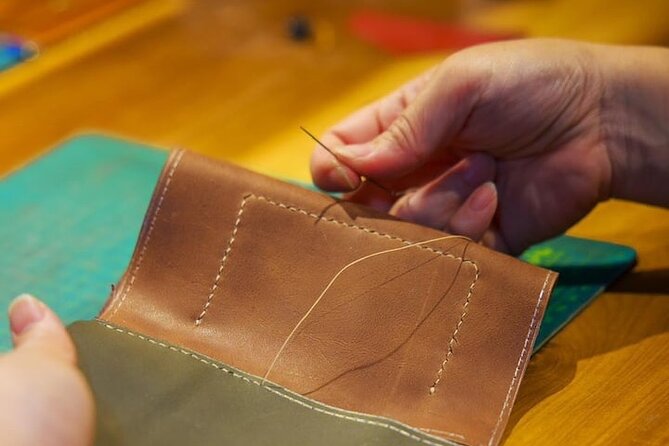
Stitching is the final proof. It’s the part you’ll notice most in a finished product, so the time spent on correct technique is what makes your souvenir feel real.
Step-by-step: what your workshop time feels like
The experience runs about 2 hours, so the flow is likely structured. Still, the teaching approach is described as patient and supportive, with individual attention throughout. That’s the key: you’re not expected to learn everything at once.
1) Set up and choose materials/designs
You’ll begin in the studio, where Anton helps you select what you’ll make and what you’ll use. The workshop emphasizes that you’ll work with premium leather and the same kinds of tools and techniques used in the studio’s finished products.
In practical terms, this is where you should take your time. Decide what design you truly want, and don’t rush the leather choice. If you’re unsure, lean into the guidance. Color and texture choices can make the final piece feel personal and worth the trip.



2) Pattern work and layout
Next comes the pattern stage. This is where you learn how pieces should be arranged and marked, so that when leather is cut and assembled, it forms correctly. If you’ve never worked with patterns, this part is surprisingly important. Patterns aren’t fancy drawings—they’re the recipe for correct shape.
A useful mindset here: accuracy early saves pain later. If you’re off by a little at the pattern stage, the stitching line and edges may not meet the way you want.
3) Cutting leather accurately
Then you cut. Cutting is where your hand learns to slow down. It’s also the stage that makes you feel like you’re really doing the craft, not just assembling.
You’ll likely get direction on how to keep your cutting clean and controlled. Even if you’re nervous at first, you’ll typically find rhythm once you start following the plan.
4) Punching holes (the hammer moment)
Punching holes is one of the most loved parts. People enjoy the tactile, action-based feel of it. But the point isn’t only fun. Correct hole placement makes stitching look professional and keeps seams strong.
If you want a smooth result, focus on consistency—punching in the right spots with steady pressure.
5) Shaping leather
After cutting and punching, you’ll shift from flat work into shaping. This step is often where the project starts looking like a real leather good instead of a set of parts.
Take your time here. Good shaping can improve how the final item sits, folds, or fits in hand.
6) Stitching and finishing
Stitching is both technical and visible. It’s also where you get a real sense of accomplishment: the item starts to lock together, and the edges become defined.
The teaching style described is supportive rather than controlling. That’s what you want as a beginner. You’ll get help when you need it, but you’ll still feel responsible for the final result.
7) Packing it to take home or gift
Finally, you’ll pack the item so you can take it home or give it as a gift. This small detail is worth noting. A leather souvenir is something you’ll want protected on the walk back to your hotel.
When you finish, you’re not leaving with raw materials or unfinished pieces. You leave with a leather item made by you.
Why the small-group size changes everything
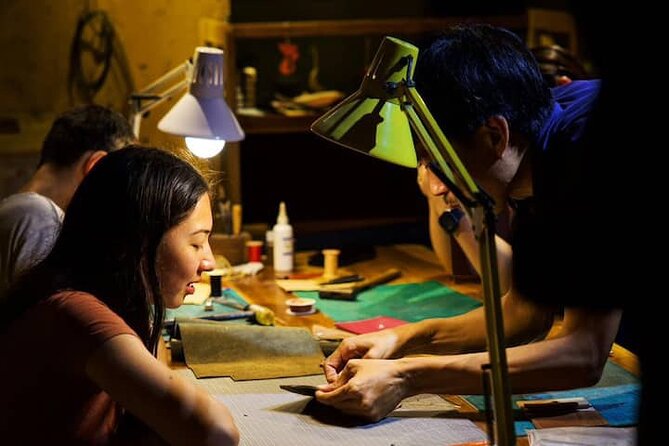
The workshop maxes out at 10 travelers. For a craft class, that’s a meaningful detail.
In a larger group, you’d spend more time waiting for someone to notice what’s wrong. Here, individual attention is built into how the class works. That’s why beginners feel comfortable and why people can get help at the exact moment they hit a problem—like when your stitching line starts to drift or when hole placement needs correction.
If you like learning by doing (and you don’t enjoy getting lost), this group size is a strong fit.
Who this leather workshop suits best
This is a great choice if you want a hands-on souvenir in Hoi An, not just a purchase. You’ll likely enjoy it most if you:
- want to make a practical leather item you can use after the trip
- enjoy learning a skill you’ll remember later
- prefer a small, calm setting rather than a busy tour style
- like interactive activities where you physically make things (hammering and stitching are a big clue)
It’s also designed to be workable across a range of abilities. That doesn’t mean it’s effortless. Leathercraft rewards attention. But it does suggest you won’t be thrown into something too advanced for a normal visitor.
What about time limits if you want a bigger project?
The session is about 2 hours. That’s enough time to create a finished small leather good, but it can feel tight for large, multi-part items.
One practical tip: if you’re thinking about a wallet, bag, or anything with more steps, consider asking whether your chosen item is a good match for the shorter session. The key is to pick a project you can finish without rushing. Rushing leads to wonky stitching and frustration—which defeats the whole point.
For most people, the best value comes from finishing the piece you choose within the time window.
Price and value: is $37 fair for 2 hours of real leathercraft?
At $37 per person for about 2 hours, this workshop looks like good value for three reasons.
First, you’re not paying for entertainment. You’re paying to use premium leather, professional pattern work, and the tools and techniques that create a finished product.
Second, you’re leaving with an item made by you. That changes the economics. If you bought a similar leather souvenir in a market, you’d likely pay for the finished object only. Here, you pay for the experience plus the finished output.
Third, the small-group teaching model reduces wasted time. In a craft class, the biggest cost isn’t only your time—it’s the risk of getting stuck without help. With a max group size and individual attention, you have a better chance of finishing something you’re proud of.
Quick practical tips before you go
- Pick your item early and decide what you want: wallet vs. purse vs. other options. It helps the whole session run smoothly.
- Expect to get comfortable with tools quickly. Punching and stitching are hands-on skills; don’t overthink them.
- Plan to wear comfortable clothes. Leathercraft involves steady handwork and some movement around your workspace.
- Think about gift travel. Since you’ll pack the item, you’ll want to keep your return trip simple and gentle.
Should you book this leather workshop in Old Town Hoi An?
I’d book it if you want a real skill-based souvenir and a calmer contrast to Old Town’s noise. The combination of a tranquil studio setting, small group size, and clear instruction through professional patterning, cutting, punching, shaping, and stitching makes it a strong deal for the price.
Skip it only if you want a purely passive experience. This is not a sit-and-watch activity. It’s hands-on from the start, and your enjoyment will come from doing the work—not just observing it.
If you’re deciding on a first workshop in Hoi An, this is a solid choice: you’ll leave with an item you made, not just photos.
FAQ
Where is the workshop located and how does it end?
The workshop takes place in Hoi An, Quảng Nam, Vietnam, and it ends back at the meeting point.
How long does the leather workshop last?
The experience lasts about 2 hours.
How much does it cost?
The price is $37.00 per person.
How many people are in the group?
The workshop has a maximum group size of 10 travelers.
Can I choose what I make?
Yes. You can select your item before the start (or choose from photos you send).
Will I finish the leather item and take it home?
Yes. You’ll create a professionally finished leather good and leave with it packed for you to take home or gift.
What is the cancellation policy?
You can cancel for a full refund up to 24 hours in advance. If you cancel less than 24 hours before the start time, the amount paid is not refunded.