
REVIEW · HOI AN
Biking to Explore Traditional Craft Villages in Hoi An.
Book on Viator →Operated by Sun Hoi An Tours · Bookable on Viator
Hoi An is famous for lanterns, but this route shows its working side. I love how the day mixes biking with real family trades, so you’re not just watching from the sidewalk. Two standouts are hands-on crafting at the villages and the way the countryside cycling turns into a moving story of local life.
The potential catch: it’s an early start and you’ll be doing light, active work (cycling and making things) outdoors, so good weather matters and you’ll want to dress for it.
In This Review
- What makes this tour genuinely useful
- Key highlights to look for
- Why the early-morning bike route matters in Hoi An
- Thanh Ha Traditional Pottery Village: clay skills you can actually take home
- Rice paper and noodles: a kitchen lesson you can taste
- Reed sleeping mats: making something useful, not just pretty
- From the river to war stories: history you’ll hear while you ride
- Traditional carpentry village: wood carving and boat-building craft
- Price and value: what $45 really covers in a 5-hour day
- Pacing, comfort, and what to bring
- Who should book this craft-and-rice-fields bike tour
- Should you book Sun Hoi An Tours’ craft village biking day?
- FAQ
- What time does the tour start?
- How long is the experience?
- Do I get hotel pickup?
- What transportation is included?
- Are tickets included?
- Is there an English-speaking guide?
- What can I make during the tour?
- How big are the groups?
- Is the tour dependent on weather?
- What is the cancellation policy?
What makes this tour genuinely useful
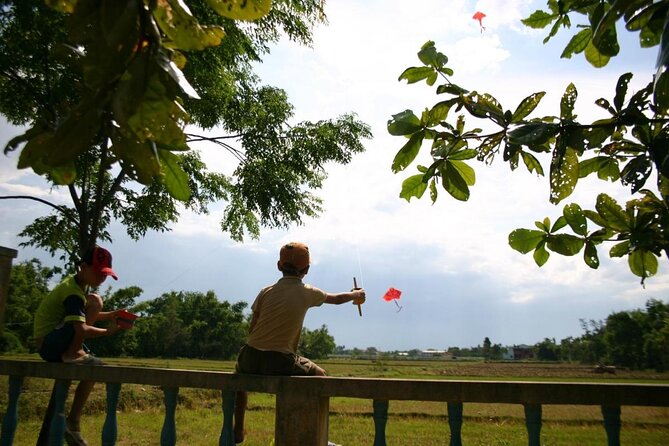
This is one of those tours that helps you understand Vietnam without turning it into a museum stop. I like the pacing: a leisurely ride between different craft areas, with time to ask questions and learn what you’re seeing. And since it runs with a small max of 10 people, your guide can steer you through each family’s workspace without feeling rushed.
You’ll also get a practical souvenir angle: several stops let you make items yourself—so you leave with objects you actually contributed to, not just photos.
Key highlights to look for
- Hands-on pottery where you make cups, jars, bowls, and pots and keep what you make
- Rice paper and noodle practice with a local family, followed by a meal
- Reed sleeping mat making you can try yourself at a household workshop
- Countryside cycling with photo chances like water buffalo along rice fields
- Carpentry village carving showing how artisans shape wood for statues and boats
- Return by boat to Hoi An old town, adding a scenic finish
You can also read our reviews of more cycling tours in Hoi An


Why the early-morning bike route matters in Hoi An
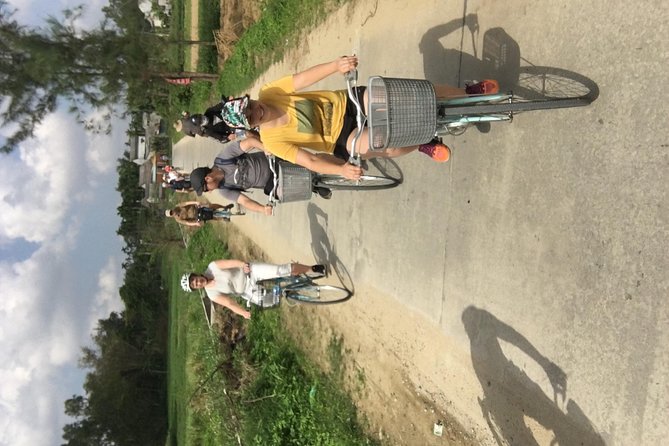
Starting around 8:00 am is smart here. It beats the late-morning heat, and the villages and fields feel more alive when the day is still young. You’re picked up from your hotel, then you’re on a bike and moving through the outskirts in time to see daily work areas rather than a staged “tour version” of the countryside.
The ride itself is described as easy-going in a practical way: you’re cycling between craft stops, not training for a long-distance event. One review notes about 15 km of cycling, and the overall rhythm is calm and unhurried. If you can ride a bike on flat or gently rolling roads, you’re likely fine.
The best part is how the landscape becomes part of the lesson. You don’t just hear words about Vietnamese culture—you also see the fields, gardens, and village layouts that support the trades you’re learning.
Thanh Ha Traditional Pottery Village: clay skills you can actually take home
Your morning craft day kicks off at Thanh Ha Traditional Pottery Village, where you meet families who make the kind of materials that build homes. The work here isn’t only about decorative items; these makers historically produced bricks and tiles used for older house construction.
What you’ll do is the key attraction: you learn how to make cups, jars, bowls, and pots yourself. Then you keep your finished pieces as souvenirs. That’s a big difference versus many “craft” tours where you only watch. Here, you get hands-on instruction, and the item you take home comes from your own effort.
There’s also a strong cultural payoff. Pottery is a practical trade—drying, shaping, firing, and careful handling all translate into daily life. When you sit and work the clay, you start to understand why craftsmanship persists: it’s not just heritage, it’s a skill set that feeds real households.
A small consideration: working with clay takes time and attention. Even with guidance, you’ll want patience for steps like shaping and handling. If you’re short-tempered in workshops, go in ready to slow down.
Rice paper and noodles: a kitchen lesson you can taste
Next, you ride to a local family that produces rice paper and noodles from rice flour. This stop is valuable because it’s not an abstract “food culture” talk. You learn how it’s made, and then you eat what you help prepare.
This is the kind of activity that makes Vietnamese cuisine easier to understand later. Once you see how rice flour turns into sheets (for rice paper) or into noodle forms, menu descriptions stop being vague. You start connecting ingredients to process.
What makes it especially enjoyable is the combination of skill practice plus a meal. Most craft tours leave you hungry or satisfied-but-uninformed. This one gives you both: you learn the method and you get to taste the result right away.
If you’re someone who likes to ask questions while you work, this stop is a good match. You’ll likely have plenty to discuss—timing, texture, and what changes when rice flour meets technique.
Reed sleeping mats: making something useful, not just pretty
Then comes a household known for making sleeping mats from reeds. This is one of the more tactile stops on the route. Instead of shaping clay or cooking food, you’re working with plant material—so you’ll feel the craft differently.
The aim here is participation: you can challenge yourself and make one by yourself. That phrase matters. It means the tour doesn’t assume you only want to watch; it encourages you to try the core method at the reed-mat level.
Why it’s worth your time: sleeping mats are practical items tied to daily living. When you learn how reeds are processed and arranged into a usable mat, you get a grounded sense of how local households solve real needs with local materials. It’s also visually satisfying—reeds have a texture and color that make the process fun to observe while you learn.
Possible drawback: reed-work can be a bit fiddly. If you want quick, low-mess crafts only, you may find this requires more concentration and steady hands than pottery. But the payoff is that you leave with a deeper appreciation of how ordinary life is supported by craft skills.






From the river to war stories: history you’ll hear while you ride
After the main craft stops, the route shifts into “countryside story mode.” You ride through areas by a river and stop to see a pagoda, a war monument, and a cemetery. Your guide tells stories about the Vietnam War, explained in a way that fits the pace of the day.
This is a delicate section, and the value is in how it’s handled: you’re not turning history into a slogan. Instead, you’re seeing places shaped by events and listening to context through a local explanation. It gives the morning’s craft work a larger backdrop—how communities lived, rebuilt, and continued traditions after difficult times.
If you prefer purely cheerful sightseeing, this portion may feel heavier. Still, it’s also one of the most “understanding Vietnam” parts of the day, because it connects geography to lived memory.
The bike ride between stops also gives you breathing space. You’ll cross and cycle through areas like a chili garden, corn fields, and rice fields, and there’s a chance to take photos of water buffalo. That mix—working landscapes plus history stops—keeps the day from becoming repetitive.
Traditional carpentry village: wood carving and boat-building craft
Later, you head to the traditional carpentry village. This stop focuses on carving and woodwork—craft that needs skill, patience, and a feel for material. You’ll see how artisans carve wooden statues and fishing boats.
This is a great follow-up after pottery and reed mats. Each craft uses different tools and methods, so you get a wider view of what “tradition” means in Hoi An’s working villages. Carpentry also adds a functional lens: fishing boats aren’t decorative. They’re part of livelihoods and community routines.
One practical benefit: watching carving work up close can be easier to understand than some abstract craft processes. Even if you don’t do the carving yourself, the craft’s purpose is visible in the forms you see. It helps you translate what you’re learning into real-world use.
The tour then includes a boat return to Hoi An old town, so you finish the day with a scenic, lower-effort segment. It’s a nice way to wrap up the bike ride without turning the final hour into more pedaling.
Price and value: what $45 really covers in a 5-hour day
At $45, this tour is best viewed as a full day of guided cultural practice—not just sightseeing. Here’s what that cost buys you based on what’s included:
- hotel pickup around 8:00 am
- a guided route with an English-speaking guide
- bikes and boat
- all visit tickets
- bottled water
Value comes from two places. First, several stops are hands-on (pottery and craft-making), so you get instruction and a real souvenir outcome. Second, the route is structured so the guide helps you connect what you see—crafts, fields, and historical places—into a coherent explanation.
You’re also capped at a maximum of 10 travelers, which matters more than people think. Small groups keep the pace relaxed and make it easier to ask questions at family workshops.
As for what’s not included: personal spending and tips are on you. That’s normal, but it’s worth remembering so you don’t get surprised at the end.
Pacing, comfort, and what to bring
This is a 5-hour experience (about there), finishing around 1:30 pm. You’re not out all day, but you are outside for multiple parts: biking, workshop time, and photo stops.
Bring the basics:
- comfortable clothes for cycling and workshop work
- something to protect from sun (head coverage helps)
- water (you get bottled water, but extra is smart if you sweat easily)
- closed-toe shoes if you plan to move around in workshop areas
Also think about your “souvenir plan.” If you’re making pottery or other items, you’ll want to handle them carefully and keep space for them so you don’t scramble later.
If you’re sensitive about early starts, set your expectations. The point of this tour is that it works best when you leave at morning hours.
Who should book this craft-and-rice-fields bike tour
This tour is a strong fit if you:
- like practical learning and want to try making items, not only watch
- enjoy countryside scenes like rice fields, gardens, and water buffalo photo moments
- want a small-group experience with a guide who explains the “why,” not just the “what”
- prefer an active but easy outing (biking plus short stops)
It’s also ideal if you’re staying in or near Hoi An and want an excursion that’s culturally grounded, not a long ride to somewhere far away.
If you hate being asked to participate in hands-on workshops, this may feel like too much. But if you enjoy doing things with your hands, it’s the exact right mix.
Should you book Sun Hoi An Tours’ craft village biking day?
I think it’s a good booking when you want more than postcards. The combination of village craft practice (pottery, rice paper/noodles, reed mats) plus countryside cycling plus a historic stop gives you a rounded day that still feels human-scale. And the guide’s role matters here—especially with people like Hung mentioned for clear direction and lots of added context.
Book it if you value hands-on experiences and you’re comfortable riding a bike at an easy pace in the morning. Skip it only if you’d rather spend your time in Hoi An’s old town with no workshop participation, or if weather is unpredictable and you’d rather avoid outdoor time.
If you’re the type who likes returning home with objects you made yourself, not just a memory, this one is hard to beat.
FAQ
What time does the tour start?
The tour pickup is around 8:00 am.
How long is the experience?
It runs for about 5 hours and finishes around 1:30 pm.
Do I get hotel pickup?
Yes. Pickup from your hotel is offered.
What transportation is included?
You’ll have bikes for the cycling parts and a boat for the return to Hoi An old town.
Are tickets included?
Yes. All visit tickets are included.
Is there an English-speaking guide?
Yes. The tour includes an experienced English speaking guide.
What can I make during the tour?
You can make clay items at pottery village, try rice paper and noodles with a local family, and make a sleeping mat from reeds at the reed-mat workshop.
How big are the groups?
This activity has a maximum of 10 travelers.
Is the tour dependent on weather?
Yes. The experience requires good weather, and if it’s canceled due to poor weather, you’ll be offered a different date or a full refund.
What is the cancellation policy?
You can cancel for a full refund up to 24 hours before the experience starts. If you cancel less than 24 hours before, you won’t get a refund.