Quiet roads and real village life.
This is one of those Hoi An tours that feels like it was built for people who want the everyday version of Vietnam, not just the photo stops. You’ll pedal out with a local English-speaking guide (Vinh is a fan favorite), ride past calm countryside scenes, and then spend real time hands-on at artisan workshops and a host family’s home.
I especially loved the hands-on craft time—making pottery, learning rice-noodle work, and trying weaving. I also liked that you’re not rushed through a museum-style visit; you’re part of the process, with explanations and time to ask questions.
One thing to consider: it’s a solid cycling morning (about 15 km total). If you’re not comfortable on a bike for that distance, check the scooter transfer option, or save your legs for later in town.
In This Review
- Key things to know before you go
- Why this countryside bike tour is different from the usual Hoi An loop
- Pickup, bikes, and the route tempo (15 km, multiple stop points)
- Poetic Lotus Lake and rice fields: the calm part before the crafts
- Thanh Ha Pottery Village: hands-on clay work by the Thu Bon River
- The bridge view and Cam Kim Island: a short scenic reset with context
- Noodles, bamboo boats, and weaving at a local home
- The banh mì break: food as a final cultural cue
- Price and value: what you’re really paying for at $28
- Who this tour suits best (and who should think twice)
- Practical tips so your pottery and weaving time stays comfortable
- Should you book this cycling countryside tour?
- FAQ
- How much does this tour cost?
- How long is the tour?
- Where do we get picked up and dropped off?
- What’s the cycling distance?
- Is the tour guide available in English?
- What craft activities are included?
- What food is included?
- Can I switch from a bike to a scooter?
- What should I bring?
- FAQ
- Is it okay for children and older adults?
- Is free cancellation available?
Key things to know before you go
- You’ll ride about 15 km through the rural outskirts of Hoi An, with multiple short stops.
- Thanh Ha Pottery Village is along the Thu Bon River and traces back more than 500 years.
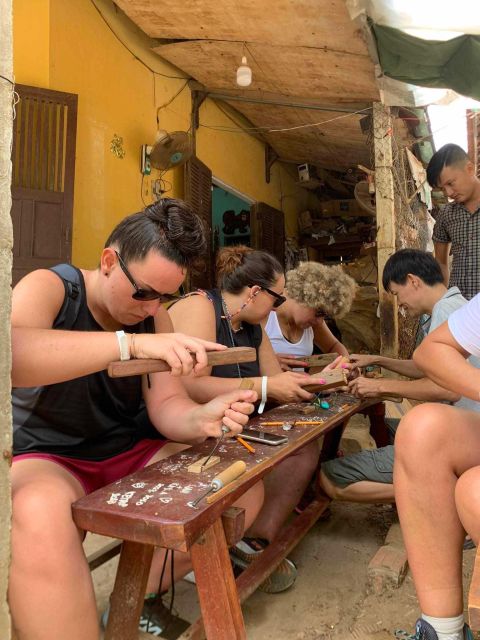
- You’ll try pottery and do craft activities with local guidance, not just watch.
- A host family’s home includes noodle-making, bamboo boat building, and weaving.
- You’ll snack on Vietnamese food, including bánh mì Hoi An before heading back.
- Expect a morning ending around noon to early afternoon, with hotel pickup included.
Why this countryside bike tour is different from the usual Hoi An loop

Hoi An can be busy, charming, and full of things to see—then you leave the center and realize how much of the real story is outside the walls. This tour takes you there, on two wheels, with a route designed for quieter rhythms: lakeside calm, rice-field stretches, river-side stops, and workshops where people do the same work year after year.
What makes it feel special is the balance between movement and participation. Yes, you’re cycling. But the main payoff is what happens when the bike stops: you get to do things. Pottery isn’t a show. Noodles aren’t a lecture. Weaving isn’t a quick peek. You’re guided through practical steps in craft work that actually matters to the people doing it.
And because you’re riding, you get a “front row” view of how the countryside connects to daily life. You don’t just arrive at a destination; you travel through the area the way locals experience it—slowly, gradually, with plenty of time to look around.
You can also read our reviews of more tours and experiences in Thanh Ha Pottery Village.

Pickup, bikes, and the route tempo (15 km, multiple stop points)
The day starts with pickup at your Hoi An hotel. You should be ready in the lobby about 10 minutes before the scheduled time. The tour runs in the morning and follows a plan built around practical pacing: ride, stop, learn, repeat.
You’ll cycle roughly 15 kilometers (about 9.3 miles) over the course of the tour. That doesn’t sound huge on paper, but the feel is different when you mix traffic crossings, river-side roads, and a bunch of short breaks. The reviews highlight that it’s doable with sensible stops along the way, and I’d agree with that logic: you’re not doing a nonstop training ride.
If you want a low-stress option, there’s an alternative transport mention: you can switch to a scooter transfer for $20 per person. That’s useful to know if cycling just isn’t your thing that day.
Poetic Lotus Lake and rice fields: the calm part before the crafts

Early on, you’ll head out toward the rural outskirts. One of the first notable scenery stops is Poetic Lotus Lake. It’s the kind of place that helps your brain slow down. The countryside here isn’t about dramatic monuments—it’s about open space, water views, and the quiet that makes the rest of the morning feel more grounded.
From there, you ride through rice-field scenery and smaller lanes on the way toward the next cultural stops. This is where the bike tour works as more than transport. The route gives you “in-between moments” you usually miss when you’re in a car.
Practical thought: countryside rides mean sun and glare can hit hard. If you tend to burn quickly, don’t skip sunscreen and sunglasses. Comfortable shoes matter too, because you’ll likely be stepping off the bike often—especially at the pottery village and the family stop.
Thanh Ha Pottery Village: hands-on clay work by the Thu Bon River
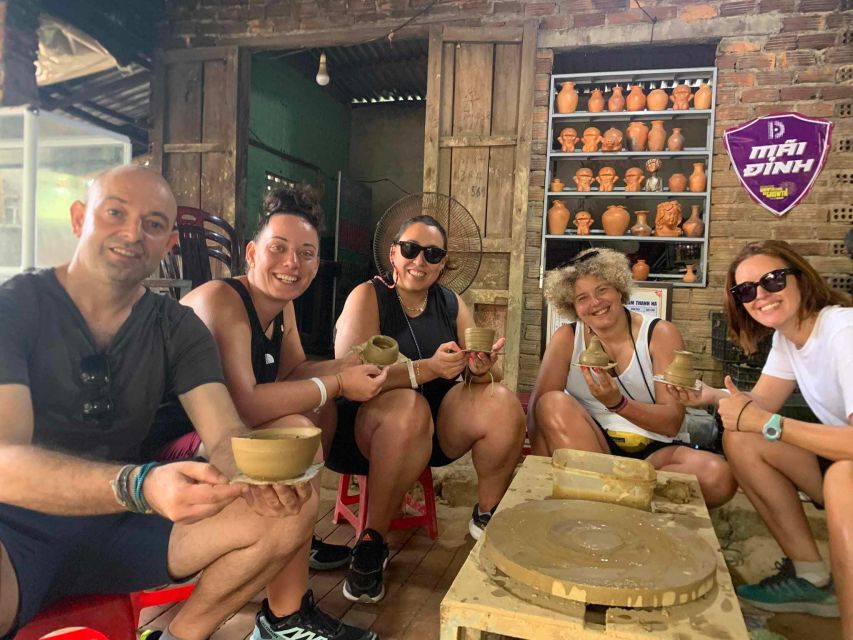
The tour’s first big craft milestone is Thanh Ha Pottery Village, located along the Thu Bon River. The village’s formation and development go back more than 500 years, which matters because it explains why the craft feels like lived culture, not a modern performance.
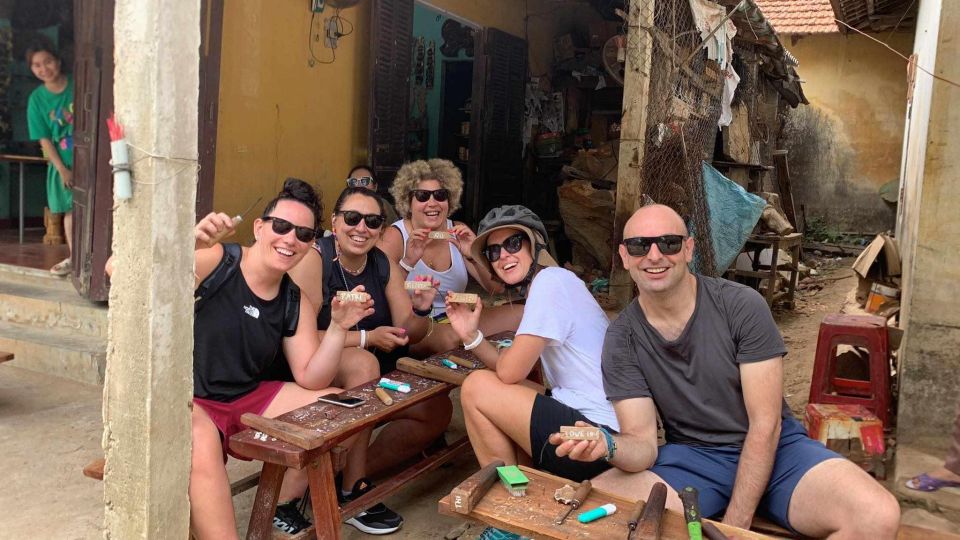
What you get here is more than a visit to pottery displays. You’ll learn how pottery is made by local artisans, then you’ll get guidance to try making pottery yourself. The standout detail is the working rhythm: you can actually see (and feel) how techniques are applied, and you learn that pottery isn’t just one step—it’s a chain of small actions done with practice.
One review detail I found especially telling: watching women spin clay by foot. Even if you aren’t doing that exact motion yourself, you’ll understand the craft logic fast. This is where your tour becomes “real learning.” You leave with the sense that the craft is supported by skill passed down locally—shaped by time, tools, and repeat work.
What to watch for: pottery-making can involve hands-on handling, so bring an open mind and accept that you might get a little messy. The tour includes the entrance fee for activities on the itinerary, so you’re not worrying about ticket lines while you’re in the craft zone.
The bridge view and Cam Kim Island: a short scenic reset with context
Around the next stretch, you’ll stop at a bridge for views and a look at Hoi An’s river-connected scenery. From here, you can see Cam Kim Island, which adds geographic clarity to what you’re seeing.
Even if you’ve already heard the names, it’s different when you’re viewing them from the cycling route. The river is the spine of the area. This stop ties together what you’ve already seen—the lake, the countryside lanes—with what’s coming: more Thu Bon River activity and family-based crafts.
This is also a good moment to ask the guide questions. Vinh’s style, based on what people say, is that he explains the history and the “why” behind the places you’re passing. Bridge stops are ideal for that because you can look around while you learn.
Noodles, bamboo boats, and weaving at a local home
The tour continues by following the Thu Bon River toward the home of a local family. This part is the heart of the morning because it shifts from village craft workshops into actual household skills: you’ll see how daily life and traditional work overlap.
At the family stop, you’ll learn a mix of activities, including:
- How to make noodles
- Bamboo boat building
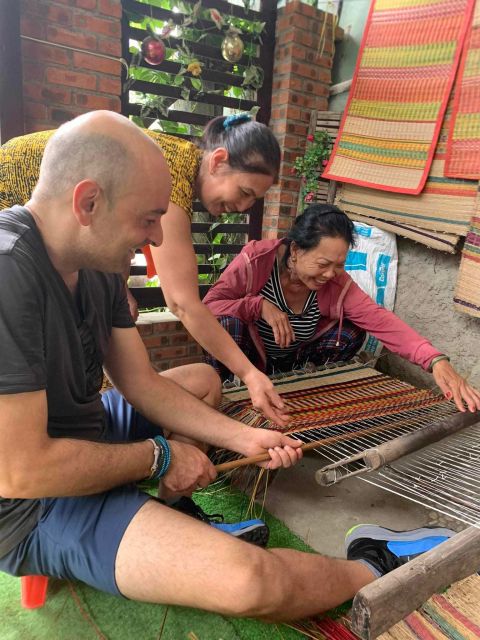
- Trying weaving colorful mats
This combination is smart. Pottery and pottery tools are one craft world. Noodles and weaving move you into a different set of materials, different tools, and different rhythms. Bamboo boat building adds yet another layer—because boats aren’t just about travel here; they connect to the river environment that shapes the region.
You’ll also get a snack made from noodles and rice products provided by the host family. This is where the tour stops trying to be a “tour product” and becomes a shared moment. If you’re someone who likes food, the family snack is often where the memory sticks.
A note on participation: you won’t be expected to master everything in one visit, but you’ll likely be invited to try key steps. That’s the difference between watching craft work and learning it. If you go in with a “let me try” attitude, you’ll get a lot more out of this segment.
The banh mì break: food as a final cultural cue
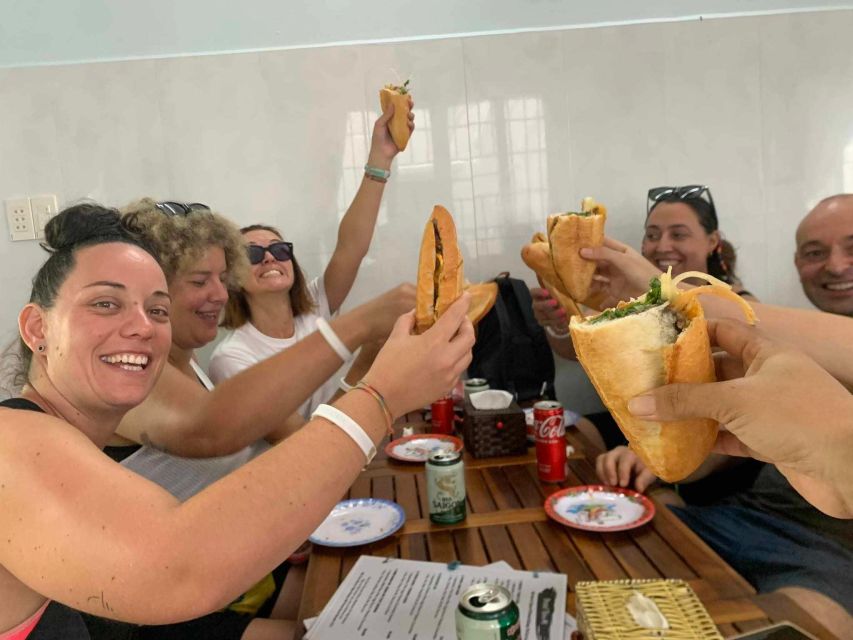
Before you head back toward the city, you’ll stop at a Vietnamese bakery to try bánh mì Hoi An. This is included as part of the snack/break in the tour plan, so you don’t need to budget extra during the day beyond personal needs.
I like this approach because it ties the morning together. You start with river and rice-world crafts, and you end with bread and fillings that reflect the local food culture. Even if you’ve eaten banh mì before in Vietnam, this is still a nice “wrap-up” moment after a morning spent working with rice-based ingredients and craft traditions.
Price and value: what you’re really paying for at $28

At $28 per person, the value comes from the mix of what’s included. You’re not just paying for a bike and a guide who points at places. Your ticket covers:
- An English-speaking tour guide
- Hotel pickup and drop-off in Hoi An
- Bike transfer (with the scooter transfer option available for a fee)
- Entrance fees for the activities on the itinerary
- A bottle of water
- A snack, including bánh mì Hoi An
That makes a difference. Many tours in Vietnam sell the “experience” but add on costs once you’re out in the day. Here, the itinerary activities are already covered, so you can focus on participating instead of doing cost math mid-ride.
Also, the time matters. The tour lasts about 4 hours. That’s long enough to get meaningful craft exposure, but short enough that you won’t lose your whole day to logistics. If you’re on a tight schedule in Hoi An, this is a practical way to add real local culture without burning your time.
Who this tour suits best (and who should think twice)
This is best for people who like learning by doing. If you enjoy crafts, food, and talking with guides, you’ll feel at home here. It’s also a good choice if you want a break from the main-town pace without giving up comfort and organization.
It may not fit everyone, though. The tour isn’t suitable for:
- Children under 4
- People over 70
And remember the cycling piece. If you’re physically limited for bike riding, the scooter transfer option ($20 per person) is the practical workaround mentioned. Consider it early so your day doesn’t feel stressful.
Practical tips so your pottery and weaving time stays comfortable
A few small preparations can make a big difference on a hands-on craft day.
Bring:
- Sunscreen and sunglasses for the outdoor ride sections
- Comfortable shoes for stepping on and off at stops
Also, manage expectations. Pottery and weaving are practical crafts. You’ll likely handle materials and tools, and you may come away with a memory more than a perfect finished product. That’s normal. If you treat it like a workshop with guidance, not a graded class, the experience lands the way it’s meant to.
Keep your questions ready for the guide. Stops like the bridge view and the village work are ideal times to ask about how things connect—river, rice, craft, and daily routine. Based on how Vinh is described, he shares history and context in a clear, approachable way, so your questions get real answers.
Should you book this cycling countryside tour?
Yes, if you want Hoi An beyond the center and you like experiences where you participate. This tour is strong on craft interaction—pottery in Thanh Ha, then noodles and weaving at a local family home—plus it ends with bánh mì Hoi An to close the loop with local food.
Skip it only if cycling distance will stress you out. In that case, use the scooter transfer option or save the route for another day with easier mobility.
If you’re the type who plans your morning, then likes to spend the afternoon free for rest, shopping, or a slow walk along the river, this one fits the rhythm nicely.
FAQ
How much does this tour cost?
The price is $28 per person.
How long is the tour?
It’s listed as 4 hours. Check availability for the specific starting times.
Where do we get picked up and dropped off?
Pickup and drop-off are included at your Hoi An hotel lobby.
What’s the cycling distance?
You’ll cycle about 15 kilometers (9.3 miles).
Is the tour guide available in English?
Yes, the tour includes an English-speaking guide.
What craft activities are included?
You’ll visit Thanh Ha Pottery Village and have a chance to make pottery. You’ll also visit a local family home where you can learn about making noodles, bamboo boat building, and weaving colorful mats.
What food is included?
You’ll have a snack break that includes bánh mì Hoi An, plus a snack made from noodles and rice products at the host family stop.
Can I switch from a bike to a scooter?
You can transfer by scooter for $20 per person, based on the option listed.
What should I bring?
Bring sunscreen, comfortable shoes, and sunglasses.
FAQ
Is it okay for children and older adults?
The tour is not suitable for children under 4 years old and not suitable for people over 70.
Is free cancellation available?
Yes. You can cancel up to 24 hours in advance for a full refund.